
Rotobrush Air Duct Cleaning in Santa Ana: A Homeowner’s Guide
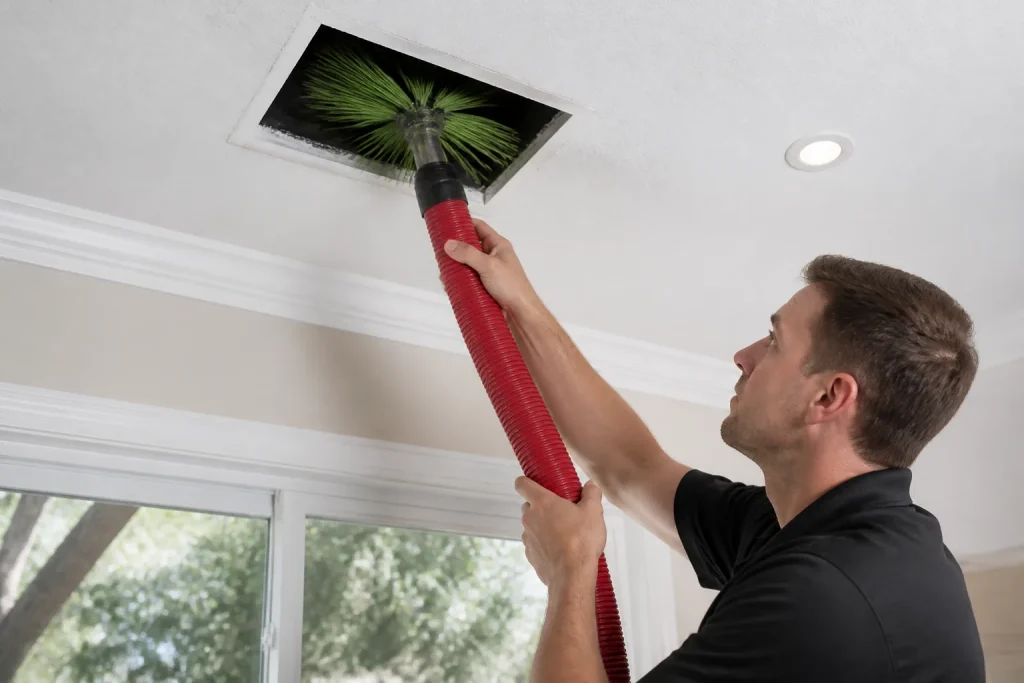
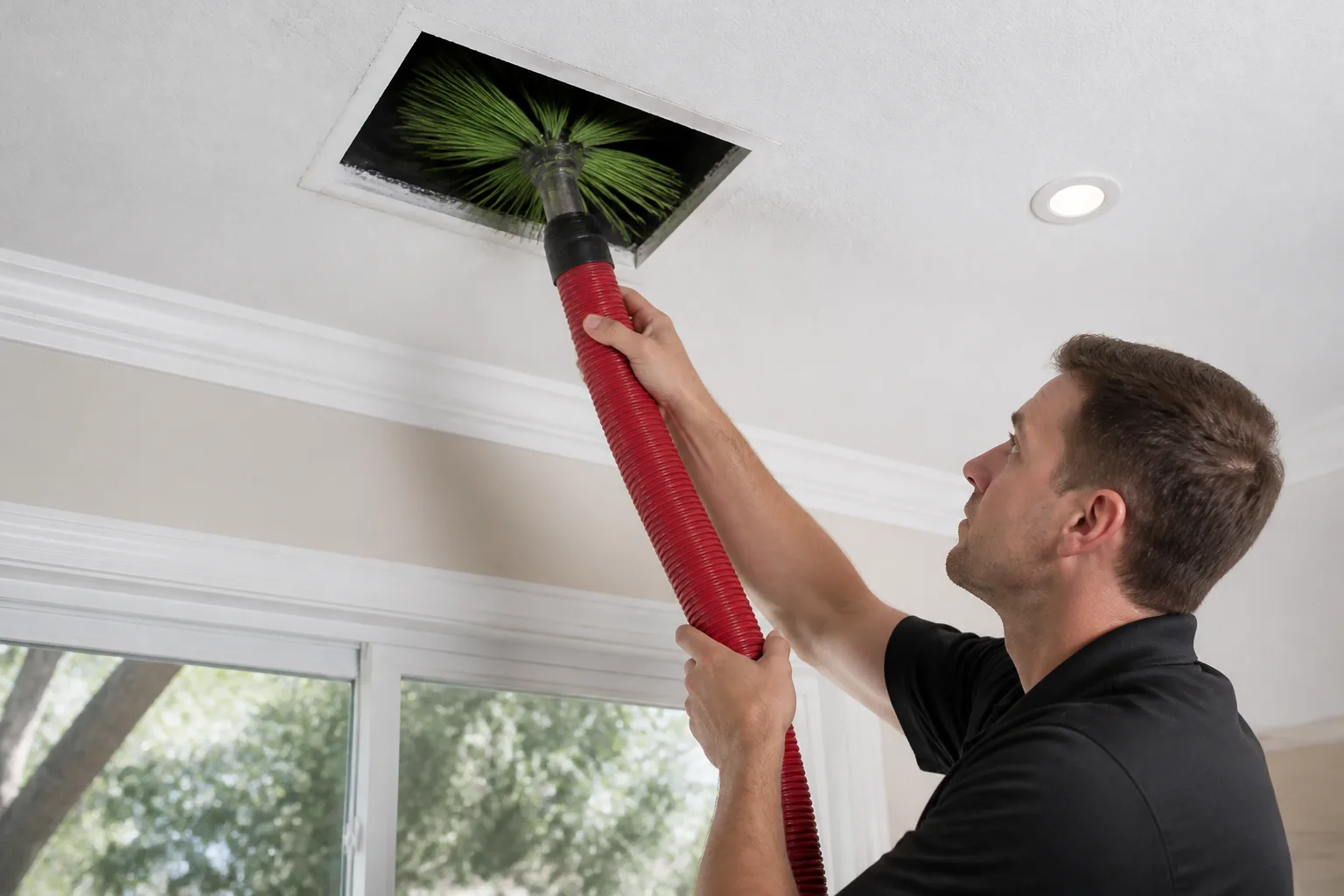
Rotobrush air duct cleaning in Santa Ana uses a rotating brush system with a co-axial vacuum that scrubs bonded debris off duct walls while extracting it at the same point of contact. It’s the right tool when compressed air alone won’t dislodge years of caked-on dust, pet dander, and construction residue. But it’s not a universal solution, and knowing the difference will save you from paying for either too little or too much. If you’d rather skip the research and talk to someone who runs this equipment daily, call (833) 620-2848 for a straight answer.
A lot of contractors advertise “Rotobrush cleaning” the same way they’d advertise a brand name vacuum, as a prestige signal. What they don’t explain is the specific physics of why a brush-and-vacuum system outperforms air whips on certain duct surfaces, and why it can damage others. This guide walks through what the machine actually does, where it earns its keep, and how to verify the work was done properly in your Santa Ana home.
What the Rotobrush Actually Does Mechanically
The Rotobrush system, specifically the BrushBeast line used in residential work, operates on a simple principle that most homeowners never hear explained: the brush scrubs, and the vacuum follows at the same point, in the same moment. That co-location matters more than most people realize.
Here’s the mechanical sequence. A rotating nylon or poly brush head spins at roughly 400 to 600 RPM inside the duct. As it rotates, the bristles scrape against the duct wall, dislodging the bonded layer of dust, skin cells, insect matter, and whatever else has been accumulating since the home was built. Mounted directly behind or around that brush head is a vacuum intake connected to a high-CFM negative air machine, usually in the 4,000 to 8,000 CFM range depending on the system. The debris gets pulled into the vacuum lines at the same point where the brush knocks it loose.
Compare that to a remote negative air machine alone, which relies on air velocity moving through the duct to pick debris up. Air whips and skipper balls knock debris around, but fine, sticky particulate often resettles before it ever reaches the collection point. In homes across Santa Ana, where inland heat and dry air create a fine dust that clings rather than floats, same-point extraction is the difference between cleaning and just repositioning dirt.
The takeaway: Rotobrush is not a vacuum with a brush attached. It’s a scrubbing system with immediate extraction, and that co-location is the entire point.
Where Rotobrush Excels: Material Compatibility in Santa Ana Homes
Not every duct material responds the same way to a rotating brush. This is where a homeowner can get oversold, and it’s worth understanding the distinction before anyone puts a camera in your system.
Sheet metal ducts are the Rotobrush’s home turf. Galvanized steel handles bristle contact without issue, and the smooth surface sheds bonded debris cleanly once the brush breaks the adhesion layer. Most homes in Santa Ana built before the 1990s have at least some sheet metal trunk lines, and in those runs, a brush-and-vacuum pass removes contamination that an air-only cleaning would leave behind.
Fiberglass duct board also responds well, though the technician needs to back the pressure off. The rigid surface holds up to gentle bristle rotation and releases years of trapped particulate without delaminating the interior.
Flex duct is where the conversation changes. The inner liner of flexible duct is a thin plastic or foil layer surrounding an insulated coil. Aggressive brush rotation can tear that liner, and once the liner is compromised, insulation fibers enter the airstream and the duct itself needs replacement rather than cleaning. In our experience with Santa Ana homes, a significant portion of residential systems built in the last 20 years use flex duct for bedroom runs and return drops. For those sections, a Nikro negative-air system with gentle agitation is often the appropriate approach, not a rotating brush.
The point isn’t that Rotobrush is dangerous. It’s that the technician needs to assess duct material before selecting the tool. A company that runs a brush through flex duct without checking is creating work for a repair crew later.
What Your Technician Should Be Observing During the Pass
Professional equipment generates information. A sharp technician reads the debris as it comes out, and those observations tell you what kind of contamination you’re dealing with and whether the source has been addressed.
During a Rotobrush pass in a Santa Ana home, here’s what we’re watching for:
- Debris color. Brownish-gray dust is normal accumulation. White or chalky residue often means drywall dust from past renovation work. Black, greasy material is typically soot or, in some cases, cooking residue pulled into return ducts. Dark, clumped material warrants a closer look.
- Debris volume. If the first ten feet of duct produces a heavy flow and then it tapers off, that’s a normal declining load. If every pass produces the same heavy volume, the contamination may be entering from an unsealed return chase or a disconnected section.
- Odor. Musty odor during cleaning suggests moisture has been present, which points to a condensation issue or a roof leak feeding a duct run. A sharp, acrid smell can indicate pest activity. Neither is something cleaning alone fixes.
- Bristle resistance. The technician feels the machine. Uneven drag suggests collapsed sections, crushed flex, or partially disconnected joints. All of these are repair items, not cleaning items.
This is the difference between running a machine and diagnosing a system. The tool does the work, but the observations determine whether the job is actually solving the problem. For homeowners in Santa Ana, this is where Air Duct Cleaning in Santa Ana separates real remediation from vacuum-only work.
How to Verify the Work Was Actually Done
The bait-and-switch problem in duct cleaning isn’t the price. It’s the proof. A lot of companies show two photos that look identical except one is slightly darker, taken from the same register at the same angle. That proves nothing.
Here’s what before-and-after camera footage should actually show:
- Same duct section, same angle, identifiable landmarks. Look for a seam, a joint, or a specific bend that appears in both shots. If you can’t match the location, the “after” shot could be from any duct.
- Visible debris removal, not just different lighting. The before shot should show dust accumulation, pet hair, or visible debris. The after shot should show bare metal or bare fiberglass board with the grain or seam clearly visible.
- Multiple sections, not one. A legitimate cleaning covers supply trunks, branch runs, and return ducts. Ask for footage from at least three different locations: one supply trunk line, one branch run, and the return side.
- Camera depth. The camera should travel through the duct, not sit at the register. If the video is static at the opening, you’re not seeing the actual work area.
We once pulled out a section of flex from a home near Centennial Park where the previous company had photographed the same clean-looking register twice, from two angles, on two different days. The duct interior was still carrying a visible layer of construction dust. Verify with your own eyes, not their word.
When to call a pro: If you’re seeing inconsistent airflow, visible dust on registers within weeks of cleaning, or you’ve inherited a house where the duct condition is unknown, that’s not a DIY moment. The duct system is enclosed, runs through walls and ceilings, and a wrong tool choice can damage material that’s expensive to replace. For Santa Ana homeowners, Air Duct Repair in Santa Ana is often the necessary follow-up when cleaning reveals structural issues, and having the same crew handle both saves a second diagnosis.
When Rotobrush Is Overkill: The Nikro Negative-Air Option
Not every duct system needs a rotating brush. Here’s the honest math: if the contamination is loose particulate, light household dust, or the system has been cleaned within the last few years, a Nikro negative-air system alone is often the correct call. It costs less, it’s faster, and it does the job without introducing mechanical contact to duct surfaces that don’t need it.
The Nikro approach works by sealing the duct system under negative pressure and using high-velocity air to sweep loose debris toward the collection point. In metal ducts with light accumulation, this produces clean results. In flex duct, it’s the safest method because there’s no direct mechanical contact with the liner.
Rotobrush earns its price when the contamination is bonded: years of settled dust, smoke residue, pet dander worked into the duct surface, or post-construction drywall particulate. For homes in Santa Ana that sat through a renovation or went years between cleanings, that’s the profile.
The responsible approach is system-dependent. A company that always uses Rotobrush, or always uses negative air, or always charges the same price regardless, isn’t assessing your ducts. They’re running a script. We’ve worked on systems where the correct answer was a hybrid: brush and vacuum on the metal trunk lines, negative air on the flex runs. That’s what actual diagnosis looks like.
For homes with Honeywell or Aprilaire filtration systems, the duct load is often lighter because the filtration catches more at the source, which can make negative-air cleaning sufficient. It depends on the system, not on a brand name on the side of a van. Related services in Santa Ana: Dryer Vent Cleaning in Santa Ana addresses a separate but connected part of the air pathway that deserves its own method and its own verification.
The Bottom Line
The Rotobrush system is a legitimate, professional-grade tool that does specific work well: scrubbing bonded contamination off rigid duct surfaces with same-point extraction. It is not a magic wand, not a universal solution, and not a selling point on its own. What matters is whether your duct material matches the tool, whether the technician is observing the right signals during the pass, and whether you can verify the result with real evidence.
- Rotobrush is ideal for sheet metal and fiberglass board ducts with bonded debris build-up.
- Flex duct requires a different approach to avoid liner damage.
- A technician’s observations during the pass reveal contamination type and hidden structural issues.
- Verify cleaning with matching before-and-after footage from multiple duct locations, not static register shots.
- Nikro negative-air alone is often the right call for light or recent contamination.
If you’re in Santa Ana and need help, Anvil Air Duct Cleaning home offers straightforward, equipment-specific service with no scripted upsells. Call (833) 620-2848 for a free estimate. We’ll tell you what your ducts need, and just as importantly, what they don’t.
Frequently Asked Questions
No. Rotobrush is safe and effective for sheet metal and fiberglass duct board, but it requires careful adjustment or an alternative method for flex duct, where the inner liner can tear under aggressive bristle contact. A qualified technician should assess duct material before selecting the cleaning method.
Rotobrush air duct cleaning in Santa Ana typically runs higher than basic negative-air cleaning because it includes mechanical agitation and same-point extraction. The price depends on system size, duct material, accessibility, and contamination level. Expect a range rather than a flat number, and be wary of any quote that doesn’t specify which method is being used. Call (833) 620-2848 for an exact quote, estimates are free.
Request before-and-after camera footage from the same duct location, same angle, with identifiable landmarks like a seam or joint visible in both shots. The footage should come from multiple sections, including a supply trunk, a branch run, and the return side. Static register shots prove nothing.
It depends on the duct material and contamination type. Rotobrush is better when debris is bonded to the duct walls, common in homes that haven’t been cleaned in years or have renovation dust. For loose particulate or flex duct systems, a Nikro negative-air approach is often more appropriate and equally effective. The best method is the one that matches your system.
Written by the team at Anvil Air Duct Cleaning, serving Santa Ana since 2017.
Need Air Duct Cleaning Help?
Call Anvil Air Duct Cleaning - licensed & insured, with free written estimates in Santa Ana.
(833) 620-2848