
Last updated November 2, 2026
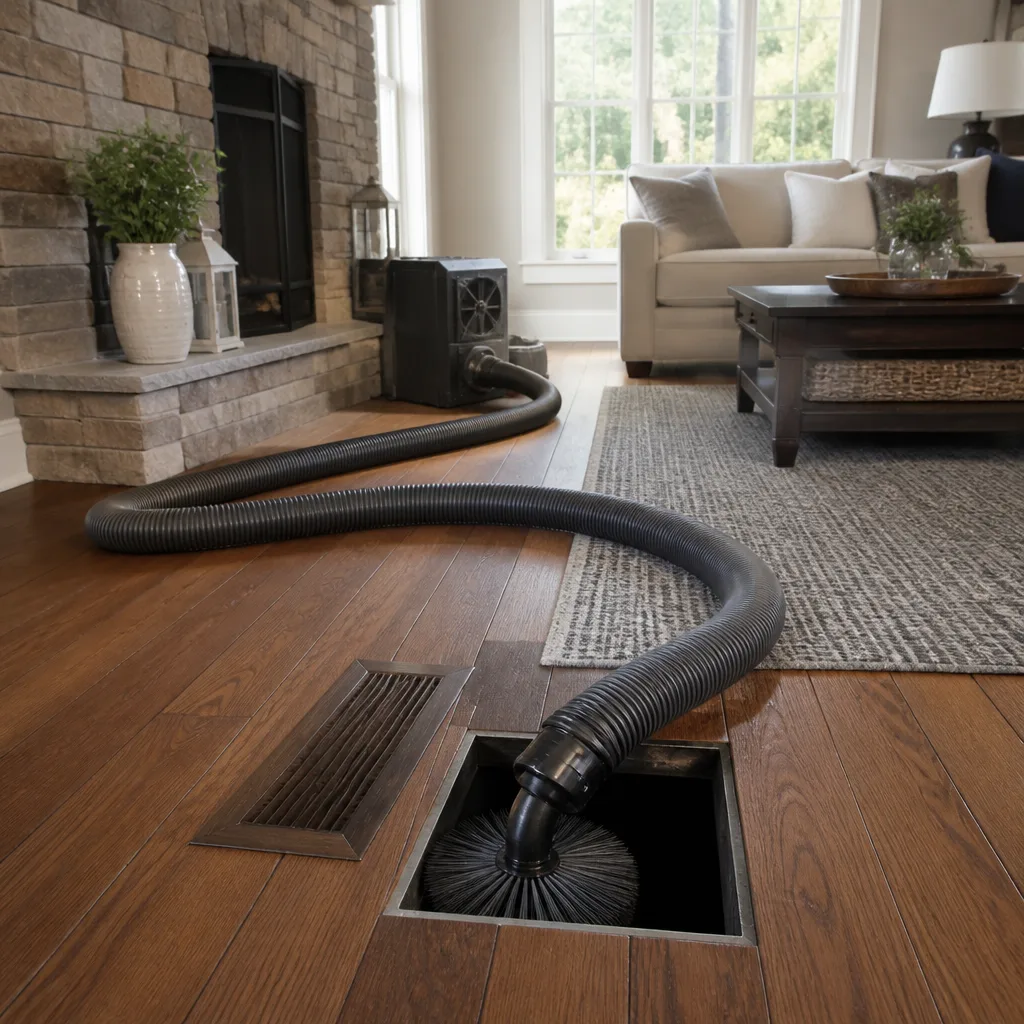 Whole-home duct cleaning
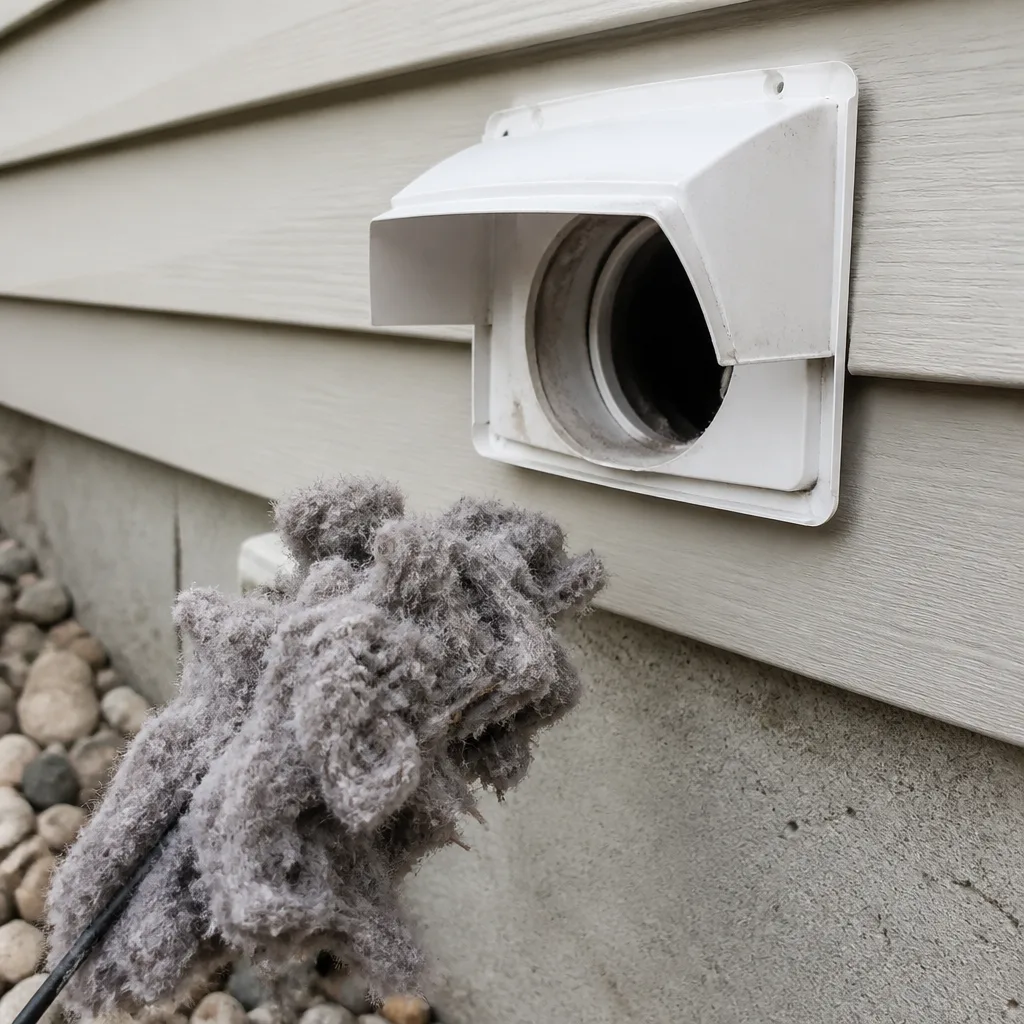 Dryer vent cleaning
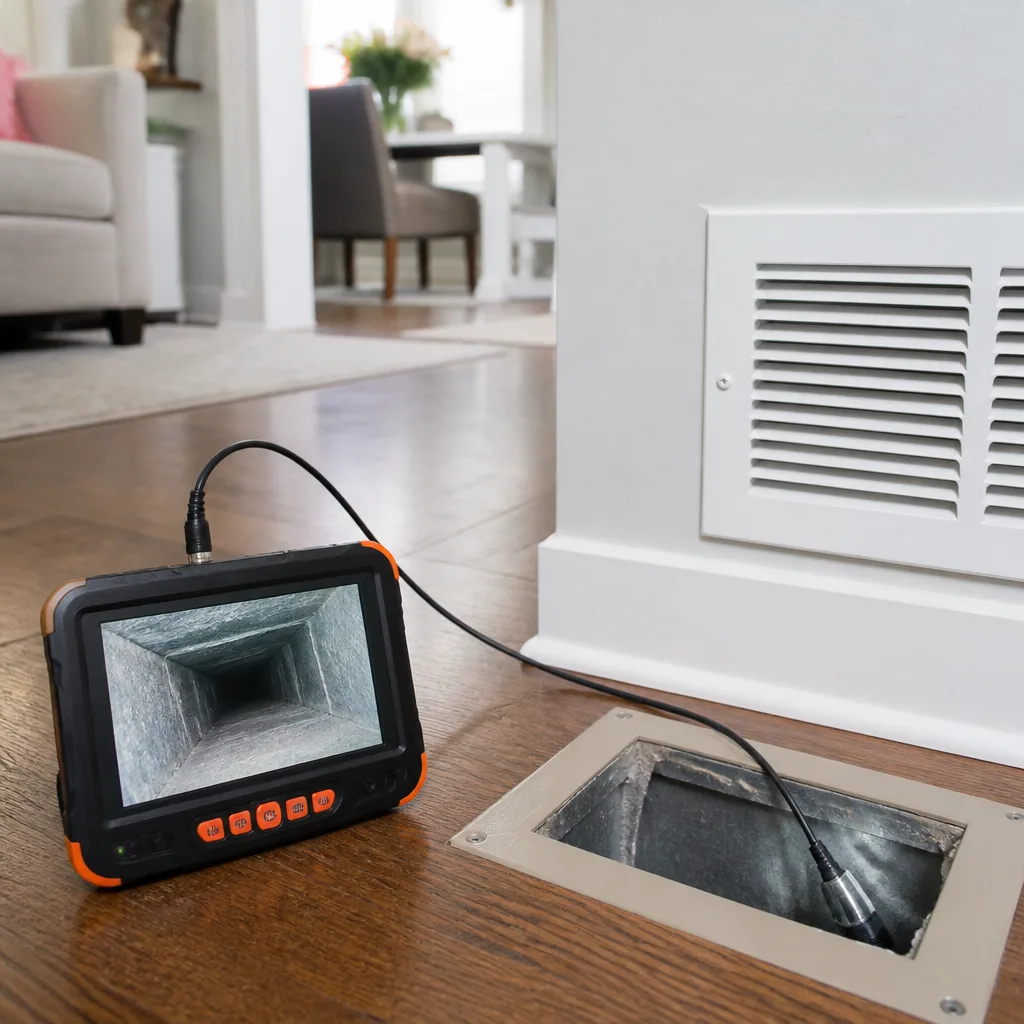 Camera inspection
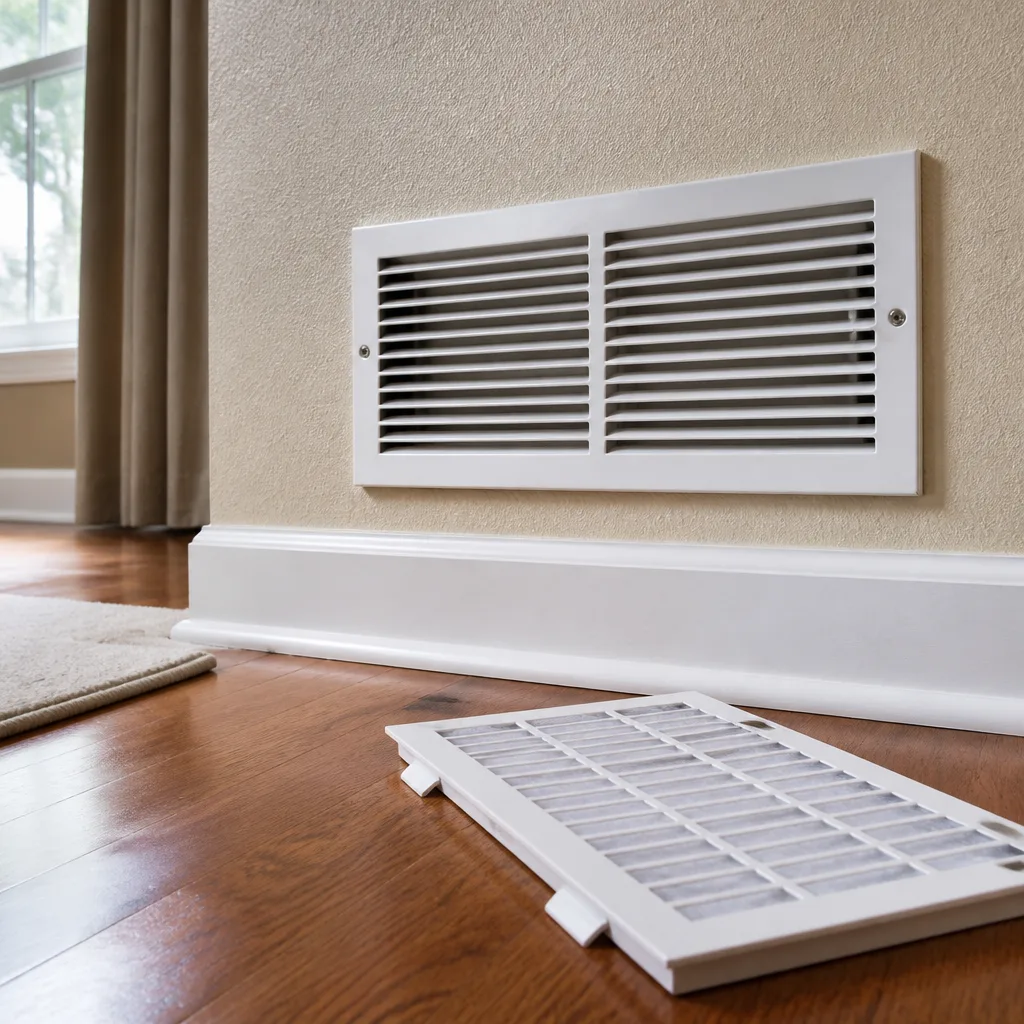 Sanitizing & deodorizing
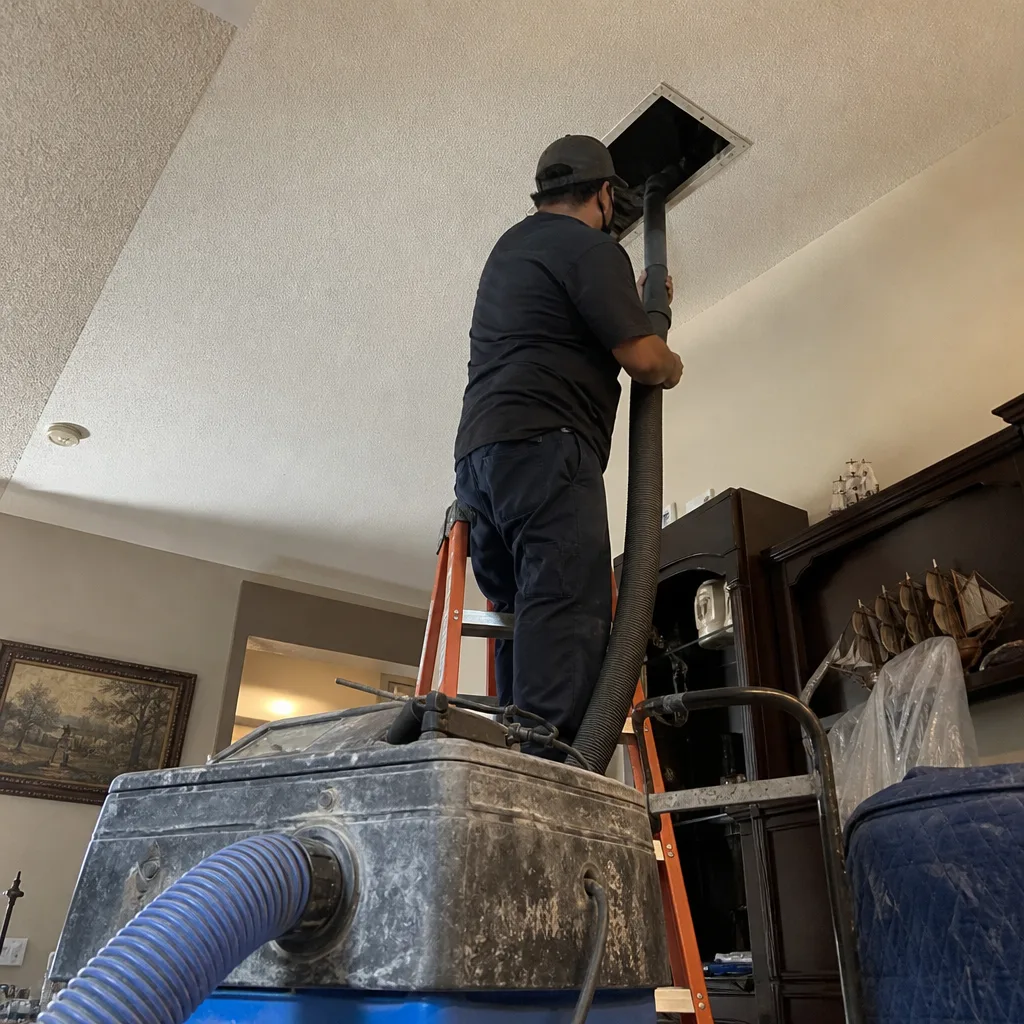
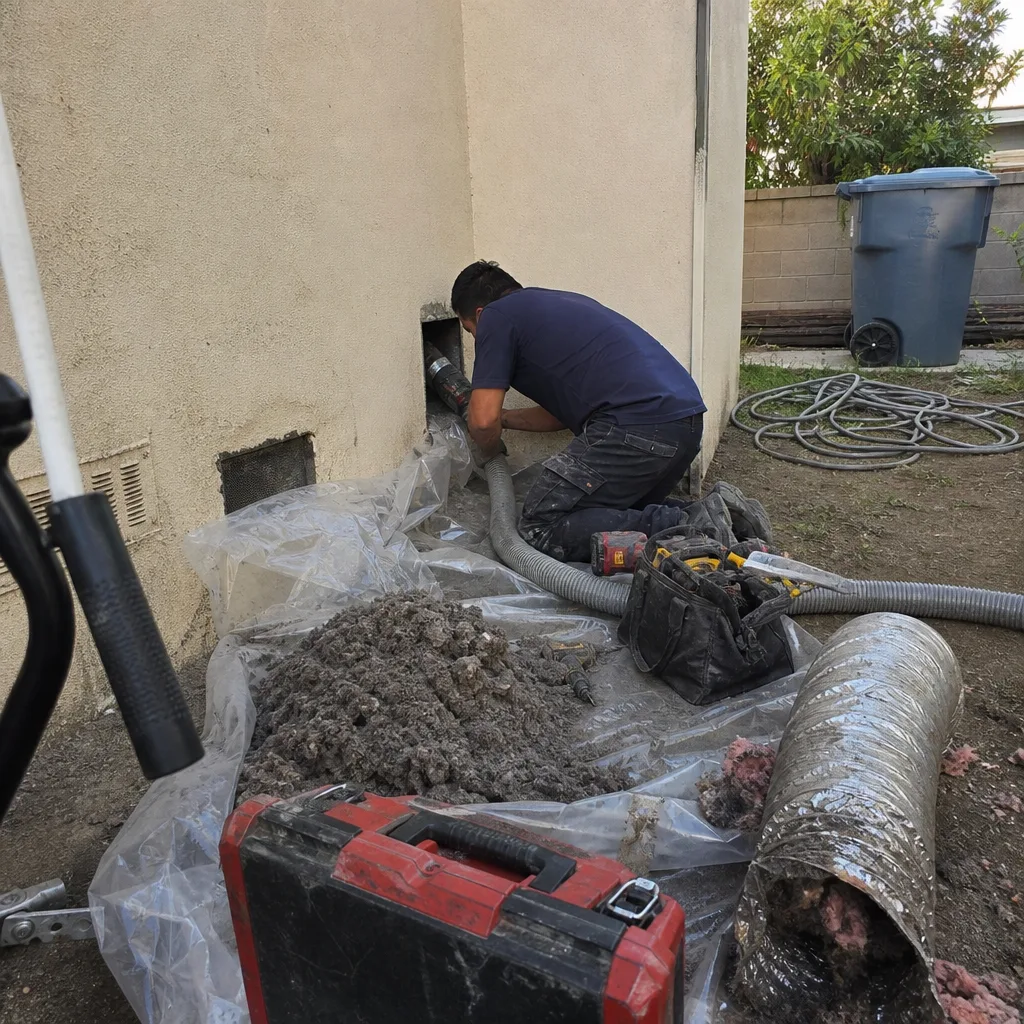
Whole-system duct and dryer vent check with before-and-after photos - you see exactly what came out of your vents
That "$99 whole-house special" is a bait ad - the real number appears once they are in your hallway, or the "clean" is a shop-vac at the register. We photograph the inside of your ducts before and after instead.
Seasonal Air Duct Cleaning Care for Santa Ana: Year-Round Homeowner’s Guide
Here’s a claim that sounds wrong until you’ve lived through it: a Santa Ana home’s duct system works harder in a single October than a Minneapolis duct system works all winter. The standard advice to clean your ducts “every 3 to 5 years” was written for climates with furnace seasons and snow-covered intake vents. It fails in Santa Ana, where offshore wind events push fine sediment through window seals and return air grilles, where the marine layer keeps interior humidity riding high for months, and where the air handler cycles ten months out of twelve. This guide maps the four actual air quality phases Santa Ana experiences, what each one deposits inside your ductwork, and the maintenance responses that match them. We’ll give you a month-by-month calendar, specific filter protocols, and the honest truth about when cleaning is warranted and when it can wait, with more guides & resources available on our blog.
Styles & brands we work with
- Whole-home duct cleaning
- Dryer vent cleaning
- Camera inspection
- Sanitizing & deodorizing
Quick Answer
Seasonal air duct cleaning in Santa Ana should follow four local air quality phases, not the calendar seasons used elsewhere in the country. The Santa Ana wind season (October through February) deposits fine silt and ash that warrant filter checks every 30 days and inspection after major wind events. The spring pollen surge (March through May) calls for upgraded filtration and duct inspection if allergy sufferers live in the home. Marine layer months (June through September) create condensation risk inside poorly sealed ducts, which can promote microbial growth. Most Santa Ana homes run the air handler nearly year-round, so duct cleaning should be timed around these phases rather than a fixed interval. Call Anvil Air Duct Cleaning home at (833) 620-2848 for a free inspection and flat-rate estimate.
Table of Contents
- The Four Air Quality Phases of Santa Ana (Not the Four Seasons)
- Santa Ana Wind Season: October Through February
- Spring Pollen Surge: March Through May
- Marine Layer and Humidity: June Through September
- Filter Protocols for Each Santa Ana Phase
- The 12-Month Santa Ana Duct Care Calendar
- Common Mistakes to Avoid
- When to Call a Professional
- Frequently Asked Questions
- The Bottom Line
The Four Air Quality Phases of Santa Ana (Not the Four Seasons)
Santa Ana doesn’t get winter. What it gets instead is a sequence of atmospheric shifts that each impose a different load on a residential duct system. Understanding these phases is the difference between maintaining your system correctly and guessing. Each phase has a distinct particulate signature, a distinct humidity profile, and a distinct maintenance response. Treat these as a local discipline, not a national template.
Phase One: Santa Ana Wind Season. Roughly October through February. Offshore winds sweep down through the canyons and push fine dust, mineral sediment, and occasionally wildfire smoke into neighborhoods across Orange County. This is the heaviest particulate loading phase of the year. Santa Ana wind events do not announce themselves politely; they arrive overnight and keep going for days. During these stretches, the air outside often carries visible haze, and a lot of that haze ends up inside your return air plenum.
Phase Two: Spring Pollen Surge. March through May. Santa Ana sits in a dense urban tree canopy with eucalyptus, oak, sycamore, and ornamental grasses all shedding pollen in overlapping waves. Unlike wind-driven particulate, pollen is organic and allergenic, not inert. It accumulates in the same ducts, but the reason you’re removing it is different. Pollen causes respiratory reactions in sensitized occupants. It also degrades over time and can become a food source for dust mites inside the air system.
Phase Three: Marine Layer Months. June through September. The coastal influence keeps humidity elevated, particularly overnight and through the morning hours. Interior ducts in unconditioned spaces like attics experience condensation cycles when the air handler runs cold air through warm, humid ductwork. That moisture binds fine particles to duct surfaces and creates conditions favorable to mold growth in systems that aren’t sealed properly.
Phase Four: Peak Heat and Continuous Cycling. Late August through early October. The air handler runs essentially non-stop during heat waves. That isn’t a particulate phase per se, but it’s a mechanical stress phase. Continuous operation pulls more air through the system, which means the filter loads faster and any duct that was already dirty becomes a higher-friction, lower-efficiency pathway. This is also the phase where we see the most evaporator coil fouling, which accelerates duct contamination from the supply side.
Each of these phases leaves a different residue. You don’t respond to all of them the same way. The sections that follow walk through the specific maintenance response for each one, including what to inspect, when to upgrade filtration, and when to bring in professional-grade cleaning equipment.
Santa Ana Wind Season: October Through February
Santa Ana wind events are the single largest contributor to duct contamination in this city. It’s not close. A single strong event can push more fine particulate into a return air system than six months of normal household dust accumulation. The particulate is typically mineral silt, which is abrasive, fine enough to pass through standard fiberglass filters rated below MERV 8, and in heavy wind seasons it’s often mixed with ash from regional wildfires.
Here’s what happens physically. Air pressure differentials during high wind force outside air through window rough openings, door undercuts, and attic penetrations. That air carries particulate. The HVAC return side draws that air into the system continuously while the handler runs, and sometimes even when it doesn’t, because stack effect and wind loading create passive airflow through return ducts. The fine fraction settles in the return plenum first, then moves through the blower compartment and into the evaporator coil. The abrasive fraction gradually wears blower wheel vanes and motor bearings. We’ve pulled return registers in Santa Ana homes after a heavy wind season and found a half-inch of tan sediment in the return drop that looks exactly like the sand in the gutters outside.
Within 48 hours after a major wind event, check these three things:
- Remove the filter and hold it up to a light. If you can’t see the light through it, replace it immediately. Wind-event loading clogs filters much faster than rated intervals suggest.
- Shine a flashlight into the return register. If visible dust accumulation or sediment trails appear on the inside surfaces, the system has already captured particulate that will continue migrating toward the coil.
- Check the area around supply registers. If you see dust marks forming on walls or ceilings near supply vents within days of a wind event, the system is pushing fine particulate already past the filter and through the supply side. That is a signal for professional cleaning of the supply runs.
The correct response during this phase is paired: upgrade to a pleated filter with a MERV 8 to 11 rating, and check it every 30 days. MERV 8 captures most wind-driven silt. MERV 11 captures a meaningful share of smoke particulate during wildfire episodes. If your system’s filter slot is designed for a 1-inch filter, MERV 8 pleated is the right balance between capture and airflow restriction. Restrict airflow too much and you reduce system efficiency and strain the blower motor.
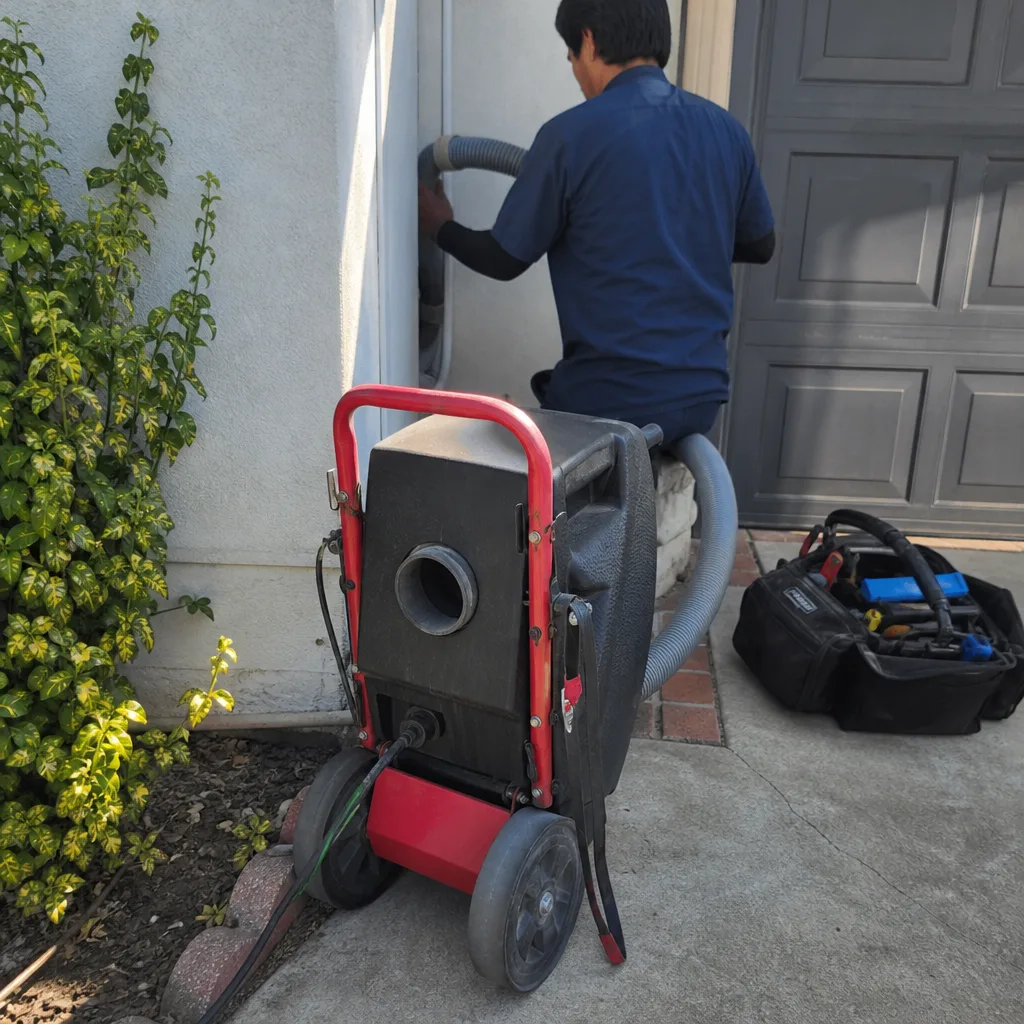
When wind season ends in February, that’s the optimal window for professional Air Duct Cleaning in Santa Ana. The system has just absorbed five months of continuous particulate loading, and cleaning it now means you enter the pollen season with clean surfaces rather than layered accumulation. At Anvil, we use Rotobrush and Nikro systems for this work. These are the same equipment platforms commercial contractors run in office buildings and industrial facilities. Rotobrush’s agitation and capture method removes adhered sediment mechanically, not just by vacuum. Nikro’s HEPA-filtered negative air machines keep dislodged particulate from re-entering the living space during the cleaning process. That distinction matters in a wind-season cleaning, because the volume of material being released from the duct walls is significant.
Spring Pollen Surge: March Through May
Pollen season in Santa Ana runs long and dense. The city’s diverse tree canopy means there’s rarely a true lull between the first eucalyptus bloom in late February and the final grass pollen release in early May. The result is a sustained organic particulate load that behaves differently from mineral silt. Pollen grains are larger and stickier than wind-driven dust. They adhere to duct surfaces, to coil fins, and to blower vanes. They also decay and provide substrate for dust mites, which produce waste particulates that irritate allergies far after the pollen itself has broken down.
For homes with allergy occupants, spring is not the season to experiment. The protocol that works is specific and consistent:
- Switch to MERV 11 filtration no later than March 1. MERV 11 captures most tree and grass pollen grains at meaningful efficiency. Pair it with monthly filter replacement through May, even if the filter looks clean at four weeks. Pollen loading isn’t always visible the way wind-event silt is.
- Run the system fan in “On” mode during peak pollen weeks. Continuous fan operation keeps air passing through the filter even when heating and cooling are not called, which captures more airborne pollen and keeps occupants more comfortable. This does increase filter loading, which is why monthly replacement is part of the protocol.
- Inspect the return registers for pollen dust. Pollen has a distinctive yellow-gray color. If you see it accumulating at return grilles, the system is ingesting it, and a duct inspection is warranted.
- Consider cleaning the blower compartment. Pollen sticks to blower wheel vanes and throws balance off slightly. In systems we open after heavy pollen seasons, the blower wheel often carries a film of pollen residue that reduces air movement and increases motor amp draw. This is a service most companies skip, because it requires opening the air handler, not just vacuuming registers.
One more Santa Ana-specific note: many homes in this city run older Honeywell air filtration systems in addition to the primary filter slot. If your Honeywell unit has a washable electrostatic cell, spring is the right time to clean it, because a loaded cell loses capture efficiency exactly when you need it most. If your system uses a high-efficiency media filter from the same manufacturer, follow the manufacturer’s replacement interval rather than stretching it. Spring pollen at Santa Ana air volumes will load a media filter at the top of its rated range.
Marine Layer and Humidity: June Through September
The marine layer does something to Santa Ana duct systems that most homeowners never see, because it happens inside the walls and above the ceiling. Humidity from the coastal influence moves through unconditioned spaces, and when the air handler is running cold air through ducts located in that humid space, condensation forms on the exterior and sometimes the interior surfaces of the ducts.
The sequence matters. Condensation by itself isn’t a problem. Condensation mixed with accumulated particulate is. That mixture forms a paste that adheres to duct walls and creates a reservoir that holds moisture against metal surfaces. Over weeks and months, that reservoir can support microbial growth, and the odor from that growth then circulates through the home every time the fan runs. If you’ve ever noticed a musty smell when the air conditioning first kicks on in a Santa Ana summer, what you’re smelling is microbial activity in the condensate-laden dust inside the ductwork.
There are three conditions that make the problem worse. First, ducts run through an attic with poor ventilation. Second, duct seams and connections that aren’t sealed, which lets humid air infiltrate directly. Third, missing or degraded duct insulation, which allows the cold duct surface to contact warm humid air more directly. Any one of these conditions can turn a routine summer into a mold start event inside the air system.
What should you do during marine layer months? First, inspect visible duct runs in the attic or crawlspace for condensation beading. Do this in the early morning when humidity peaks. Second, check for musty odors when the system first starts after sitting idle. The first 60 seconds of runtime will carry the smell if microbial growth is present. Third, if the system has a humidistat or your thermostat reports interior relative humidity, keep interior humidity below 60%. Run bath exhaust fans after showers, and consider a dehumidifier if the home consistently rides above 60% during marine layer stretches. Fourth, if condensation is present or the odor is confirmed, have the ducts and air handler evaluated. Professional cleaning removes the accumulated particulate and moisture-bound residue. If the issue stems from poorly sealed duct joints, Air Duct Repair in Santa Ana is the right corrective action, because cleaning alone will not stop condensation from recurring if outside air is leaking into the ducts.
Anvil’s equipment lineup includes Abatement Technologies negative air machines, which are remediation-grade filtration platforms. That’s the right class of equipment for moisture-related contamination work, because it continuously HEPA-filters the air in the work zone while dislodged material is being removed. It’s a meaningful difference from running a shop vacuum into a register and calling the job done.
Filter Protocols for Each Santa Ana Phase
Filtration is the first line of defense in every phase, but the right filter changes. Using the same filter all year in Santa Ana means you’re either under-filtering during wind and pollen events or over-restricting airflow during heat waves. The table below is built for Santa Ana’s phase reality, not for generic national guidance.
| Phase | Filter Rating Range | Replacement Interval | Rationale |
|---|---|---|---|
| Santa Ana Wind Season (Oct-Feb) | MERV 8-11 pleated | Every 30 days, plus immediate check after major wind event | Captures wind-driven silt and wildfire smoke particulate. Wind events load filters rapidly. |
| Spring Pollen Surge (Mar-May) | MERV 11 pleated | Every 30 days through May for allergy homes; every 45 days otherwise | Captures pollen grains at meaningful efficiency. Pollen loads are less visible than mineral sediment. |
| Marine Layer Months (Jun-Sep) | MERV 8-11 pleated | Every 45-60 days | Lower particulate load, but humidity means filters shouldn’t sit loaded. Condensate-bound dust is harder to remove. |
| Peak Heat (Aug-Oct) | MERV 8 pleated | Every 30-45 days during heat waves | Lower restriction reduces blower strain during continuous operation cycles. |
A note on filter upgrades: if your system currently uses a 1-inch fiberglass filter, upgrading to MERV 8 pleated is a low-risk change that meaningfully improves capture. If your system has an existing media cabinet designed for a 4- or 5-inch filter, you have more flexibility to move up to MERV 11 without airflow penalty. If you have a Guardsman or similar aftermarket filter housing installed, check the manufacturer’s airflow specifications before changing resistance characteristics. An HVAC technician familiar with these systems can confirm that the blower is rated for the static pressure the new filter imposes. Anvil technicians work with Honeywell, Aprilaire, and Guardsman filtration platforms regularly, so the answer to “can my system take a MERV 11” is usually a quick equipment check rather than a guess.
The 12-Month Santa Ana Duct Care Calendar
Here’s the actionable version of everything above. Each month gets a specific trigger or action. If you only remember one thing from this guide, make it the post-wind-event filter check in the fall and early winter.
- January: Mid-wind season. Replace the filter. Do a visual inspection of return registers for accumulated sediment. If Santa Ana winds have been active, document what you see with photos. This is peak season for visible duct loading.
- February: Wind season is winding down. Replace the filter again. If the last five months have included multiple heavy wind events, book a professional duct cleaning now. Cleaning in February means the system is clean before pollen season compounds the loading.
- March: Upgrade to MERV 11 if you have allergy occupants. Start running the fan in “On” mode during peak pollen days. Replace the filter at the start of the month.
- April: Pollen peak. Replace the filter monthly. If you notice pollen dust accumulating at return grilles, inspect inside the return drop. Consider scheduling a duct inspection if the accumulation is visible and persistent.
- May: Final pollen month. Replace the filter. This is the right time to clean washable electrostatic cells on Honeywell and similar filtration systems if you haven’t already.
- June: Marine layer begins. Do an early-morning attic inspection for duct condensation. Note any new musty odors. If condensation is present, address duct sealing or insulation before it becomes a bigger problem.
- July: Peak humidity. Keep interior humidity below 60%. Ensure bath exhaust fans are being run in the laundry room and bathrooms. Replace the filter if it’s been in place longer than 45 days.
- August: Heat and continuous cycling. Replace the filter. If the system has been cycling heavily, consider inspecting the evaporator coil for fouling. Coil fouling is a supply-side contaminant source that can’t be addressed by filter change alone.
- September: Late heat. The first weak Santa Ana events may appear. Monitor air quality. If fires are active to the east, treat this as an early wind-season month and replace the filter after smoke events.
- October: Wind season begins in earnest. Install a fresh MERV 8-11 pleated filter. Set a calendar reminder to check it after every major wind event, not just monthly.
- November: Peak wind month in most years. After each significant wind event, do the 48-hour filter check described in the wind season section. This is the month we most often see plugged filters and heavy return duct sediment.
- December: Holiday season, but the wind does not take holidays. Replace the filter. If you’ve had any water intrusion or humidity issues during the year, this is the time to ensure ducts are dry before the coldest nights bring condensation cycles into play.
This calendar assumes a system in reasonable condition. If your ducts show evidence of structural issues, such as disconnected segments, crushed flex runs, or unsealed joints, those issues should be addressed as soon as they’re found, not deferred to a seasonal window. The calendar above is for routine particulate and moisture management, which is the scope of professional air duct cleaning and maintenance. Structural degradation requires Air Duct Repair in Santa Ana work, which Anvil performs in the same visit as a cleaning when needed.
Common Mistakes to Avoid
- Following a national “every 3 to 5 years” cleaning schedule. That interval is a nationalized average that ignores Santa Ana’s wind season loading. A Santa Ana home can accumulate as much duct sediment in one heavy October as a Midwestern home accumulates in two years of furnace operation.
- Checking the filter only when the thermostat reminds you. Thermostat reminders are calendar-based, not event-based. A single strong Santa Ana wind event can plug a filter in under a week. Event-based checks are the only thing that catches this.
- Ignoring a musty odor when the AC starts. That smell is microbial activity inside the ducts, and it won’t have fixed itself by the time you notice it. Marine layer humidity gives mold the moisture it needs, and accumulated dust gives it the food. Ignoring the smell lets the colony grow.
- Using a MERV 13 filter in a system not rated for it. High-restriction filters reduce airflow, raise static pressure, and strain the blower motor. In a Santa Ana heat wave, the system already works at the edge of its duty cycle. Adding airflow restriction during peak cooling load is a self-inflicted service call.
- Scheduling duct cleaning in the middle of the worst wind event of the year. Clean ducts in a continuing particulate storm just re-load immediately. Wait until the wind event passes, or clean during a lull, so the work actually holds.
- Treating supply and return ducts as the same problem. They’re not. Return ducts see unfiltered air and load with wind silt and pollen. Supply ducts load with whatever gets past the filter plus anything shedding off the coil. The fix is different depending on which side is contaminated, and a proper cleaning protocol addresses both.
- Using a budget operator who runs a shop vac into one register and calls it done. Duct cleaning without mechanical agitation and negative air containment doesn’t remove adhered sediment. In Santa Ana’s wind season environment, the difference between a real cleaning and a surface pass is significant. If the equipment isn’t professional-grade (Rotobrush, Nikro, or equivalent), you’re paying for access, not cleaning.
When to Call a Professional
Some signs can’t be fixed with filter changes and calendar discipline. If you see dust blowing from supply registers when the system runs, if you’ve found water staining or condensation inside the ducts, if a musty odor persists after a filter replacement, or if you’ve had a recent renovation that generated drywall dust throughout the home, the system needs professional attention. These are not routine maintenance situations. They signal that contamination is either built into the duct surfaces, moisture is present where it shouldn’t be, or the system has ingested construction debris.
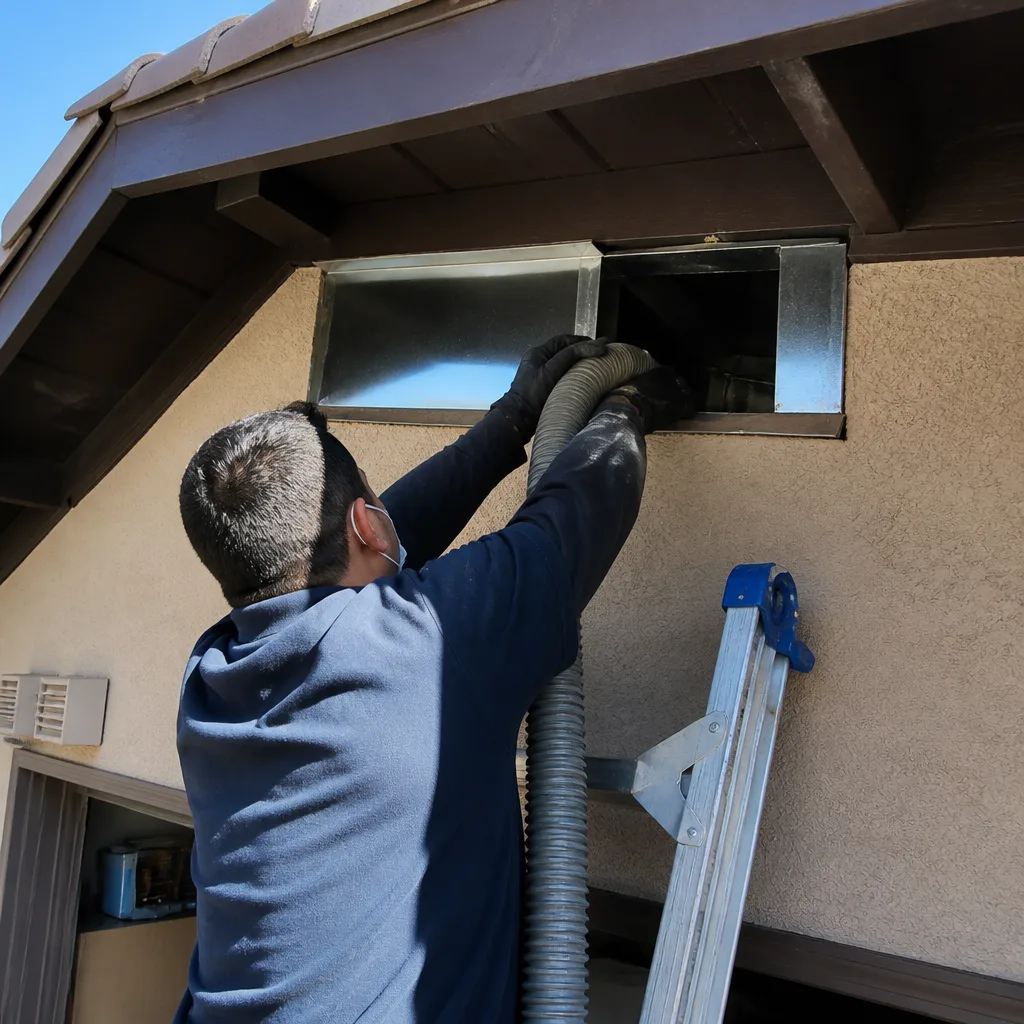
Anvil Air Duct Cleaning services Santa Ana with professional-grade cleaning and repair. We use Rotobrush and Nikro equipment for duct cleaning, and we carry Abatement Technologies negative air machines for containment during remediation-grade work. Our dryer vent service covers another part of the air pathway that most duct cleaners ignore. We offer free estimates. Call (833) 620-2848 to schedule an inspection.
Frequently Asked Questions
In Santa Ana, duct cleaning should be scheduled based on local air quality events rather than a fixed interval. Most homes benefit from cleaning every 2 to 4 years, with timing tied to the tail end of Santa Ana wind season (late February) or after a significant wildfire smoke year. Homes with allergy occupants, pets, or recent renovation may need it more frequently. A visual inspection inside the return drop tells you more than a calendar ever will. Call (833) 620-2848 for a free inspection if you’re not sure whether it’s time.
Yes, and more directly than most people realize. Wind-driven pressure differentials push outside air through attic penetrations, window rough openings, and door undercuts. The return side of your HVAC system pulls that air in continuously. Fine mineral silt and silica from wind events ends up in the return plenum and inside the return duct runs. It’s not a theoretical concern; it’s a measurable accumulation that we see after every active Santa Ana wind season.
Yes, but the reason changes. Without allergy occupants, the argument for cleaning is equipment longevity and efficiency. Abrasive mineral silt from Santa Ana wind events accelerates blower wheel wear. Heavy duct loading increases airflow resistance, which increases blower motor strain and energy consumption. Cleaning removes that load. It’s the same reason you change engine oil in a car even if you don’t care about emissions.
The price difference reflects equipment, method, and scope. Low-cost operators often use a portable vacuum connected to a single register and spend less than an hour on the whole house. Professional cleaning uses mechanical agitation to break adhered material free, paired with negative air containment so the dislodged dust doesn’t re-enter the home. At Anvil, we run Rotobrush and Nikro equipment, which are the platforms used by commercial contractors. The work simply takes more time and the result is different. We quote a flat price per system before we start, so there’s no per-vent calculus and no surprise add-ons.
Ask for before-and-after photos inside the main return and supply runs. A legitimate cleaning will visibly change the condition of the duct surfaces. At Anvil, we document before and after conditions and can show you what was removed. If a contractor cannot provide evidence of the work, assume it wasn’t performed thoroughly. The proof should be visible to you, not described in generalities.
Duct cleaning removes the airflow restriction caused by accumulated material on duct walls and the evaporator coil. Less restriction means the blower moves more air per watt, and the system does not have to run as long to meet the thermostat setpoint. In Santa Ana’s long cooling season, even a modest efficiency gain compounds over thousands of runtime hours per year. The effect is larger when the system also receives a proper filter and the coil is clean. Call (833) 620-2848 for a no-cost inspection and an honest assessment of whether your system is losing efficiency to dust loading.
The Bottom Line
Santa Ana’s air quality calendar is not the national one. This city runs its air handlers nearly year-round and sits directly in the path of offshore wind events that put fine particulate into return ducts at rates that dwarf what most of the country sees. Filter discipline, event-based inspections, and cleaning timed to the end of wind season are the three practices that matter most. If you manage those, the rest of the calendar is straightforward. If you don’t, the system pays for it. Air ducts are not a set-and-forget component, and in Santa Ana they’re under more load than almost anywhere else in the country. Give them the attention the local environment demands. Call Anvil Air Duct Cleaning home at (833) 620-2848 to schedule a free estimate for air duct cleaning, Dryer Vent Cleaning in Santa Ana, or air duct repair. We’ll inspect honestly and tell you what the system actually needs.
Written by the team at Anvil Air Duct Cleaning, serving Santa Ana since 2017.
See the difference
 Before
 After
 Before
 After
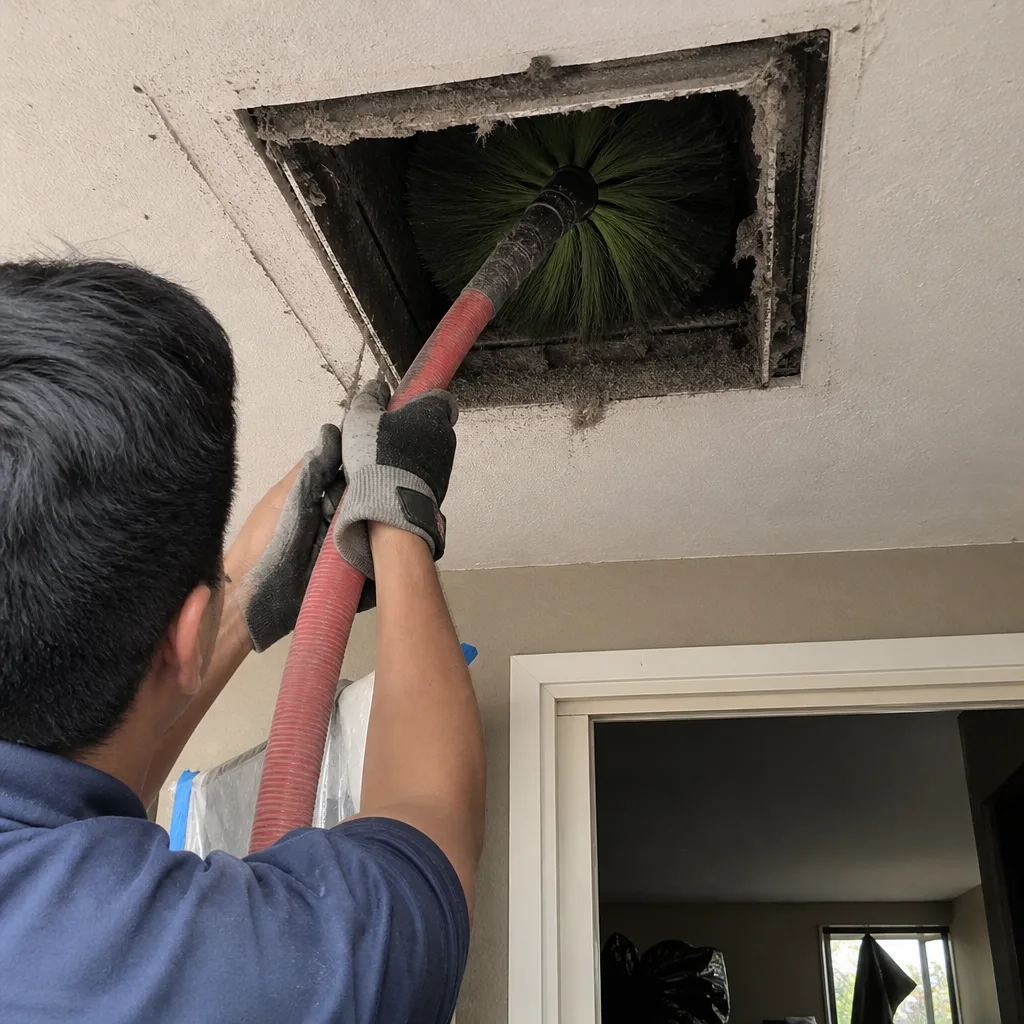 Before
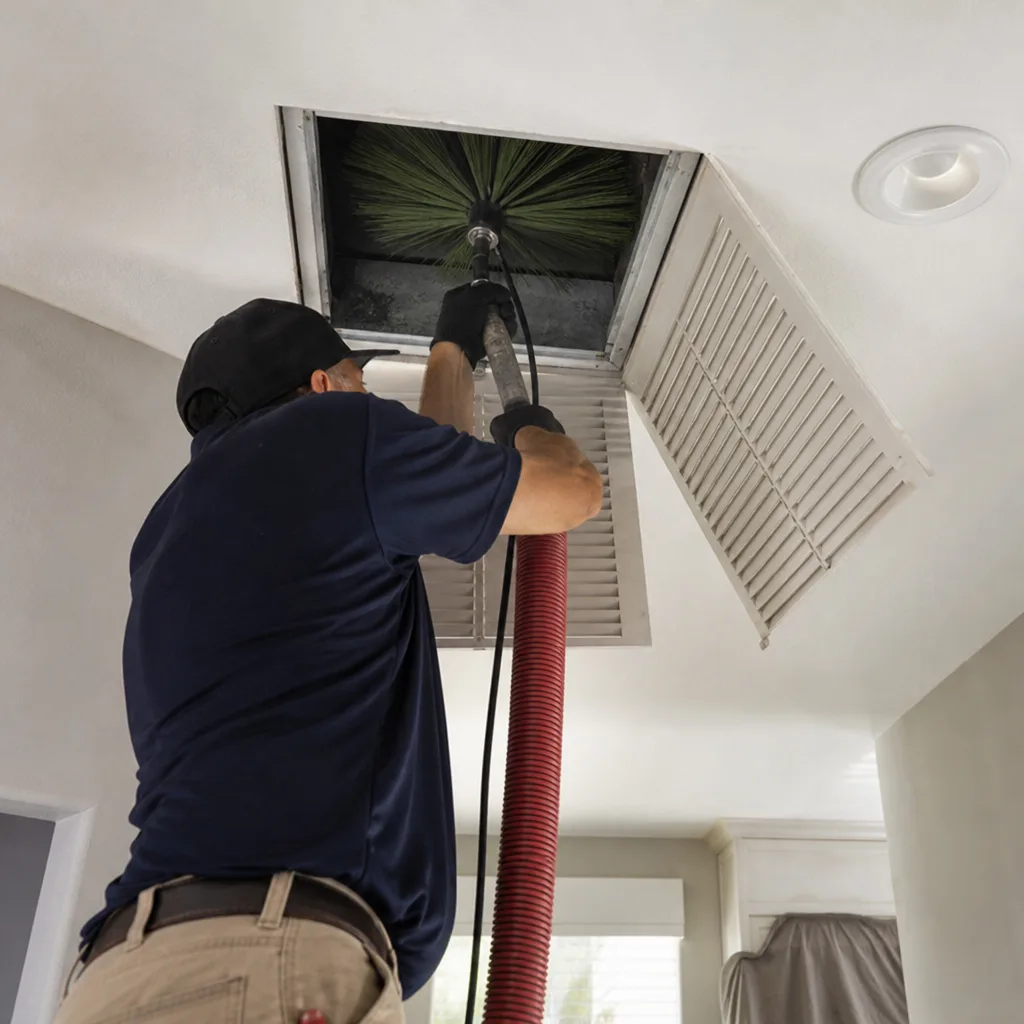 After