
Last updated November 2, 2026
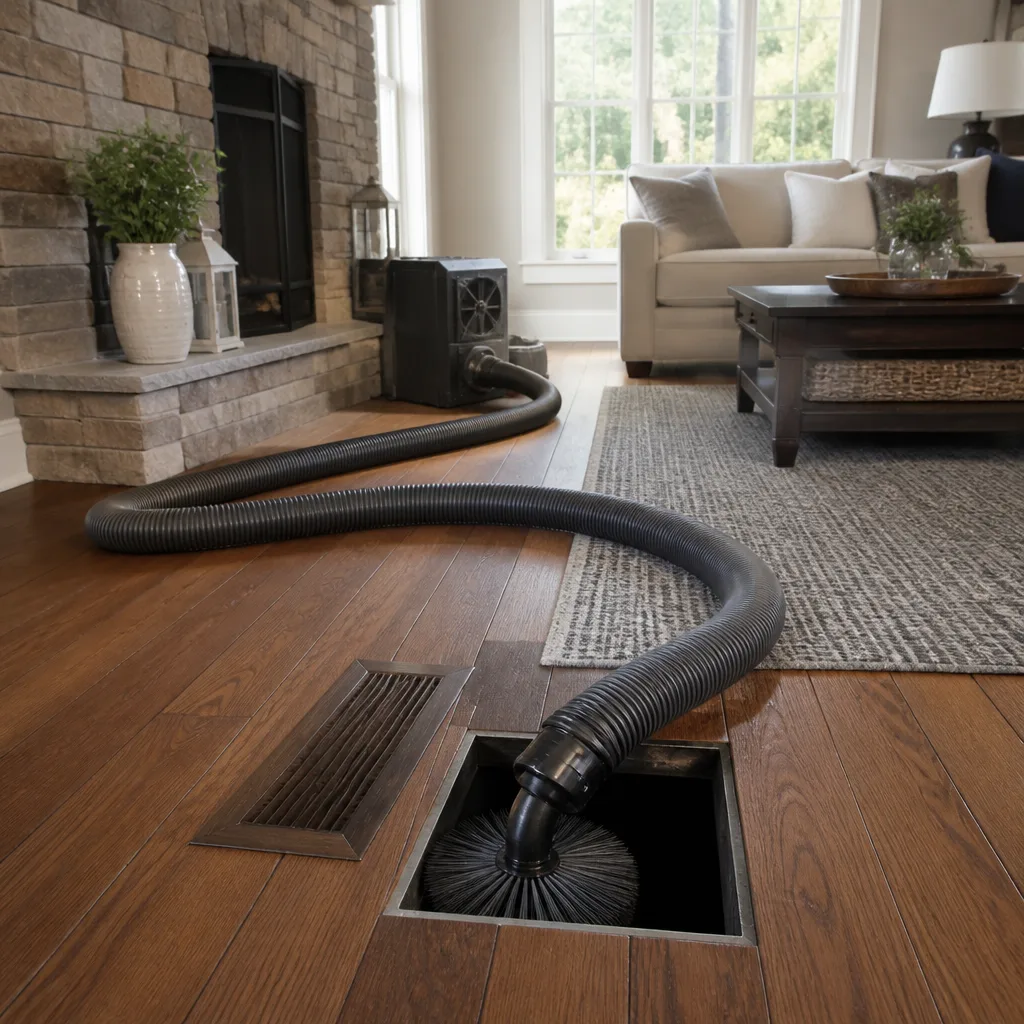 Whole-home duct cleaning
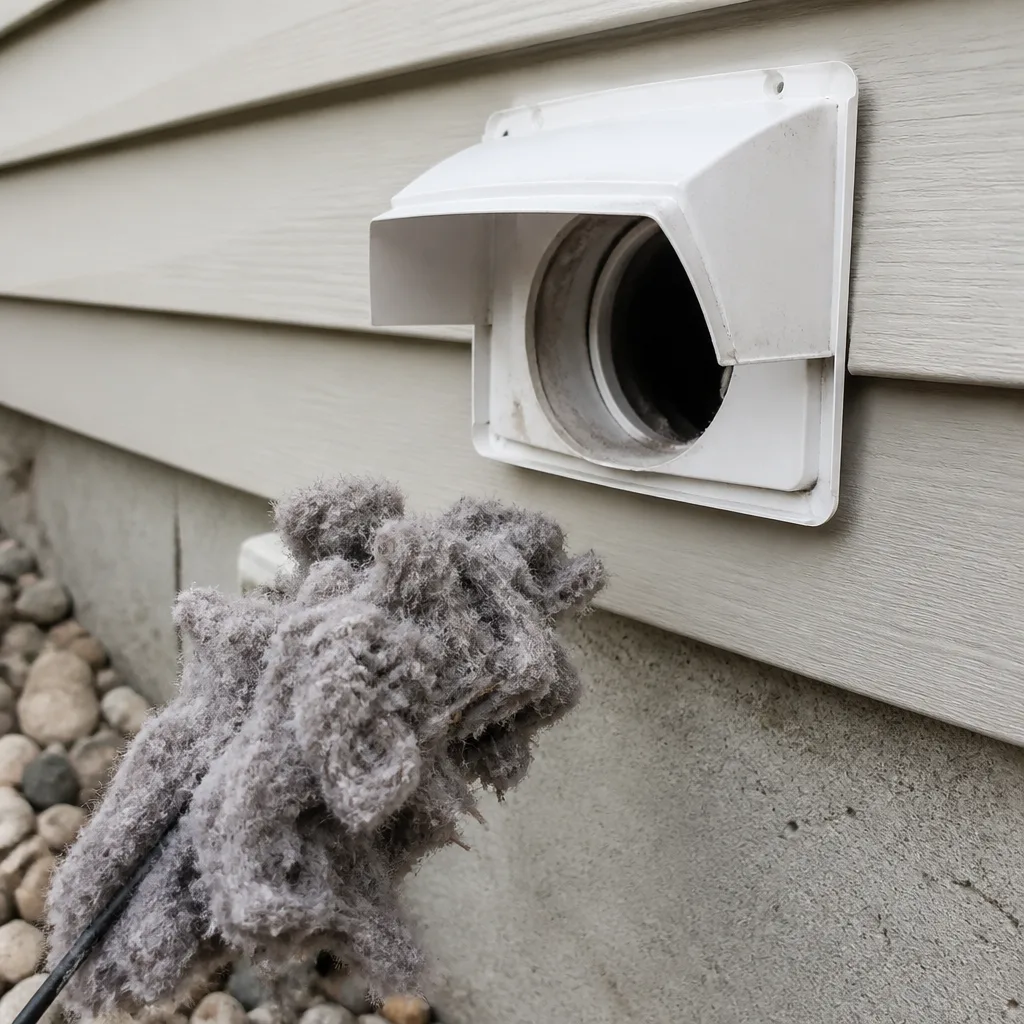 Dryer vent cleaning
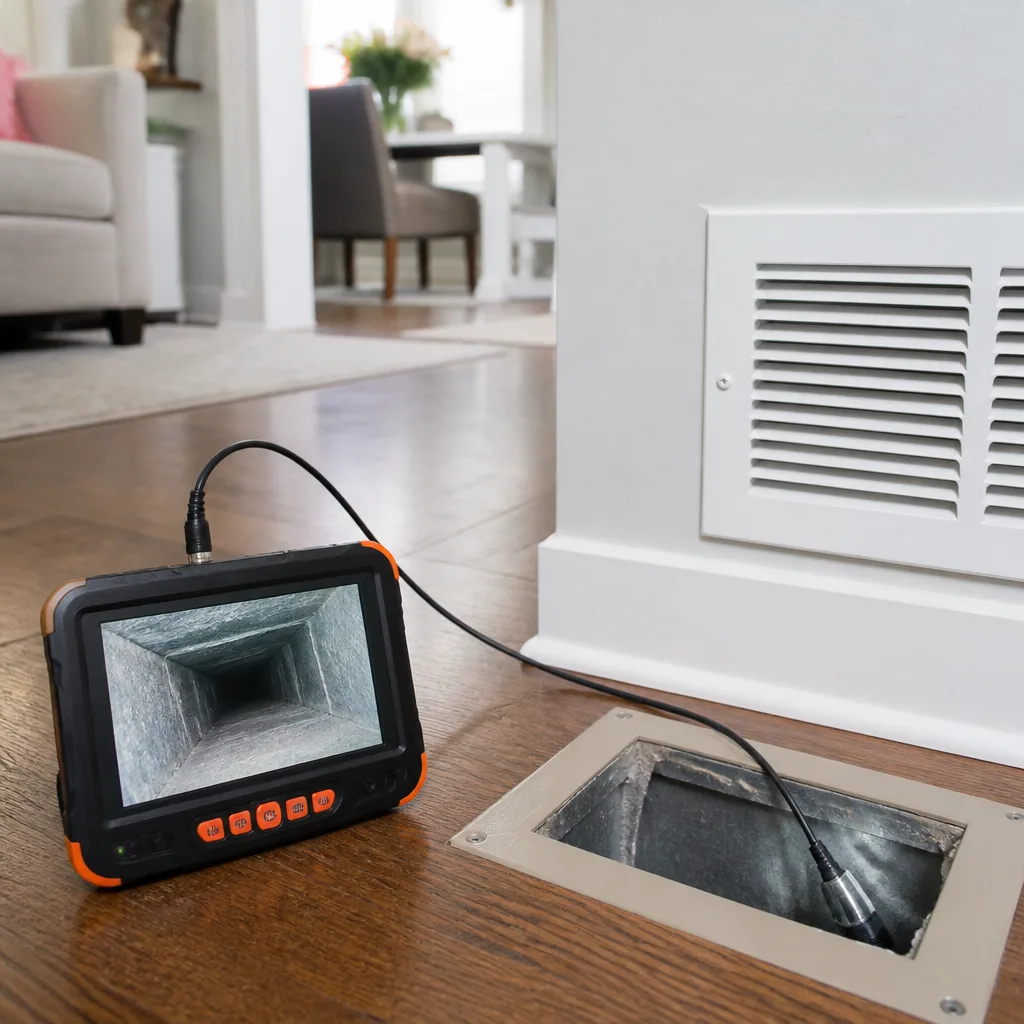 Camera inspection
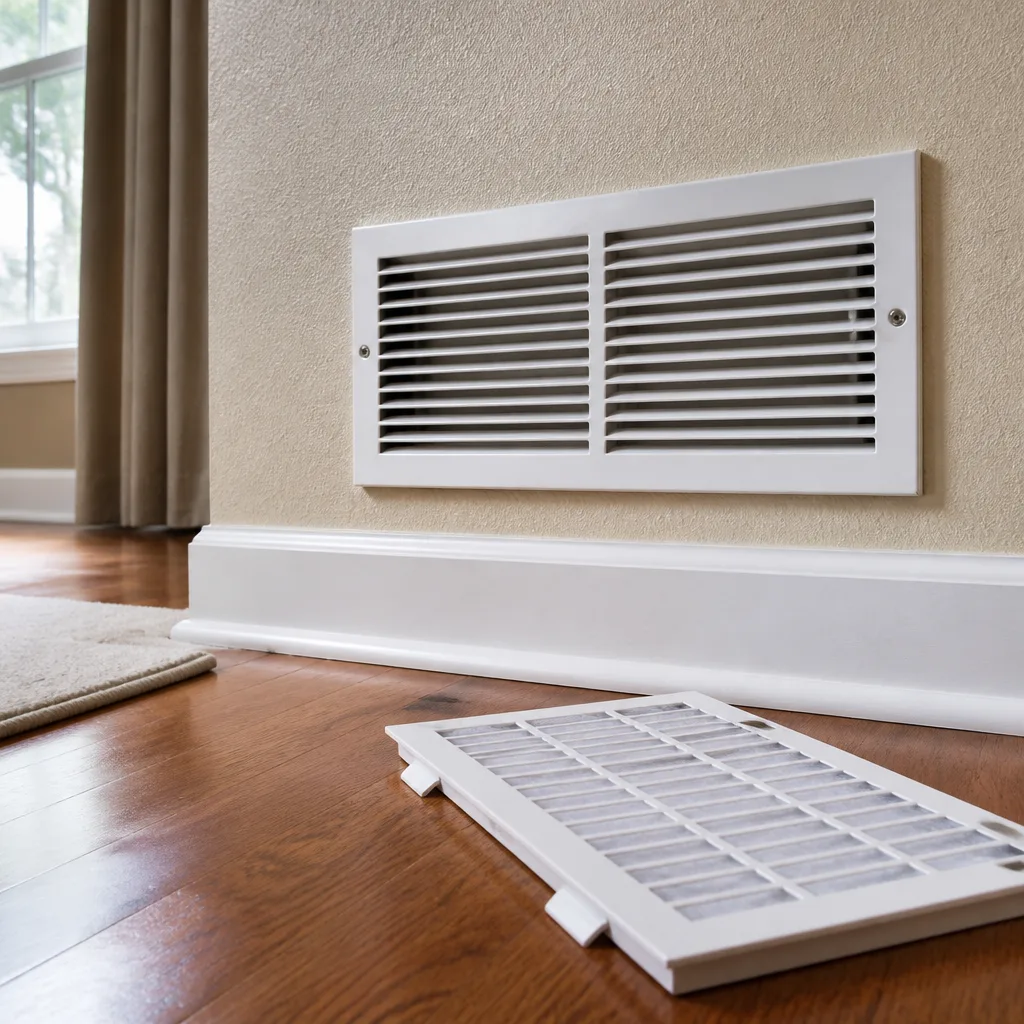 Sanitizing & deodorizing
Whole-system duct and dryer vent check with before-and-after photos - you see exactly what came out of your vents
That "$99 whole-house special" is a bait ad - the real number appears once they are in your hallway, or the "clean" is a shop-vac at the register. We photograph the inside of your ducts before and after instead.
Air Duct Cleaning Maintenance Checklist for Santa Ana Homeowners
Here’s a number most Santa Ana homeowners never think about: your HVAC system moves roughly 1,200 to 1,800 cubic feet of air per minute through your ductwork. That air carries whatever is in your home, your attic, and your crawl space. Fine dust from the 5 and 22 freeways, ash particulate during wildfire season, and the fine silt that kicks up during Santa Ana wind events all end up somewhere. Most of it settles in your ducts. This guide gives you a maintenance protocol calibrated to the specific conditions we see in Santa Ana homes, not generic advice from a manufacturer’s manual written in Ohio. You’ll learn what to inspect monthly, what belongs on a semi-annual schedule, and which tasks should never be attempted without professional-grade equipment.
Quick Answer
An effective air duct maintenance checklist for Santa Ana homes includes monthly filter inspection and replacement based on MERV rating, quarterly register and grille inspection, semi-annual inspection of the air handler and visible duct runs, post-wind-event and post-wildfire smoke inspections, and professional cleaning every 3 to 5 years depending on household conditions. Homeowners can handle filter changes and visual inspections, but actual duct cleaning, repair, and dryer vent service require Air Duct Cleaning services with professional equipment like Rotobrush and Nikro systems to be done correctly.
Styles & brands we work with
- Whole-home duct cleaning
- Dryer vent cleaning
- Camera inspection
- Sanitizing & deodorizing
Table of Contents
- Monthly Maintenance Checklist
- Semi-Annual Maintenance Checklist
- 3 to 5 Year Maintenance Checklist
- How to Read a Dirty Filter Pattern
- Register and Grille Inspection Criteria
- Santa Ana-Specific Maintenance Triggers
- Which Tasks Are DIY and Which Need a Professional
- Common Mistakes to Avoid
- When to Call a Professional
- Frequently Asked Questions
Monthly Maintenance Checklist
Monthly maintenance is the front line of your duct system’s health. It takes about 10 minutes and requires no tools beyond a flashlight and maybe a screwdriver if your return grille is screwed in place. The goal here is detection, not correction. You’re looking for changes from the previous month, because changes indicate something happening upstream or downstream in your air pathway.
Here’s exactly what we recommend Santa Ana homeowners do every month:
- Inspect the filter. Remove the filter and hold it up to a light source. If you can’t see light through it, it’s past replacement time regardless of the manufacturer’s stated lifespan. In Santa Ana, where fine particulate from freeway traffic and periodic dust storms loads filters faster than in coastal areas, we consistently see filters that need replacement at 6 to 8 weeks, not the 90 days printed on the packaging.
- Check the return grille for visible buildup. The return side of the system pulls unfiltered air from your living space before it reaches the filter. A visible dust mat on the return grille means the air entering the system carries a heavy particulate load, and some of that load is bypassing the filter entirely through gaps in the filter rack or the duct connections.
- Walk the supply registers. Run your hand along the wall or floor around each supply register. A dark dust pattern radiating outward from the register indicates particle deposition during operation. This is normal after some runtime, but if the pattern appears within days of cleaning, you have excess contamination in the supply side of the ductwork.
- Listen for changes in airflow sound. You know what your system sounds like when it runs. A whistling register, a rattle that wasn’t there before, or a change in blower pitch can indicate a disconnected duct, a developing leak, or a restriction that’s forcing the blower to work harder.
- Check the condensate line if accessible. In an attic installation, which is common in older Santa Ana homes, the condensate drain can clog with algae and dust, causing a backup that creates a damp environment inside the air handler cabinet. A damp cabinet is a contamination source that feeds the entire supply side.
None of these monthly tasks require professional equipment. They require consistency. Most homeowners lose more to neglect than to actual mechanical failure, and monthly inspection is the antidote.
Semi-Annual Maintenance Checklist
Twice a year, ideally in spring before the summer cooling load hits and in fall before Santa Ana wind season, take a deeper pass. This is the level where you begin evaluating system performance rather than just visual condition. It aligns with the two shoulder seasons in Southern California when HVAC systems transition between heating and cooling modes.
Here’s the semi-annual protocol we recommend:
- Inspect accessible duct runs in the attic or crawl space. In Santa Ana, where a majority of homes are single-story ranch or mid-century construction, ducts often run through attics that reach 140 degrees in summer. That heat accelerates the breakdown of duct mastic and tape. Look for separated joints, sagging flexible duct runs, compression at strap points, and any signs of pest activity. Rodents in crawl spaces chew through flex duct, and the damage is progressive.
- Check the air handler cabinet for dust accumulation on the blower assembly and evaporator coil. If you can see dust caked on the blower wheel, the filter isn’t doing its job, or there’s a bypass leak pulling unfiltered air in. Either way, that contamination is being distributed through your supply ducts.
- Verify the filter fit. Remove the filter and look at the filter rack or slot. A filter that’s the wrong size, or a filter rack with gaps around the edges, lets unfiltered air bypass the filter entirely. We see this constantly in Santa Ana homes where original equipment filter slots were designed for 1-inch fiberglass filters and have since been adapted, often poorly, to higher-MERV media filters.
- Inspect the dryer vent exterior termination. The dryer vent is part of your home’s air pathway, and a clogged vent pushes lint back into the laundry area and increases the fire risk. Check the exterior hood for proper flap operation and visible lint accumulation. This is a task most homeowners never perform, which is why dryer vent cleaning in Santa Ana is one of the most common services we perform.
- Review your filter’s MERV rating against your system’s capabilities. If you’re running a MERV 13 filter in a system designed for MERV 8, you may be creating excessive static pressure that reduces airflow and increases energy consumption. Higher MERV isn’t always better, especially on older Santa Ana systems with original blower motors.
These semi-annual checks take about an hour and give you a real picture of system health. They’re also where homeowners discover problems that have been developing quietly for months. A sagging flex duct that’s been leaking conditioned air into the attic is costing you money every single day it goes unnoticed.
3 to 5 Year Maintenance Checklist
This is the interval where professional air duct cleaning enters the picture. The National Air Duct Cleaners Association recommends cleaning every 3 to 5 years for most homes, but the trigger isn’t the calendar, it’s the conditions. In Santa Ana, those conditions often accelerate the timeline.
Here’s what belongs on the 3 to 5 year schedule, and why each item needs professional equipment:
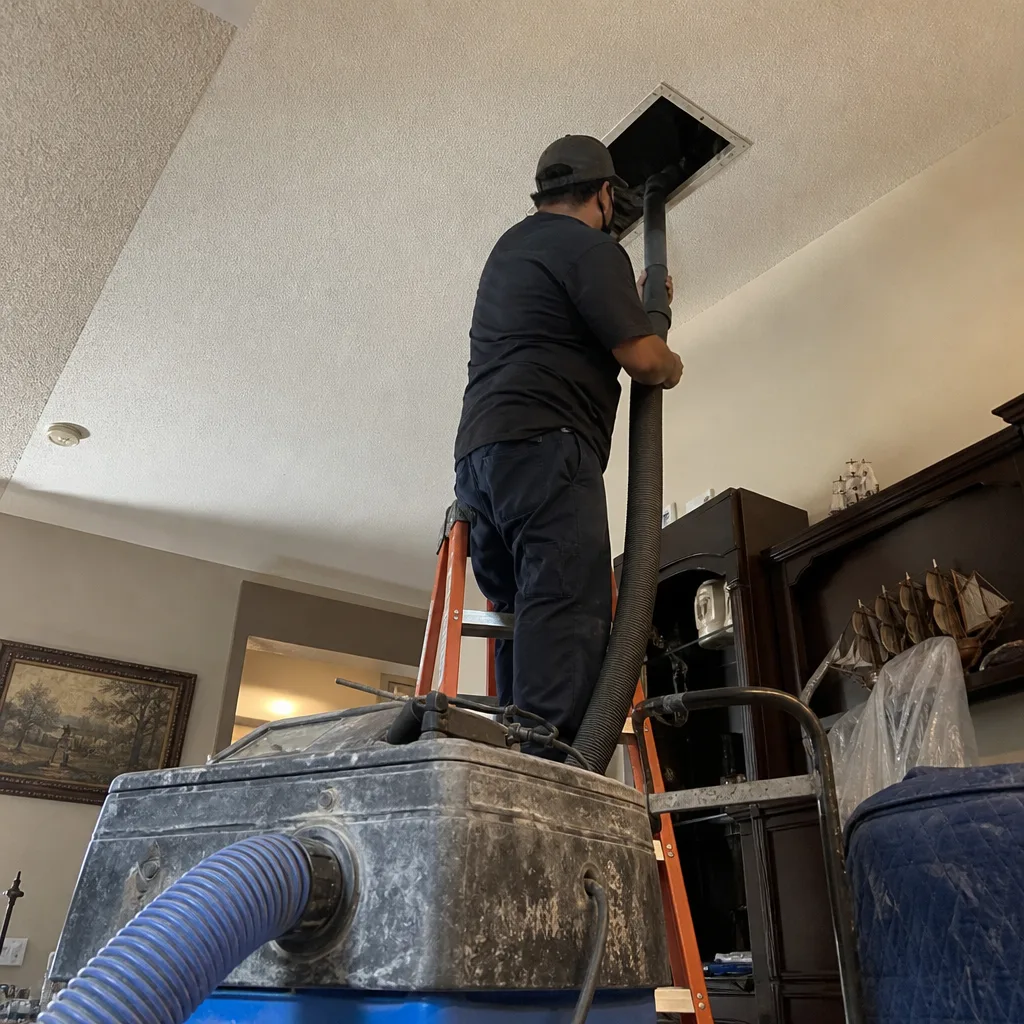
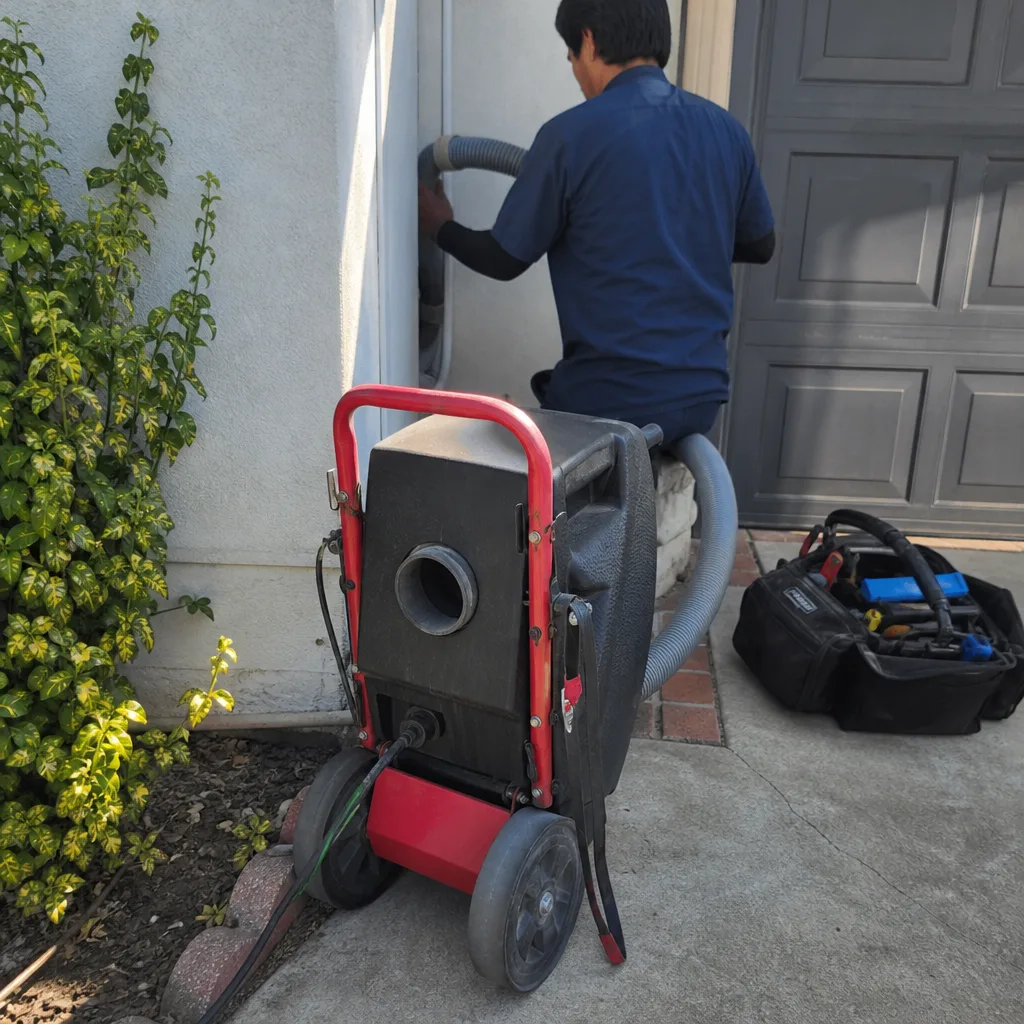
- Full air duct cleaning. This is not a task that can be accomplished with a shop vac and a brush. Proper cleaning requires negative-pressure equipment that puts the entire duct system under vacuum while mechanical agitation devices scrub the interior walls. At Anvil, we run Rotobrush and Nikro systems, which are the same professional-grade platforms used by commercial contractors. The agitation dislodges caked-on debris that vacuum alone cannot remove. This is the difference between moving dust around and actually removing it. Learn more about our approach at Air Duct Cleaning in Santa Ana.
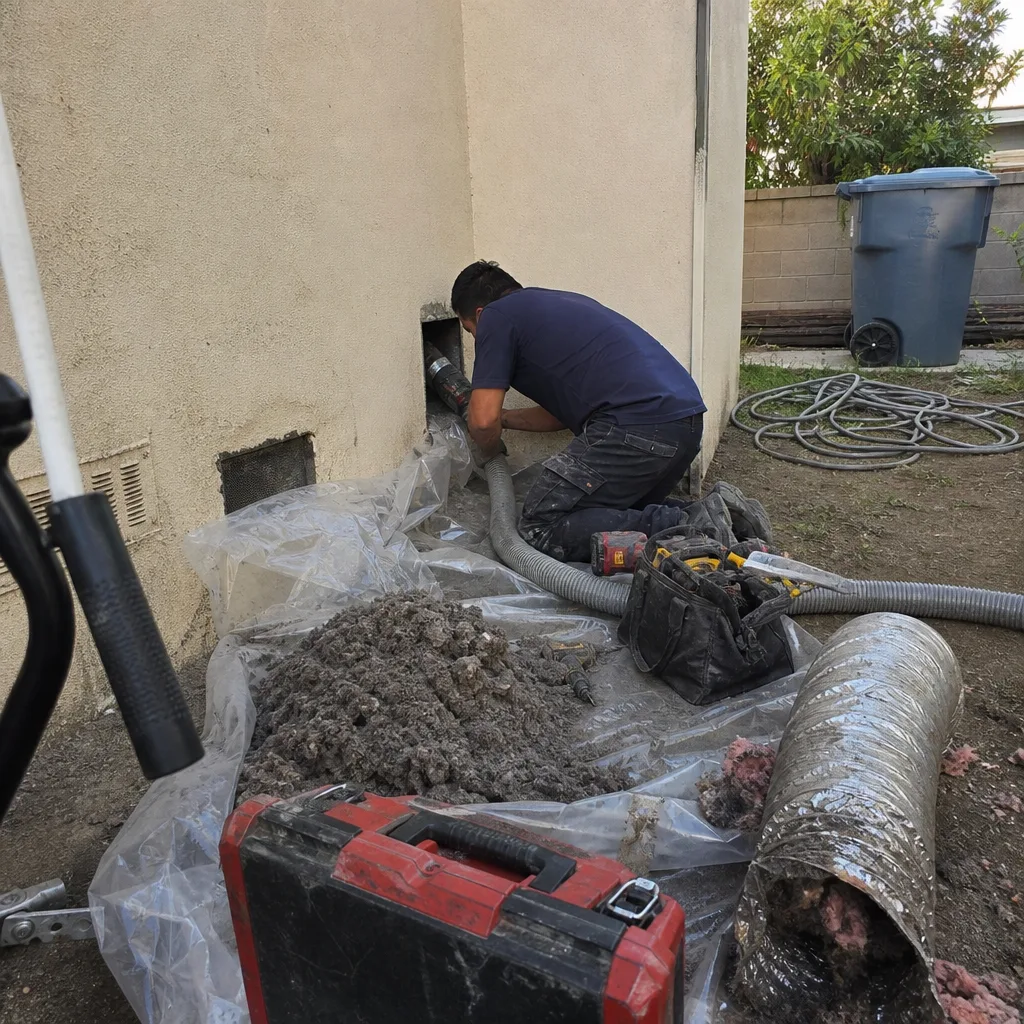
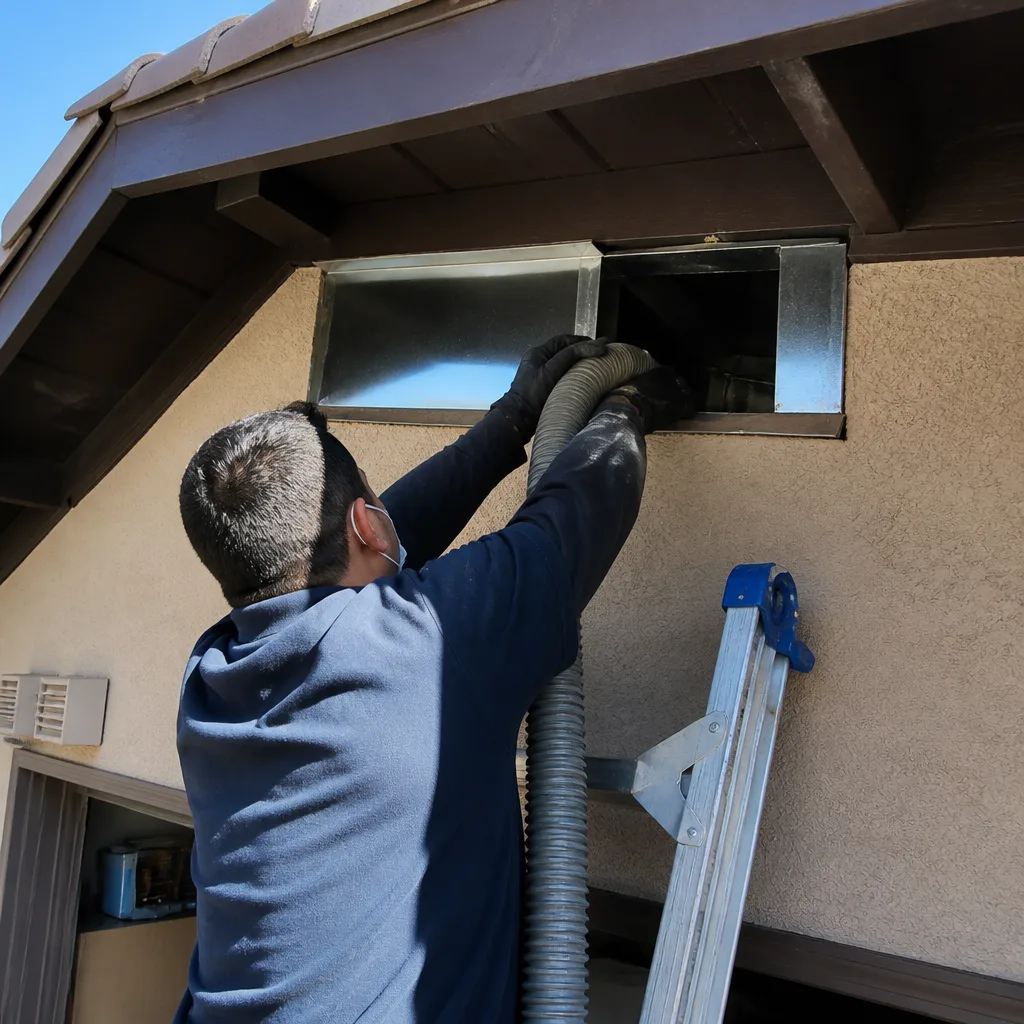
- Dryer vent cleaning. Lint accumulates in the vent line at a rate determined by usage volume and vent configuration. A long run with multiple elbows, common in Santa Ana homes where the laundry room is in the center of the house, accumulates faster than a short straight run. Professional dryer vent cleaning uses rotary brushes and high-volume air to remove the entire lint column, not just what’s reachable from the exterior. The fire-risk reduction is well documented in NFPA guidance.
- Air duct repair assessment. While the system is open and being cleaned, a professional should evaluate the ductwork itself for leaks, separations, compression damage, and improper support. Many homes in Santa Ana have original ductwork from the 1960s and 1970s that has never been assessed. We repair, not just clean. That distinction matters because a clean duct with a six-inch hole in it is still wasting conditioned air into your attic. Our Air Duct Repair in Santa Ana service addresses structural problems on the same call.
- Air handler and coil cleaning. The evaporator coil in your air handler is a dust magnet. A dirty coil reduces heat exchange efficiency and can freeze up during peak cooling season. Cleaning it properly requires access, care with the coil fins, and often removal of accumulated condensate sludge. This is not a homeowner task.
If you’ve recently completed a remodel, had pest activity, experienced significant water intrusion, or lived through a particularly heavy wildfire smoke season, move the 3 to 5 year professional cleaning up to the sooner end of that window or immediately.
How to Read a Dirty Filter Pattern
A used filter is a diagnostic tool. Most homeowners toss it without looking, but the pattern of accumulated contamination tells you where the particulate is coming from. Here’s how to interpret what you see when you pull that filter out at the end of its service life.
Uniform gray coating across the entire filter face. This is normal. It means the filter is doing its job capturing the ambient particulate load from your living space and the return air pathway. A uniformly loaded filter at the 60 to 90 day mark simply confirms your system is operating as designed.
Dark concentrated streaking on one side or corner. This indicates a bypass leak. Air is rushing around the filter at a specific point, carrying concentrated particulate past the edge of the media. Check the filter rack for gaps, verify the filter dimensions match the slot, and look for damage to the filter frame itself. In our experience, this pattern is extremely common in Santa Ana homes with original filter racks that were never designed for the thicker media filters now sold at big box stores.
Visible debris larger than fine dust: pet hair, fibers, lint. This means the return air pathway is pulling from a source of large particulate. Common sources include return registers located near the floor where pet traffic concentrates, return air drawn from a laundry area, or a disconnected return duct pulling attic or crawl space air directly into the system.
Oily or sticky residue. This is almost always from cooking. If your range hood vents inadequately or you cook frequently with oil, the airborne grease gets pulled into the return side and coats everything, including the filter face. Once that residue reaches the evaporator coil, it becomes a magnet for every other particle in the air stream. Homes in Santa Ana with open-plan kitchens and downdraft ventilation are particularly prone to this.
A filter that loads from the wrong side. The dirty side of a filter should always be the incoming air side. If the back side of the filter, the side facing the air handler, shows contamination, the filter was installed backwards, or there’s a bypass path that’s carrying particulate around it.
Reading your filter takes 30 seconds and requires no tools. It’s the single most informative maintenance observation you can make, because it tells you what’s in your air before it reaches the ductwork.
Register and Grille Inspection Criteria
Your registers and grilles are the visible endpoints of the duct system. They’re also the only part of the ductwork you can inspect without opening walls or crawling into attics. Here’s what to look for, and what each observation means.
- Inspect the register face for dust buildup around the edges. A light, even dust pattern is expected. A thick accumulation that reappears within days of wiping indicates high particulate load in the air being delivered. The contamination is either in the supply ducts or in the air handler itself.
- Check the back side of the register when removed. Flip the register over during your semi-annual inspection. If the back side shows accumulated debris that looks different from household dust, such as insulation fibers, drywall dust, or pest droppings, you’re getting contamination from the attic or crawl space entering the duct run through a leak.
- Look at the wall or floor surrounding the register. Dark staining on the wall or carpet around a supply register, sometimes called ghosting, is caused by particle deposition as conditioned air exits. This is common with older systems, but if the ghosting is present around every register, it indicates heavy contamination throughout the system.
- Check the register damper operation. Most supply registers have a damper lever. If the damper is stuck, stripped, or missing, you can’t balance airflow room by room. A stuck damper in a room you rarely use isn’t maintenance-critical, but it means that room is receiving full airflow while other rooms are starved.
- Verify the register is sealed to the opening. A register that’s loose or gapped around the edges allows air to leak into the wall cavity or floor cavity instead of delivering fully into the room. This is especially common in older Santa Ana homes with original plaster or wood-framed register openings that have warped over decades.
None of these inspections require you to open the ductwork. They’re designed to be done from the living space side, safely, by any homeowner with a screwdriver and a flashlight.
Santa Ana-Specific Maintenance Triggers
Southern California isn’t a single climate. Santa Ana, specifically, has characteristics that change how your ducts load with contamination, and when you need to act. Here are the triggers we tell every Santa Ana homeowner to keep on the calendar.
Post-Santa Ana wind events. The strong, dry offshore winds that give this city its name are a significant particulate source. They push fine dust, pollen, and whatever’s airborne in the Inland Empire through the Santa Ana Canyon and into the city. After any significant wind event, check your filter. If it’s loaded past the point where you can see light through it, replace it regardless of age. A single Santa Ana wind event can load a filter in 48 hours that would normally last 60 days.
Wildfire smoke days. When smoke from regional wildfires settles over Orange County, your HVAC system becomes a particulate collector. If you run the system during smoke events, which you should for filtration, the filter and the ductwork absorb a concentrated load of fine particulate. After the smoke clears, replace the filter immediately, even if it’s new. If you experienced prolonged smoke exposure over multiple weeks, consider advancing your professional cleaning schedule and review Air Duct Cleaning Permits, Codes & Inspections in CA: What You Need to Know before hiring. Fine smoke particulate penetrates past the filter media and deposits in the ductwork where it remains until mechanically removed.
Summer humidity spikes. Santa Ana doesn’t get the coastal marine layer that keeps temperatures moderate in Newport or Huntington Beach. Summer days regularly hit the 90s with enough humidity to make the air handler work hard. The evaporator coil condenses moisture continuously during peak cooling season. That moisture combines with whatever dust is in the airstream to create a sludge that coats the coil. By late summer, many systems in Santa Ana are running with a partially fouled coil, which reduces efficiency exactly when the system needs every BTU of capacity. Your semi-annual inspection before cooling season should include a coil condition check.
Construction and remodel activity in the neighborhood. If a neighbor is doing a major remodel, the particulate load in the ambient air increases. Homes in established Santa Ana neighborhoods are seeing significant renovation activity as the original housing stock ages. That construction dust finds its way into your return air pathway, especially if windows are open.
Pet-heavy households. This isn’t climate-specific, but it’s common enough in Santa Ana homes that it deserves mention. Multiple pets generate a continuous dander and hair load that accelerates filter loading and duct contamination. Homes with two or more indoor pets should consider moving to the 3-year end of the cleaning interval rather than the 5-year end.
Which Tasks Are DIY and Which Need a Professional
Homeowners should understand the boundary between owner-serviceable maintenance and professional work. Crossing that boundary without the right equipment produces either ineffective results or actual damage. Here’s the honest breakdown.
Owner-serviceable tasks include:
- Filter inspection and replacement
- Register and grille removal, cleaning, and inspection
- Visual inspection of accessible duct runs from the attic or crawl space
- Listening for audible changes in system operation
- Exterior dryer vent hood inspection and flap verification
- Condensate line inspection for visible clogs at the access point
These tasks are observational. They require no specialized equipment and carry no risk of damaging the system or creating a hazard.
Professional tasks include:
- Actual air duct cleaning. This requires negative-pressure equipment that’s beyond anything available at a rental counter. Rotobrush and Nikro systems, which Anvil runs as standard equipment, generate the agitation and vacuum necessary to remove caked-on contamination rather than just loose surface dust. A homeowner with a shop vac and a brush attached to a drill is not cleaning ducts, they’re disturbing debris without removing it.
- Dryer vent cleaning. The vent run is often inaccessible end to end. Professional cleaning uses rotary brush systems and high-volume air, sometimes including Abatement Technologies equipment for particularly challenging runs, to remove the entire lint column. This is a fire-risk reduction measure, not a cosmetic service. Partial cleaning leaves flammable material in place and creates a false sense of security.
- Air duct repair. This is structural work. Separated joints, crushed flex duct, disconnected runs, and poorly sealed connections require mechanical repair. We repair, not just clean, which means structural problems discovered during cleaning are corrected on the same call rather than referred out to a third party. A homeowner who attempts duct repair with duct tape, which is not rated for ductwork despite the name, is creating a future failure point. Proper duct sealing uses mastic or foil-backed tape rated for the temperature and pressure conditions in the duct system.
- Evaporator coil cleaning. The coil is fragile. The fins bend easily, and aggressive cleaning damages the coil, reducing its efficiency permanently. Professional cleaning uses specific chemicals and tools that clean without damaging the fin structure.
Systems from Honeywell and Aprilaire, which are common in Santa Ana homes, range from most of the residential spectrum. A Honeywell media cabinet or an Aprilaire whole-home air cleaner requires different filter media than a standard 1-inch slot. Knowing your system and its specific requirements is part of responsible ownership, and working with a company that’s fluent across major brands means no surprises when it’s time for service.
Common Mistakes to Avoid
- Trusting the 90-day filter recommendation without checking condition. In Santa Ana’s particulate-heavy conditions, a filter can be fully loaded in 45 days during wind season or after a wildfire smoke event. The calendar is a guideline, not a rule. Hold the filter to the light monthly and make the call on condition.
- Installing too high a MERV rating for the system. A MERV 13 filter in a system designed for MERV 8 creates static pressure that starves the blower and reduces airflow. We see homeowners do this during smoke season, leave the filter in place permanently, and then wonder why the system runs constantly without cooling properly. Match the filter to the system’s capabilities.
- Using duct tape on ductwork. Despite the name, duct tape is not rated for ductwork. It dries out, loses adhesion, and fails within a few years, especially in attics that reach 140 degrees. Duct sealing requires mastic or foil-backed HVAC tape. This is one of the most common homeowner errors we see, and the fix is always replacing the failed tape properly.
- Closing most of the supply registers to save energy. Closing registers increases static pressure in the duct system, forces the blower to work harder, and can push conditioned air out through leaks in the ductwork. It doesn’t meaningfully reduce energy consumption and can shorten blower motor life. Balance rooms by adjusting dampers moderately, not by closing everything off.
- Ignoring the dryer vent because it’s not part of the HVAC system. The dryer vent is part of your home’s air pathway, and a clogged vent is a recognized fire risk. It’s also a pathway for pests into the laundry area. Include dryer vent inspection in your maintenance routine even if you never think about your dryer until it stops working.
- Hiring the cheapest air duct cleaning bid and expecting real results. Proper cleaning requires professional-grade equipment and time. A quote that’s half the market rate typically means a cleaning-only approach with rented or improvised equipment that doesn’t actually remove caked-on contamination. The result is paying for a service that wasn’t performed. A company doing legitimate work with Rotobrush or Nikro equipment will quote honestly because the equipment and process cost real money to operate.
- Assuming new construction means clean ducts. New construction and renovation leave drywall dust, sawdust, and construction debris in the ductwork. In Santa Ana, where renovation activity is common, even relatively new homes can have contaminated ducts from the build process. Drywall dust is abrasive and fine, and it gets everywhere. If your home was recently built or renovated and the ducts were never cleaned after construction, they’re not clean.
When to Call a Professional
Some conditions require an experienced crew with professional equipment, and waiting makes the problem worse. If you see visible mold growth on registers, duct surfaces, or inside the air handler cabinet, stop and call a professional. If you hear rodent activity in the ducts or find pest droppings in the register boxes, the ducts need cleaning and possibly repair, and the pest entry points need to be found and sealed. If rooms at the far end of the house consistently receive weak airflow while others get too much, you likely have duct leakage or blockage that requires diagnosis. If a recent remodel or wildfire smoke event left the system visibly contaminated, professional cleaning restores the system to a clean baseline. Anvil Air Duct Cleaning offers free estimates in Santa Ana, call (833) 620-2848 to schedule one.
Frequently Asked Questions
Air duct cleaning in Santa Ana typically runs $350 to $650 for a standard single-family home, depending on system size, number of registers, and the level of contamination. Homes with extensive duct runs, multiple systems, or heavy contamination from pets or construction debris will be at the higher end. Call (833) 620-2848 for an exact quote based on your system, estimates are free and the price we quote is the price you pay.
Every 3 to 5 years is the standard interval for Santa Ana homes, but conditions like multiple indoor pets, recent renovation, wildfire smoke exposure, or living near heavy freeway traffic can move the timeline to the shorter end. The best approach is to follow the inspection protocol in this guide, explore more guides & resources for ongoing maintenance, and schedule professional cleaning when your observations indicate accumulation beyond what monthly maintenance can address.
No. Proper air duct cleaning requires negative-pressure equipment and mechanical agitation tools that aren’t available for rent at consumer outlets. A shop vac and a brush cannot reach 90 percent of the duct system and cannot remove caked-on contamination. Attempting it risks disturbing debris without removing it, which makes your indoor air worse rather than better. Professional equipment like Rotobrush and Nikro systems is required for a real clean.
The industry has a documented problem with bait-and-switch pricing: a low teaser price per vent that becomes a much larger invoice once the crew is on site with the system open. Legitimate companies quote a flat price for the entire system. At Anvil, we quote one flat price per system agreed before work starts, no per-vent pricing, and we show before-and-after photos of your own ducts so you can verify the work. Call (833) 620-2848 to get an honest quote.
You should receive before-and-after photos of the interior of your own ducts, not stock photos. With modern inspection cameras, a legitimate company can show you the condition of the ductwork before cleaning and after. If a company won’t provide this, walk away. Requiring photographic verification is the single best way to protect yourself from paying for a service that wasn’t performed. We provide this on every job.
Yes, but order of operations matters. During a smoke event, run your system with a clean, appropriately rated filter to capture as much particulate as possible. After the event, replace the filter immediately, because it’s loaded. If smoke exposure was prolonged, have the ductwork professionally cleaned to remove fine particulate that passed through the filter and deposited in the ducts. You can’t filter your way out of already-contaminated ductwork.
The Bottom Line
A useful duct maintenance checklist is a diagnostic protocol, not a chore list. Monthly filter inspection tells you what’s entering your system. Semi-annual register and duct inspection tells you what’s accumulating. The 3 to 5 year professional cleaning resets the baseline. In Santa Ana, where wind events, wildfire smoke, and summer heat create a unique contaminant load, following a calendar-based schedule while ignoring actual conditions means you’ll always be reacting instead of maintaining. The most important step is the one most homeowners skip: actually looking at the filter, the registers, and the accessible ductwork on a regular basis. Do that, and everything else follows. If you want a professional assessment, Anvil Air Duct Cleaning is the solid place to start. Call (833) 620-2848 for a free estimate.
Written by the team at Anvil Air Duct Cleaning, serving Santa Ana since 2017.
See the difference
 Before
 After
 Before
 After
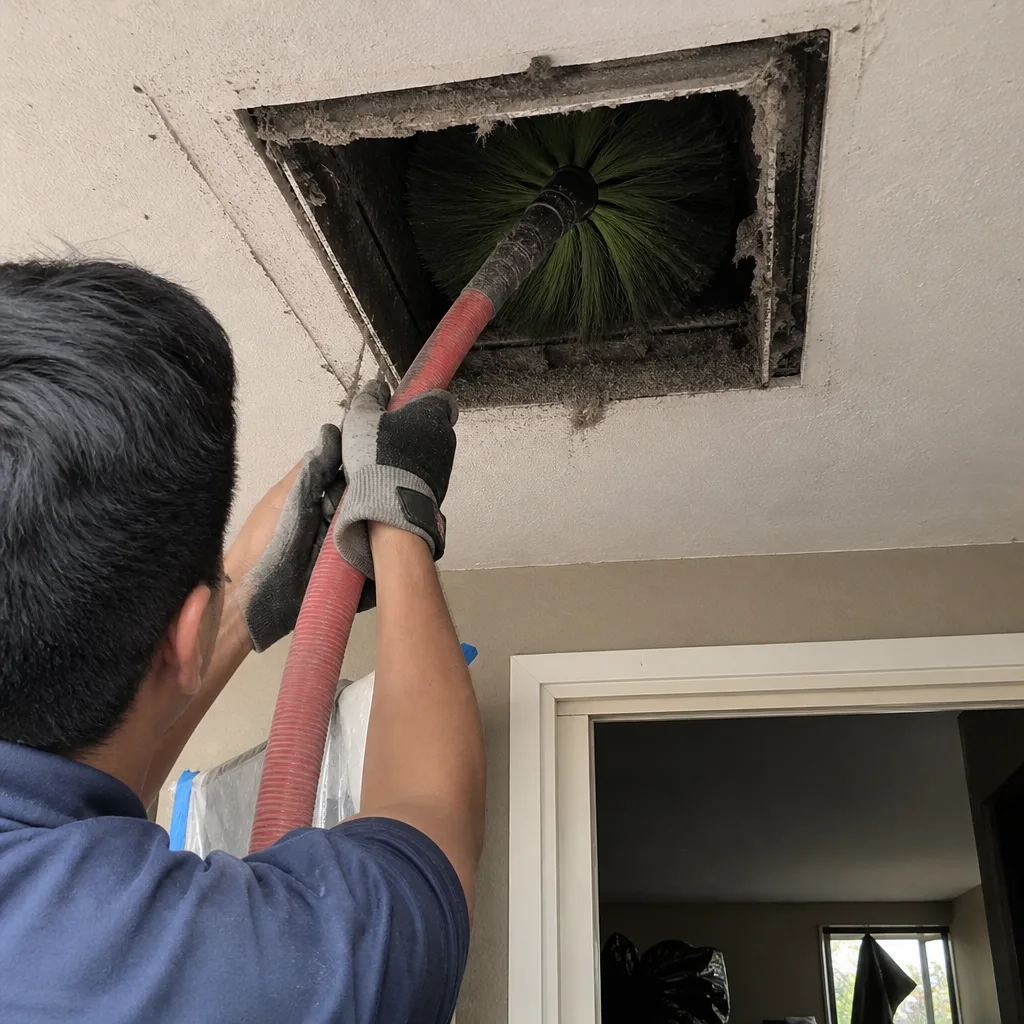 Before
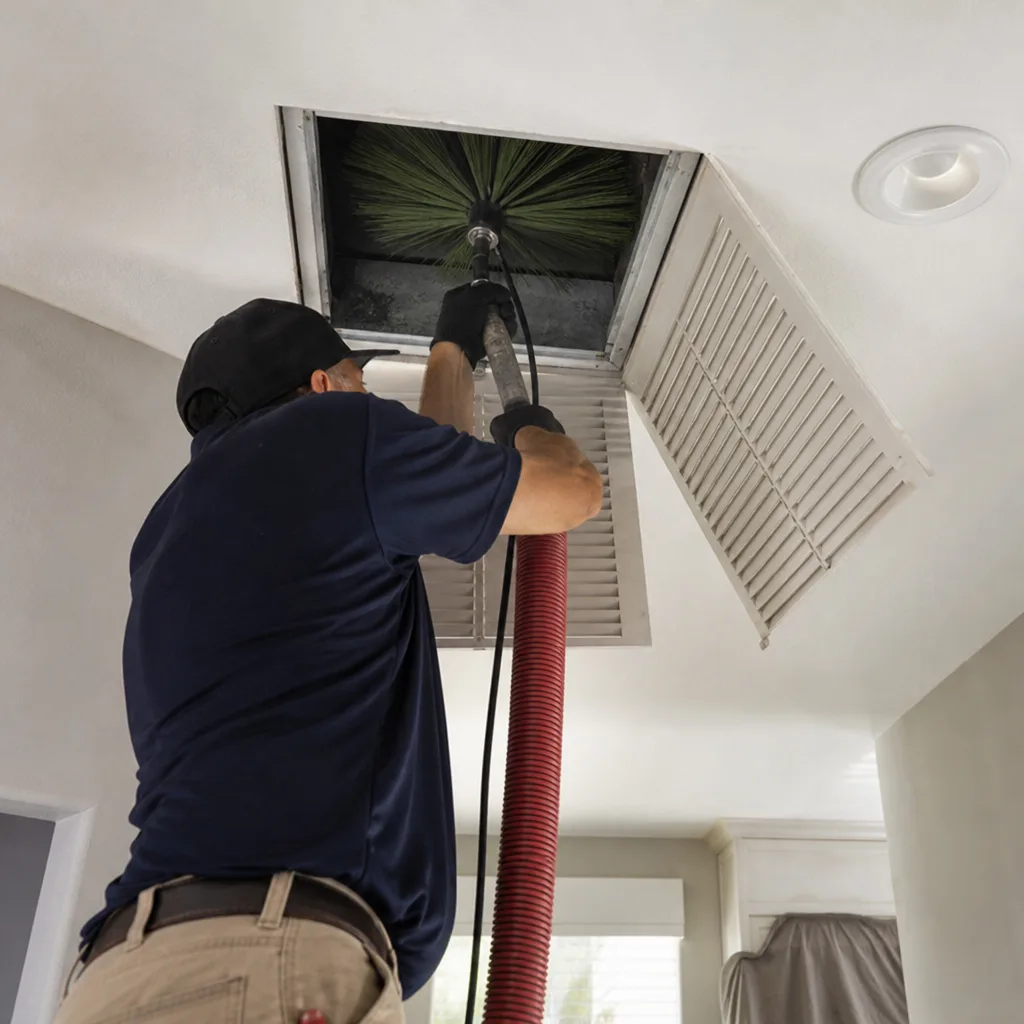 After