
Last updated November 2, 2026
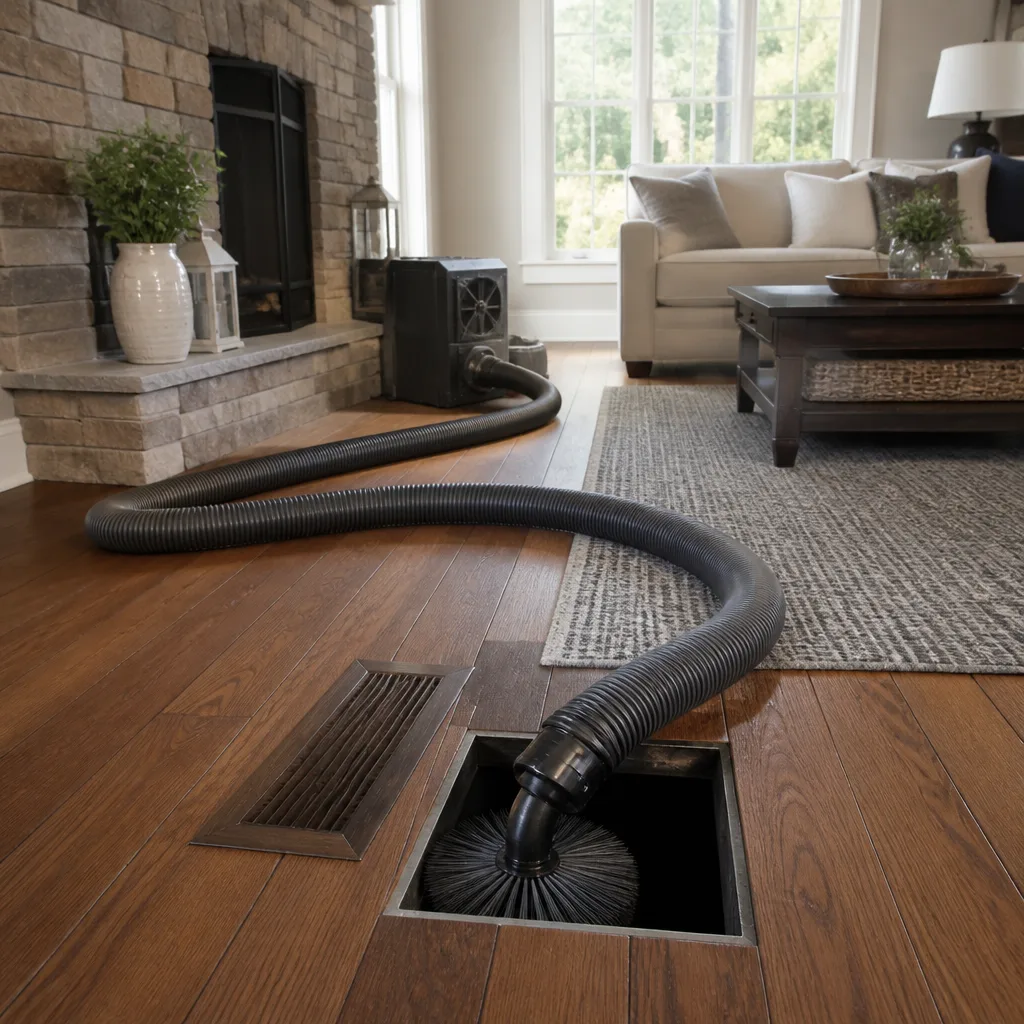 Whole-home duct cleaning
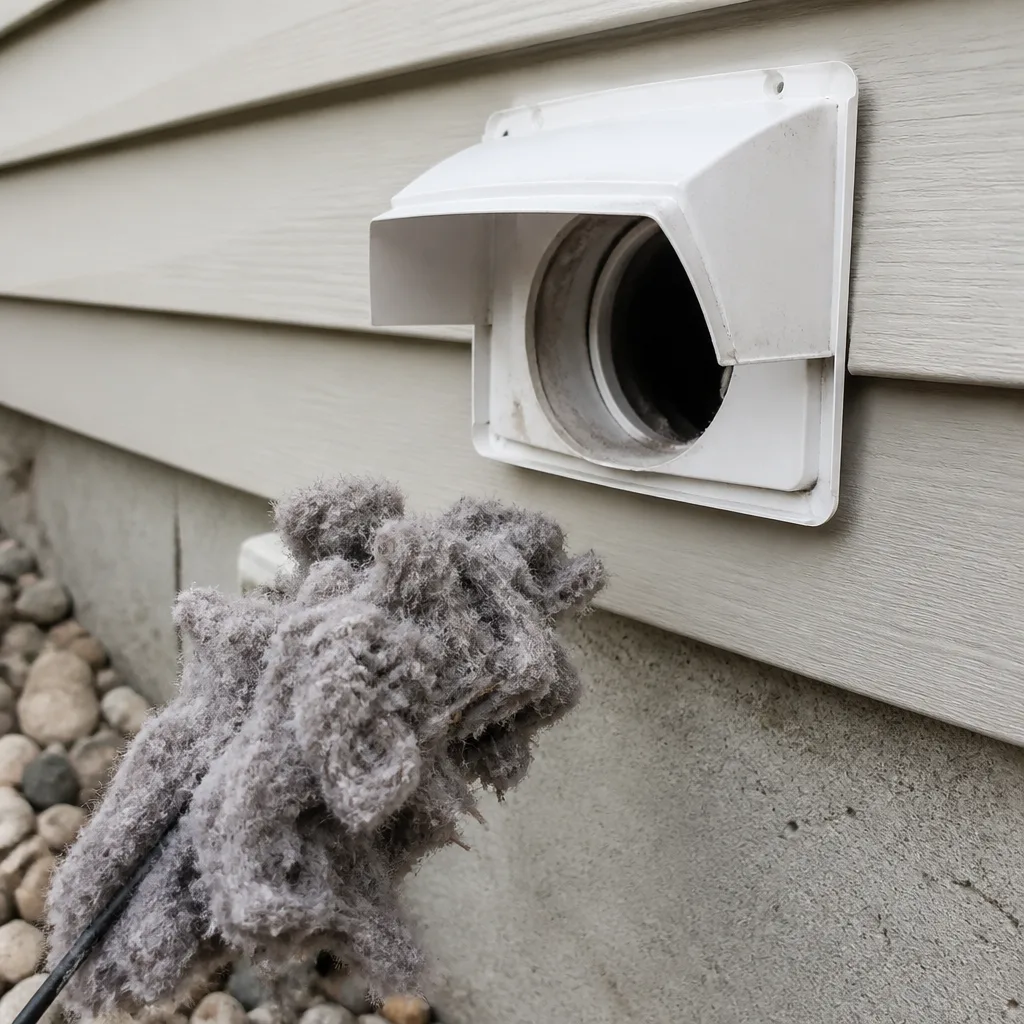 Dryer vent cleaning
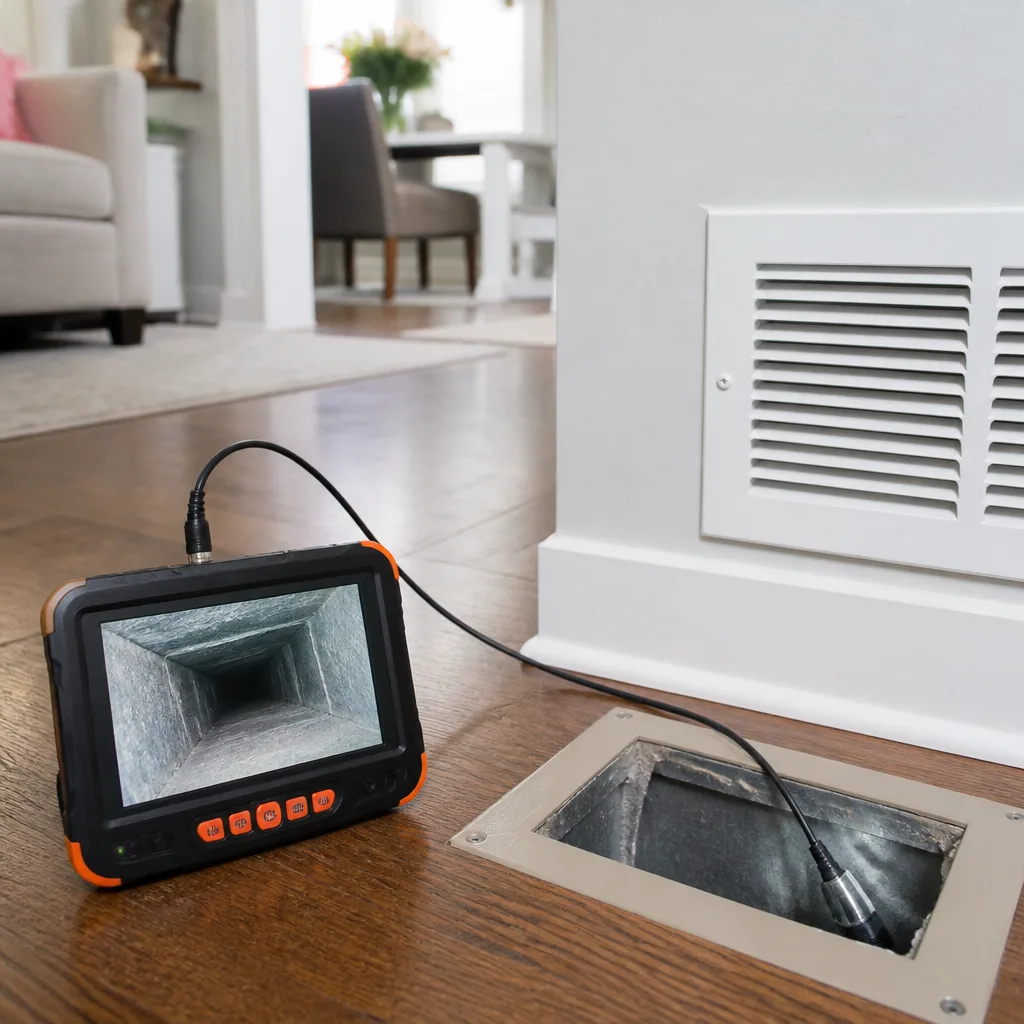 Camera inspection
 Sanitizing & deodorizing
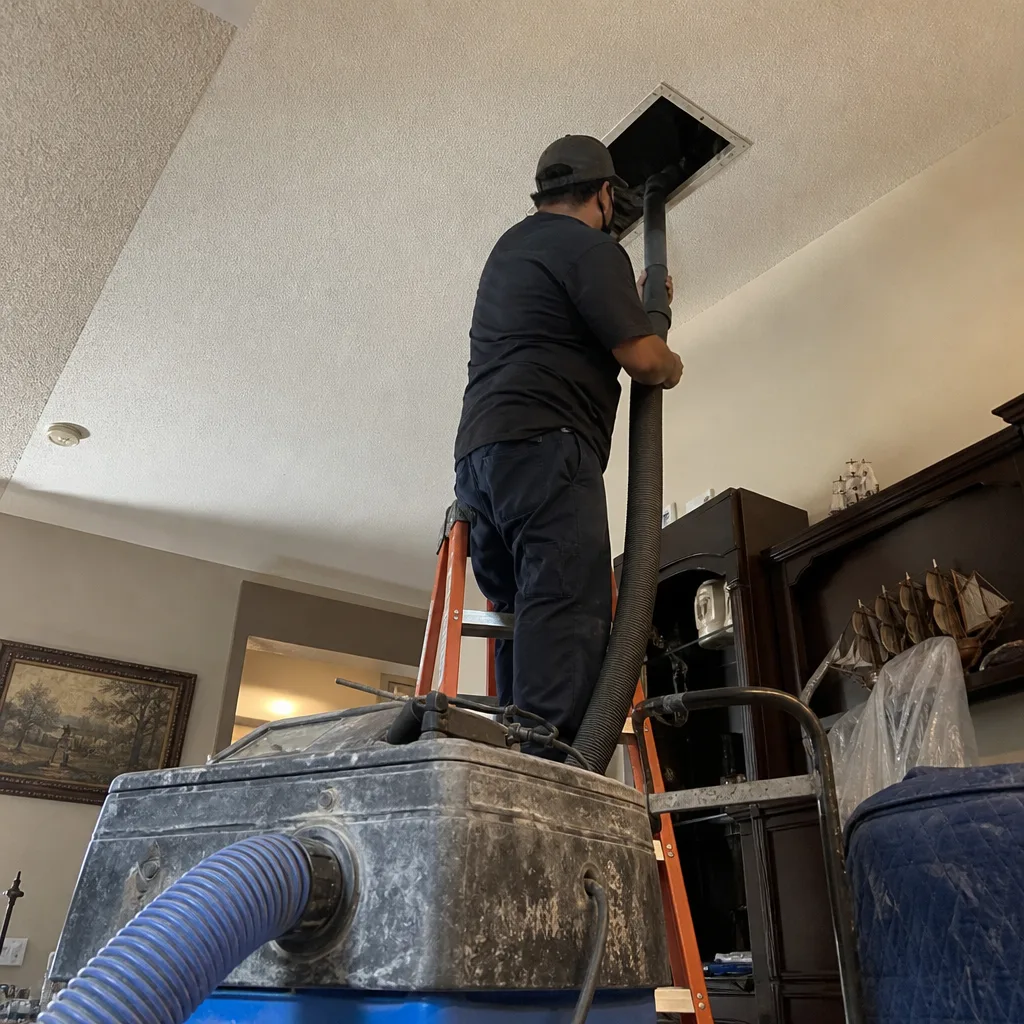
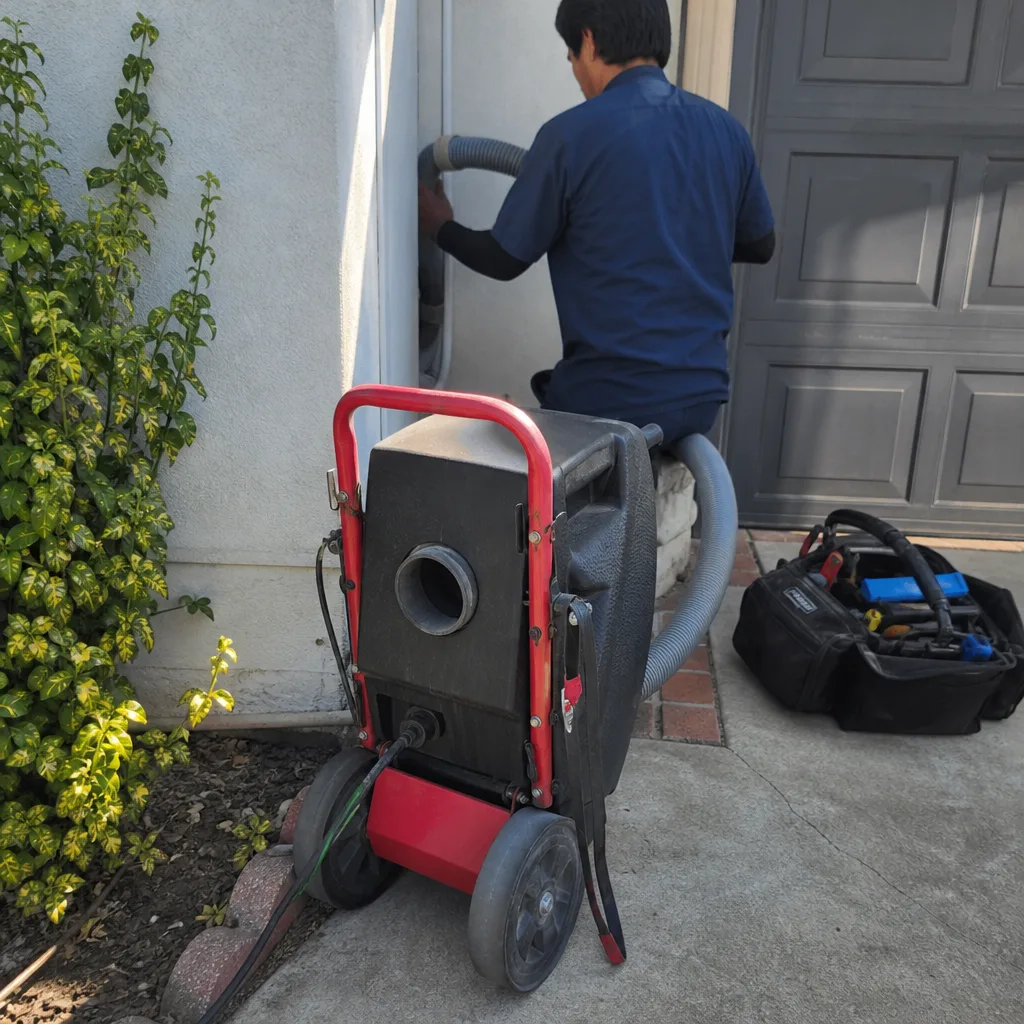
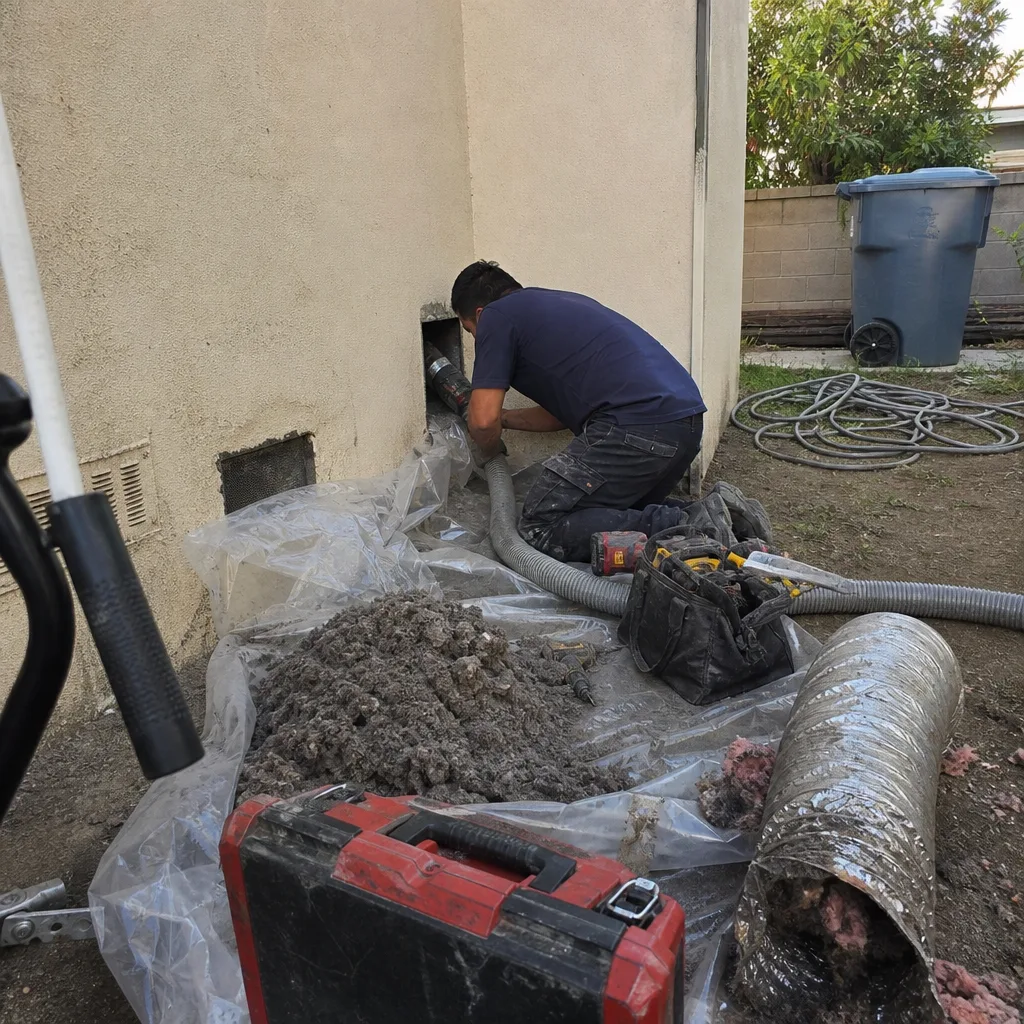
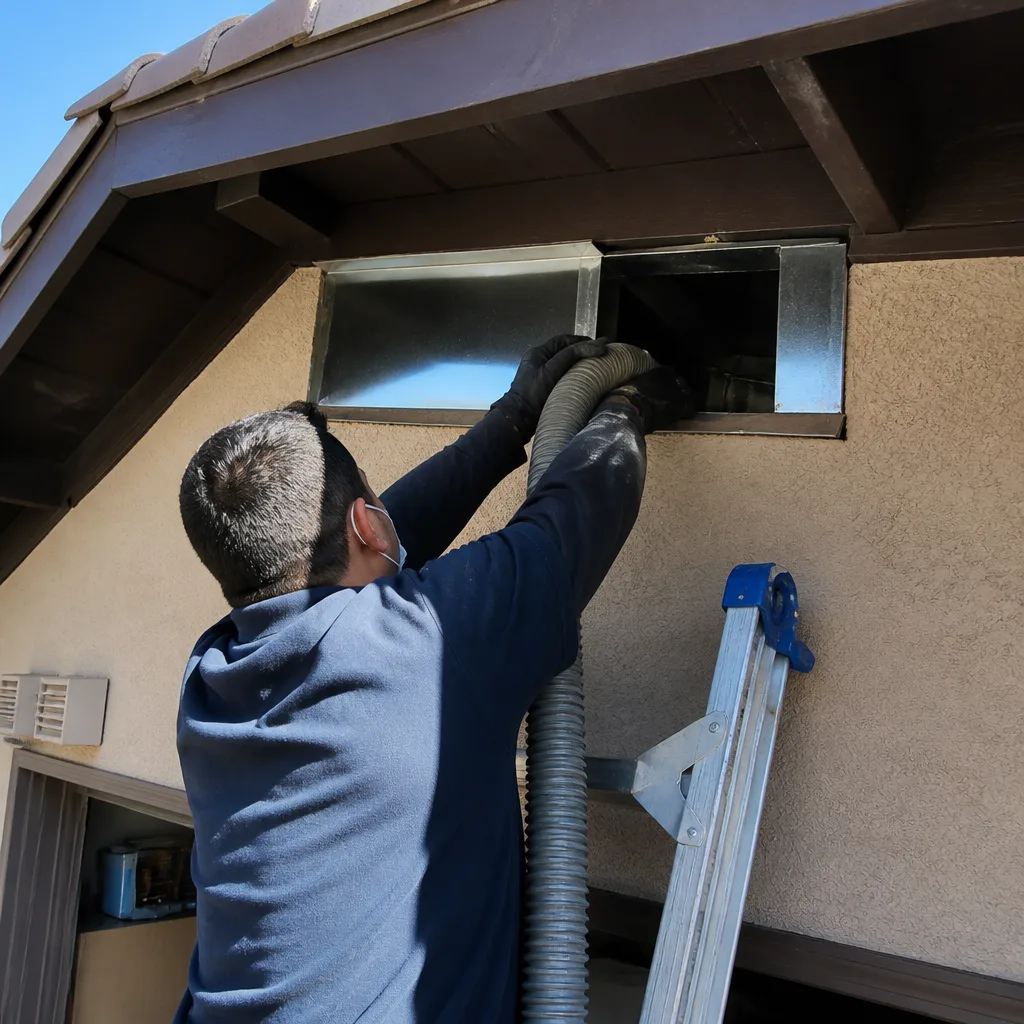
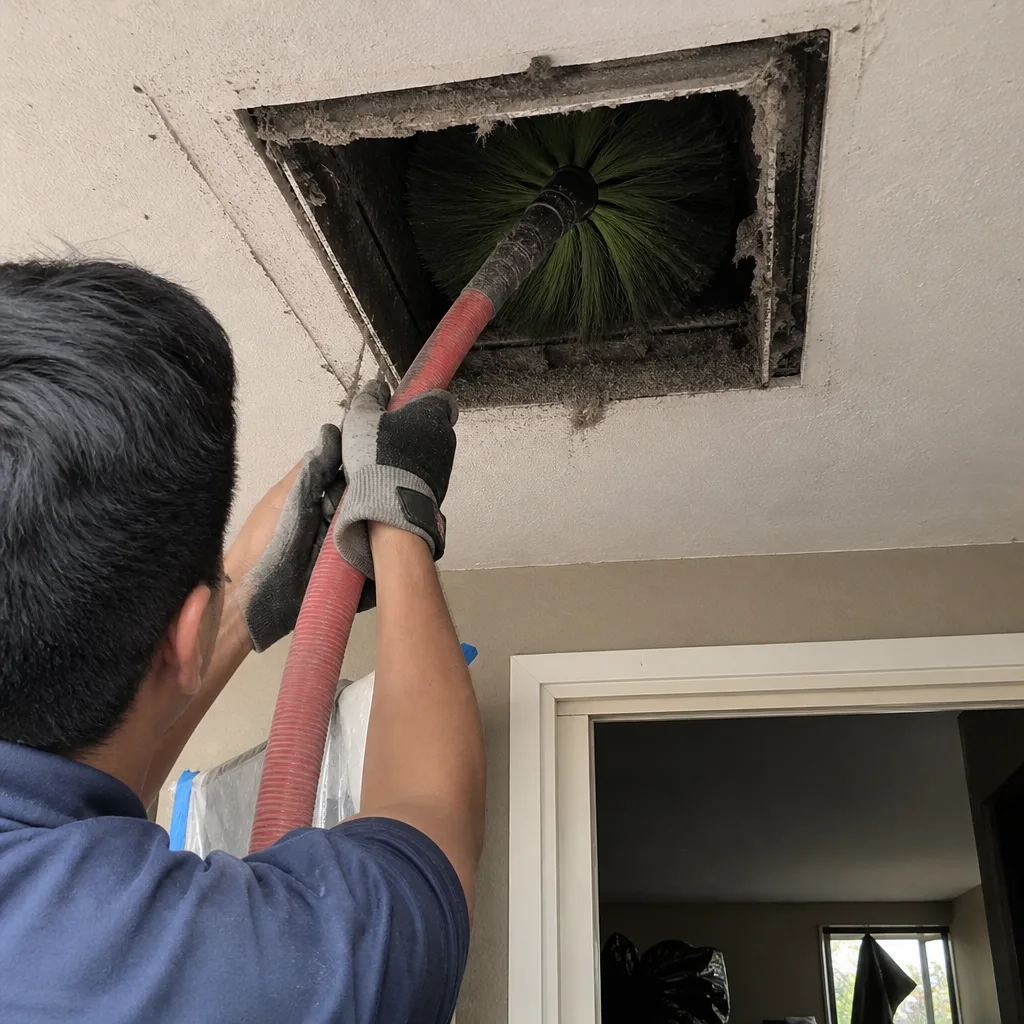
Whole-system duct and dryer vent check with before-and-after photos - you see exactly what came out of your vents
That "$99 whole-house special" is a bait ad - the real number appears once they are in your hallway, or the "clean" is a shop-vac at the register. We photograph the inside of your ducts before and after instead.
Air Duct Cleaning Permits, Codes & Inspections in CA: What You Need to Know
Here’s a scenario we see regularly in Santa Ana: a homeowner schedules a routine duct cleaning, the technician pulls back an attic access panel, and finds a return duct that’s been disconnected for years, quietly pulling 140-degree attic air into the system. The cleaning itself needs no permit. Repairing that duct might. In California, replacing a section of flex duct that a cleaner finds disconnected in your attic technically qualifies as mechanical work under Title 24, meaning an unpermitted fix by a cleaning crew could be flagged during a real estate transaction inspection. This guide walks you through exactly where the regulatory line sits, what Orange County actually enforces, and how to document everything correctly so your Air Duct Cleaning services never become a liability at resale.
Quick Answer
Air duct cleaning, as a standalone service, does not require a permit anywhere in California. The regulatory line is crossed when cleaning reveals structural ductwork problems that require repair or replacement: torn flex duct, disconnected boots, crushed returns, or modifications to the duct layout. Those repairs fall under mechanical work governed by the California Mechanical Code and Title 24 energy standards, and in Orange County they generally require a permit through Building and Safety. If your cleaning contractor offers to fix ductwork on the spot without pulling a permit, you’re accepting future liability that can surface during a home sale or insurance claim.
Styles & brands we work with
- Whole-home duct cleaning
- Dryer vent cleaning
- Camera inspection
- Sanitizing & deodorizing
Table of Contents
- Cleaning vs. Repair: Where California Draws the Line
- Title 24 and Ductwork: Why Energy Code Compliance Matters
- Orange County Duct Repair Permits: Process, Cost, and Timeline
- When Ductwork Involves Asbestos or Mold: Separate Compliance Paths
- Documenting Permitted Duct Repairs for Resale Disclosure
- A Homeowner’s Checklist: Before and After Duct Work
- Common Mistakes to Avoid
- When to Call a Professional
- Frequently Asked Questions
Cleaning vs. Repair: Where California Draws the Line
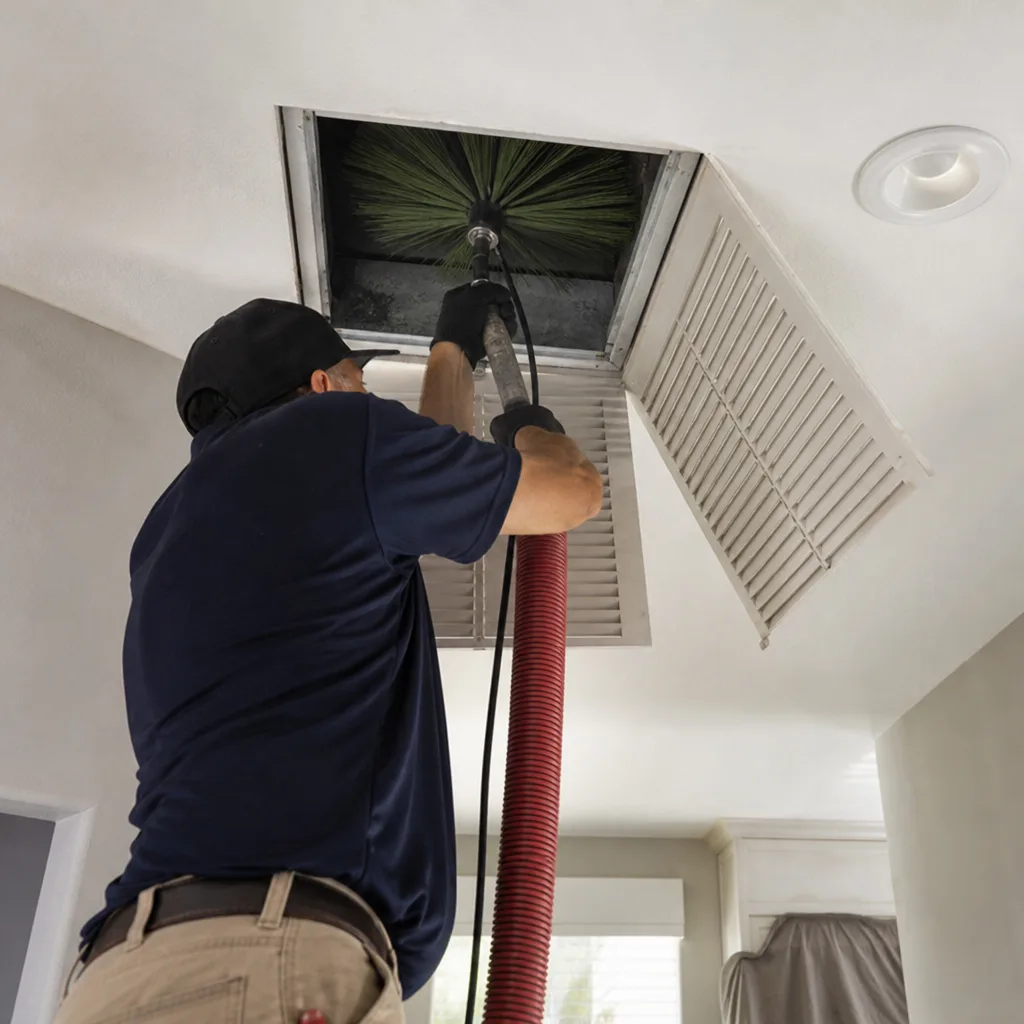
The California Building Standards Code, which incorporates the California Mechanical Code (CMC), is unambiguous about one thing: cleaning is not construction. Running a Rotobrush or Nikro agitation and vacuum system through existing ductwork removes particulate. It does not alter the structure, modify airflow routing, change system capacity, or touch the equipment that conditions air. No California jurisdiction treats this as mechanical work requiring permit review. The work is classified as routine maintenance, the same broad category as changing a furnace filter or cleaning a condenser coil.
Replacement and modification are different. Section 103.1 of the California Mechanical Code requires a permit for any installation, alteration, repair, or replacement of a mechanical system. The key word is “repair” – and Orange County interprets it as any work that restores or changes the duct system’s structural integrity or airflow configuration. This captures a specific set of findings that surface constantly during cleanings in Santa Ana’s 1950s-through-1980s housing stock:
- Torn or collapsed flex duct: The insulated flexible ductwork common in Southern California attics degrades under heat. By year 15 or 20, the inner liner separates, and the duct no longer carries the air it was sized for. Replacing a section triggers permit requirements.
- Disconnected boots or collars: Where flex duct meets a sheet-metal boot at a register or plenum, vibration works connections loose. In our experience, a disconnected return in a Santa Ana attic often pulls in fiberglass insulation particles on top of hot air.
- Crushed or kinked duct runs: When storage or tradespeople compress ductwork, airflow drops sharply. Restoring the run may mean replacing the damaged section.
- Duct modifications during HVAC replacement: If you’re replacing a furnace or air handler and the new equipment requires different duct connections, that’s always a permit project, and the duct portion is part of the mechanical permit.
Cleaning-only scope is what most homeowners understand as “air duct cleaning.” Repair scope is what we call structural remediation. The two get blurred when a cleaning contractor without mechanical experience offers to “patch that up” as part of the same visit. The patch is the permit trigger. The cleaning never was.
For homeowners researching their own options in Santa Ana, the practical takeaway is simple: if the only finding is accumulated dust and debris, no permit enters the conversation. If the finding is a physical defect in the duct system, permit obligations attach to the repair regardless of who performs it. Air Duct Repair in Santa Ana that handles structural issues is the service scope where compliance matters, not the cleaning visit that identified the problem.
Title 24 and Ductwork: Why Energy Code Compliance Matters
California’s Building Energy Efficiency Standards, commonly called Title 24, Part 6, are the reason duct repairs trigger more than just a mechanical permit. Title 24 treats the duct system as a component of the building envelope. Leaky ducts leak conditioned air, which wastes energy, which is exactly what the code exists to prevent. When ductwork is repaired or replaced in California, the completed work must meet minimum performance requirements that didn’t exist when many Santa Ana homes were built.
Here’s what Title 24 actually requires for duct repairs and replacements in existing homes:
- Duct leakage testing: For any duct system that is altered or extended, Title 24 requires a duct leakage test verifying the system meets sealing standards. The test uses a calibrated fan to pressurize the ductwork and measure air loss in CFM (cubic feet per minute). Most jurisdictions accept a HERS (Home Energy Rating System) rater to perform this test, and the result must be documented for permit sign-off.
- Sealing requirements: All duct joints, seams, and connections must be sealed with mastic or UL-listed tape. Duct tape (the classic gray fabric tape) is not code-compliant for this purpose, despite the name. This is a common point of failure on unpermitted repairs.
- Insulation minimums: Ducts running through unconditioned space – which in Santa Ana means nearly every attic – must meet minimum insulation levels, typically R-6 or R-8 depending on climate zone and duct location. Replacing a section of flex duct with the wrong R-value can fail inspection.
- Proper sizing: When duct sections are replaced, the new materials must be sized for the system’s designed airflow. Undersizing a return duct during a “quick fix” reduces system efficiency and can lead to coil freeze-ups or blower motor strain.
The energy compliance angle is what many homeowners and, frankly, many budget cleaning operators don’t understand. A disconnected return reconnected without sealing, or a torn flex section replaced with an improperly insulated knockoff, violates Title 24 even if the work improves airflow in the short term. The violation doesn’t surface immediately. It surfaces when an energy audit is performed, when a home is sold and the buyer’s inspector looks at the permit history, or when a HERS verification pulls a failing number. For more on identifying issues early, see our Air Duct Cleaning Warning Signs: A Santa Ana Homeowner’s Reference Guide.
When we perform duct repairs as part of our air duct repair work in Santa Ana, the guiding principle is simple: the repair needs to be code-clean on its own merits. We treat Title 24 as the floor, not the ceiling. That means sealed joints, correct insulation values, proper support straps, and documentation trail that matches what a building inspector expects to see.
Orange County Duct Repair Permits: Process, Cost, and Timeline
Orange County Building and Safety issues mechanical permits for duct repair and replacement work in unincorporated areas and provides the model that Santa Ana’s Building Division follows. The City of Santa Ana operates its own building department with similar requirements. If your duct repair will be done by a licensed contractor, here is the typical permit process you should expect:
- Contractor pulls the permit: In California, the responsible party for a mechanical permit is the licensed contractor performing the work, not the homeowner, unless the homeowner is acting as an owner-builder. The contractor registers with the city, files the permit application, and pays the fee.
- Scope review: For simple duct section replacement, the permit reviewer typically approves based on a written scope of work and basic system description. For larger modifications involving new duct runs or HVAC equipment changes, plan review may be required.
- Permit issuance: Once the permit is issued, the work can begin. The permit card must be posted on the job site.
- Inspection scheduling: After the work is complete – or at specific stages for larger projects – the contractor schedules an inspection. The inspector verifies the work matches the permitted scope and the duct system meets code requirements.
- Final sign-off: The inspector signs the permit card or records final approval in the city’s system. This is the documentation you need to keep for resale disclosure.
Cost-wise, a mechanical permit for duct repair in Orange County is typically in the low hundreds of dollars, but the total cost depends on the scope, the number of inspections, and any plan review fees. A simple flex duct replacement in an existing system may land at the bottom of that range. A large re-duct of an entire house will be significantly more. The permit fee itself is almost always a small fraction of the total project cost – and it buys the document that proves the work was done legally.
Timeline is another factor homeowners ask about. In Santa Ana, a straightforward duct repair permit can often be issued within a few business days of application, assuming the scope is clear. Inspections are typically scheduled within a week or two, depending on the city’s workload. The constraint is rarely the building department. It’s the contractor’s ability to schedule the work and the inspection during business hours.
One point that surprises some homeowners: most duct cleaning visits in Santa Ana uncover no permit-triggering issues at all. When we clean with our Rotobrush system, the findings are typically dust, debris, and occasional pest activity – all within cleaning-only scope. Where the permit conversation becomes relevant is when we identify structural issues during the inspection we perform alongside cleaning, which our Air Duct Cleaning Troubleshooting: Common Problems and How to Fix Them covers in detail. Our team’s ability to move from diagnostic to documented repair on the same visit is what separates a cleaning-only operator from a contractor who actually understands Orange County’s mechanical code.
When Ductwork Involves Asbestos or Mold: Separate Compliance Paths
Older Santa Ana homes present a compliance wrinkle that has nothing to do with standard mechanical permits: asbestos-wrapped ductwork and mold contamination. Both trigger separate regulatory pathways that fall outside typical contractor licensing, and both can turn a routine duct cleaning or repair project into a regulated abatement scenario.
Asbestos-wrapped ducts appear in homes built before the 1980s, particularly in the crawlspace or attic runs of older furnace systems. The wrapping – a white, fibrous material – was used as insulation. If the material is intact and not friable, it can often be left in place. But if the ductwork requires repair or replacement and the wrapping must be disturbed, the project falls under California’s asbestos regulations, which require a certified asbestos abatement contractor and, in many cases, notification to the local air quality management district (South Coast AQMD for Orange County). A standard mechanical contractor is not licensed to remove asbestos-wrapped duct insulation.
Mold in ductwork is a more common scenario in humid coastal climates, though less frequent in Santa Ana’s dry inland air. When mold is present in ducts, cleaning may not be sufficient. The remediation may require containment, antimicrobial treatment, and in severe cases duct replacement – and the replacement component triggers permitting just like any other mechanical work. Here’s where Abatement Technologies equipment becomes relevant: our lineup includes remediation-grade negative air machines and HEPA filtration that meet the standard for projects involving contaminated ductwork. Most cleaning operators don’t have this class of equipment on the truck.
The regulatory lesson for homeowners is straightforward: if your duct inspection reveals asbestos-wrapped ducts or mold, the project is no longer a simple cleaning or even a simple repair. The scope expands to include environmental compliance. This is one reason we recommend having a full-service contractor evaluate the system rather than proceeding with an operator who only owns a vacuum. The wrong call creates liability and cost.
Documenting Permitted Duct Repairs for Resale Disclosure
California’s residential real estate disclosure laws are among the strictest in the nation. Under the California Civil Code, sellers must disclose material facts about the property – and the disclosure heavyweights in the mechanical category are the HVAC system and any known ductwork issues. This is where permitted versus unpermitted duct repair creates a measurable risk differential.
Here’s the scenario that plays out all over Orange County real estate transactions. A seller replaced a section of crushed ductwork during their ownership and did it without a permit because the contractor told them it was no big deal. Five years later, the buyer’s home inspector notices the newer duct section and checks permit records. No permit exists. The buyer’s agent asks for documentation. The seller has nothing. The repair, which was functionally sound, becomes a negotiation point – or worse, a deal-killer. In a hot market, this might wash out. In a normal market, it can cost thousands.
Here is exactly what Orange County homeowners should retain after any duct repair is completed:
- The permit card or final approval notice from the City of Santa Ana or Orange County Building and Safety. This is the legal document that proves the work was inspected and approved.
- The contractor’s invoice that matches the permit scope. Keep the scope description consistent: “replaced 20 feet of damaged flex duct in attic, sealed all connections, verified R-8 insulation” is the level of detail that answers disclosure questions.
- The duct leakage test report if one was performed. This is the Title 24 compliance document that shows the system passed performance verification.
- Before-and-after photos of the repaired area. In our experience, photos settle disputes faster than any written description. We photograph duct conditions as a standard part of our process because our clients in Santa Ana have asked for exactly this.
For air duct cleaning in Santa Ana, no documentation is required for resale – cleaning doesn’t need permits, and the service doesn’t create a disclosure obligation. But if your cleaning visit results in repair findings, the documentation above becomes your disclosure defense. The difference between a paper trail and a verbal assurance from a contractor is the entire ballgame when a transaction is on the line.
A Homeowner’s Checklist: Before and After Duct Work
If you’re planning duct cleaning or exploring repair work in Santa Ana, here’s a working checklist we’ve developed for homeowners who want to stay on the right side of Orange County compliance:
- Confirm the scope before work starts: Is this cleaning only, or does the contractor expect to repair or replace duct sections during the visit? The answer determines the permit path.
- Verify the contractor’s license: In California, air duct cleaning falls under a general business operation, but duct repair requires a C-20 warm-air heating, ventilating and air-conditioning contractor license or a general building license with mechanical scope. Check the Contractors State License Board before signing.
- Ask about permit history: If the contractor says “we don’t need a permit” for repair work, ask them to confirm in writing. Legitimate contractors will either explain the scope exception or pull the permit.
- Document the starting condition: Photos of the ductwork before work begins, especially around any areas where damage was identified. This protects both you and the contractor.
- Get the permit card number if repair work occurs: Write it down. It’s the key to your building department file.
- Collect the final documentation: Inspection sign-off, leakage test results, and a detailed invoice belong in a folder you can produce at resale.
- Ask about warranty scope: For repair work, what’s covered and for how long? Verbal warranties are weak; written warranties are enforceable.
This checklist isn’t legal advice, but it reflects how a well-managed duct project should run in Orange County. The homeowners who follow it rarely encounter surprises at inspection time or during a sale. For more guides & resources, explore our blog.
Common Mistakes to Avoid
- Letting a cleaning-only contractor perform duct repair without a permit: This is the single most common compliance error we see in Santa Ana. The contractor may do acceptable work, but the unpermitted repair becomes a liability if anything goes wrong later.
- Assuming a cleaning receipt covers repair work: Cleaning documentation proves maintenance. It proves nothing about structural repairs, and sellers who substitute one for the other during disclosure get flagged.
- Using unlisted tape for duct sealing: Gray fabric duct tape is not an approved sealing material under the California Mechanical Code. This is a simple, specific failure that inspectors catch regularly.
- Skipping the duct leakage test on a repair project: In Orange County, a leakage test may be required for permit sign-off on duct modifications. Skipping it stalls the inspection and delays project closeout.
- Hiring a contractor unfamiliar with Title 24 energy requirements: A technician who knows how to install a duct section but doesn’t know R-value requirements or sealing standards will likely fail inspection.
- Failing to check whether existing ductwork contains asbestos before demolition: On pre-1980s Santa Ana homes, disturbing asbestos-wrapped ducts without proper abatement is a regulatory violation and a health hazard.
- Discarding permit documentation after the work is done: The permit card and inspection sign-off are small papers with large value at resale. Keep them.
When to Call a Professional
Duct cleaning itself is a professional service, but the scenarios that truly require specialized expertise are the ones involving mechanical work. If your cleaning visit reveals disconnected duct sections, torn flex runs, crushed returns, or evidence of mold or asbestos-wrapped ductwork, you need a contractor who can handle both the cleaning and the structural correction. That’s the specific reason we built Anvil Air Duct Cleaning home the way we did – a single team that can diagnose, clean, and repair within one scope of work. If you’re in Santa Ana and your ducts haven’t been inspected in years, Anvil Air Duct Cleaning offers free estimates. Call (833) 620-2848 to schedule a diagnostic visit. We’ll tell you exactly what’s going on in your ductwork and whether any repair work needs permit attention.
Frequently Asked Questions
No. Air duct cleaning is classified as routine maintenance and does not require a permit anywhere in California, including Santa Ana and the rest of Orange County. The permit requirement is triggered only when the work involves repairing, replacing, or modifying ductwork structure – not when existing ducts are cleaned in place.
Mechanical permits for duct repair in Orange County and Santa Ana are typically in the low hundreds of dollars for a straightforward section replacement, though larger re-duct projects may carry higher fees due to plan review and multiple inspections. The exact cost depends on the scope of work, and the city can provide a fee schedule at the time of application. Call (833) 620-2848 for help determining whether your specific repair project needs a permit.
Legally, California allows owner-builders to perform work on their own property, but the permit requirement still applies. You cannot waive the permit simply because you’re doing the work yourself. In practice, most Orange County homeowners find that the leakage testing and inspection requirements make owner-builder duct repair more costly and time-consuming than hiring a licensed contractor.
Unpermitted duct repairs can complicate a sale when the buyer’s inspector or lender identifies work that doesn’t match city permit records. The seller may be required to disclose the unpermitted work, which frequently becomes a negotiating point or a reason for the buyer to walk away. In some cases, the seller must obtain a retroactive permit or pay for corrective work before closing.
No, Title 24 energy standards apply to duct modifications, not to cleaning. Cleaning doesn’t change the duct system’s thermal or airflow performance characteristics, so it’s outside the energy code’s scope. The code kicks in when ductwork is repaired, replaced, or altered in ways that affect system efficiency.
Asbestos-wrapped ductwork was used in some homes built before the 1980s, and the only way to confirm its presence is through a professional inspection and material testing. If you suspect asbestos-wrapped ducts, don’t disturb the material before having it evaluated. Once the material is disturbed, the project falls under California abatement regulations and may require a certified asbestos contractor.
No. Dryer vent cleaning is routine maintenance, like air duct cleaning, and does not require a permit in Santa Ana or elsewhere in California. The service falls within the scope of dryer vent cleaning in Santa Ana, which we offer as a standard fire-risk reduction measure consistent with NFPA guidance. What does require attention is a dryer vent that has been damaged or improperly routed – that kind of repair can fall under mechanical work.
The Bottom Line
Air duct cleaning in California never requires a permit. The work that follows sometimes does. If your duct inspection uncovers structural damage, disconnected runs, or modifications that affect how air moves through your home, you’ve crossed from maintenance into mechanical work. In Orange County and Santa Ana, that means pulling a permit, meeting Title 24 sealing and insulation requirements, and passing inspection. The paperwork isn’t trivial – it’s the thing that protects you when you sell the house, when an insurance claim lands on your desk, or when a buyer’s inspector starts asking questions. Clean ducts are maintenance. Repaired ducts are construction. Know which one you’re doing before the van pulls away.
Written by the team at Anvil Air Duct Cleaning, serving Santa Ana since 2017.
See the difference
 Before
 After
 Before
 After
 Before
 After