
Last updated November 2, 2026
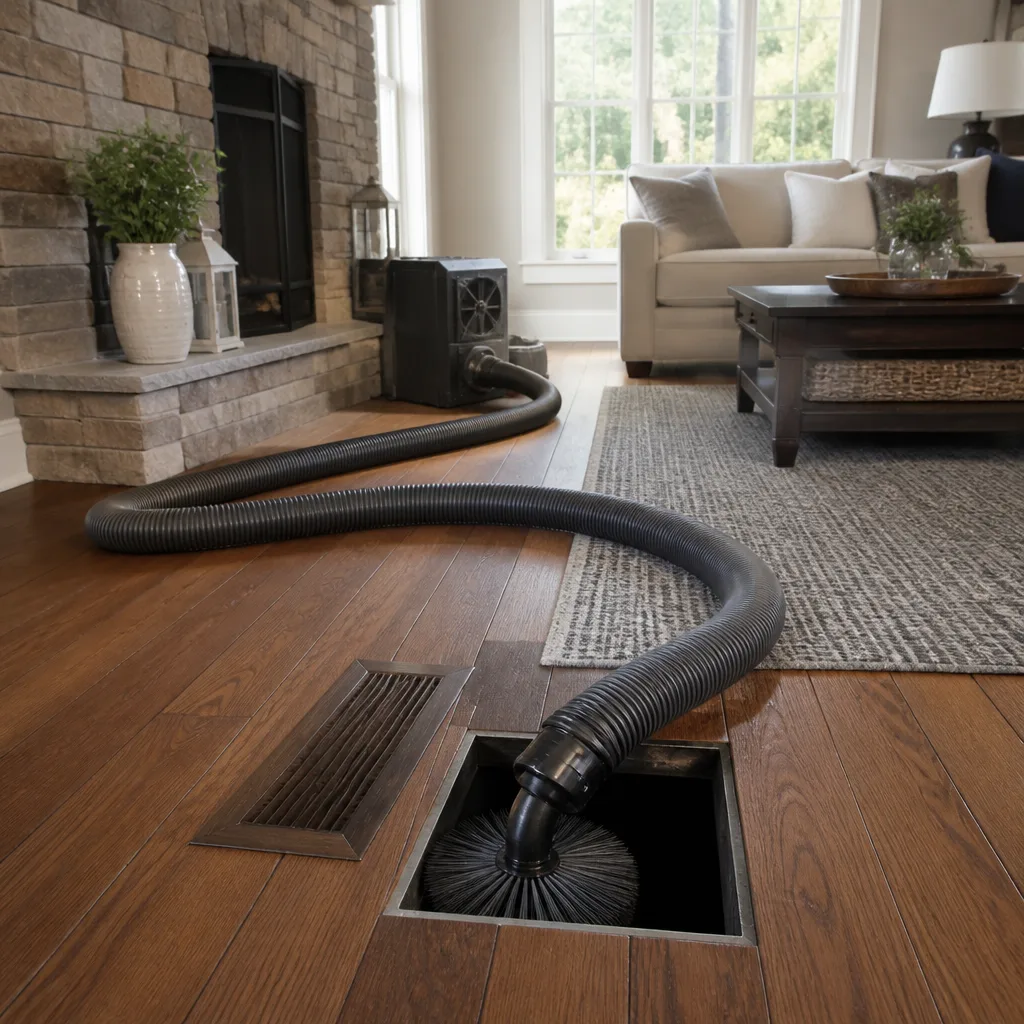 Whole-home duct cleaning
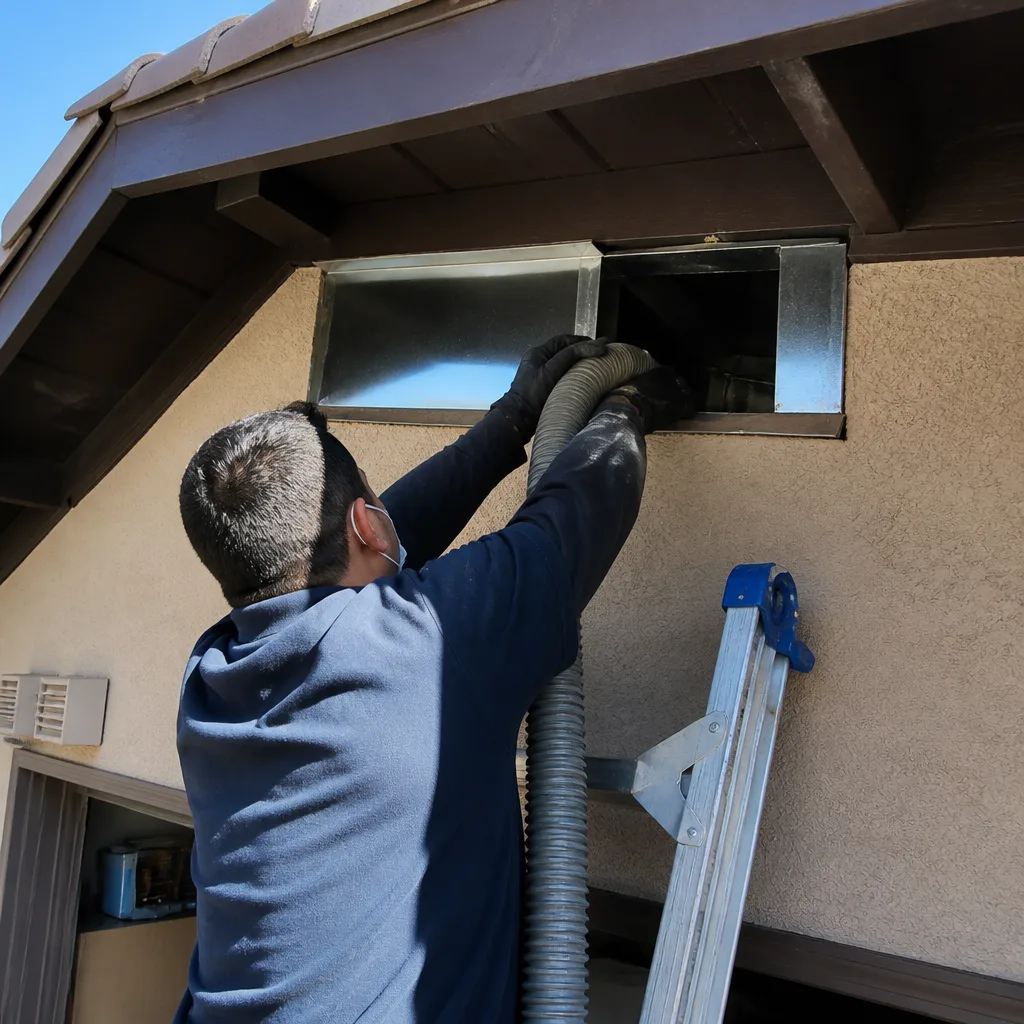
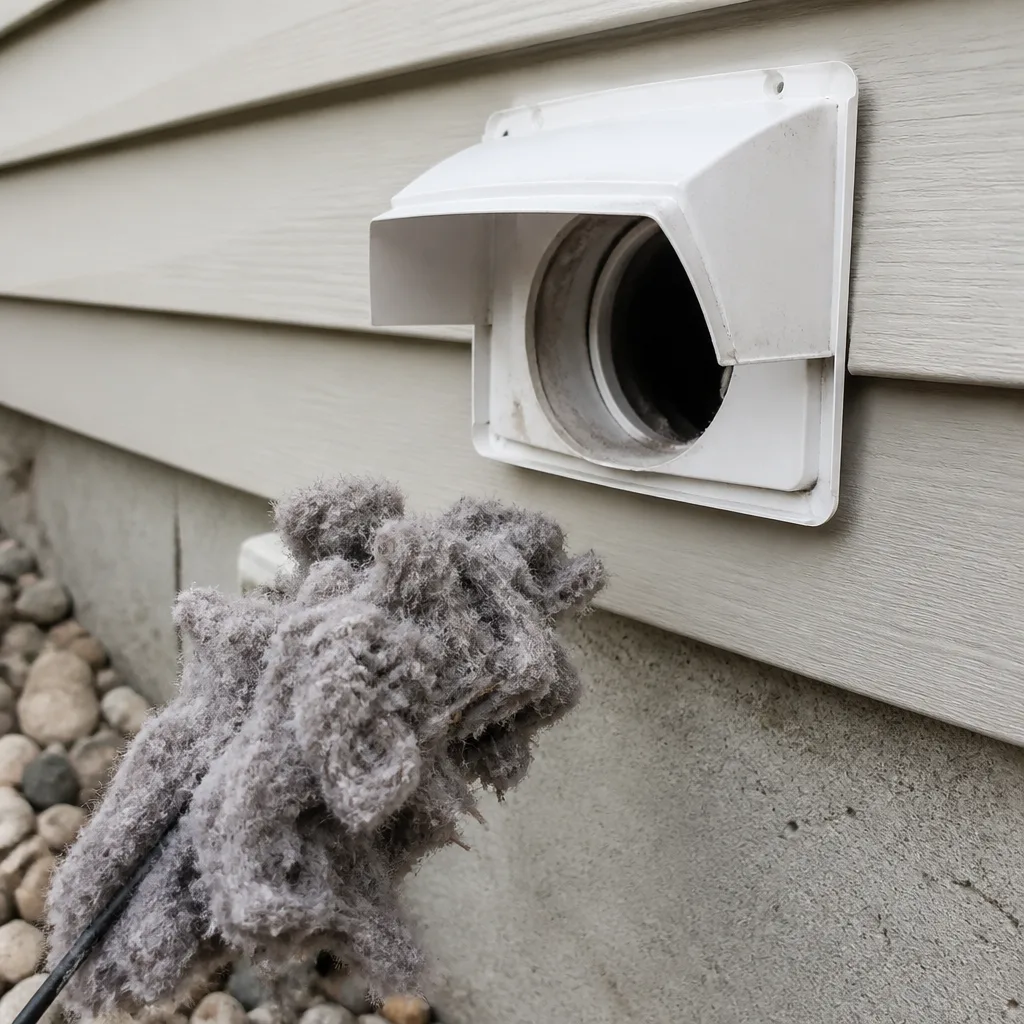 Dryer vent cleaning
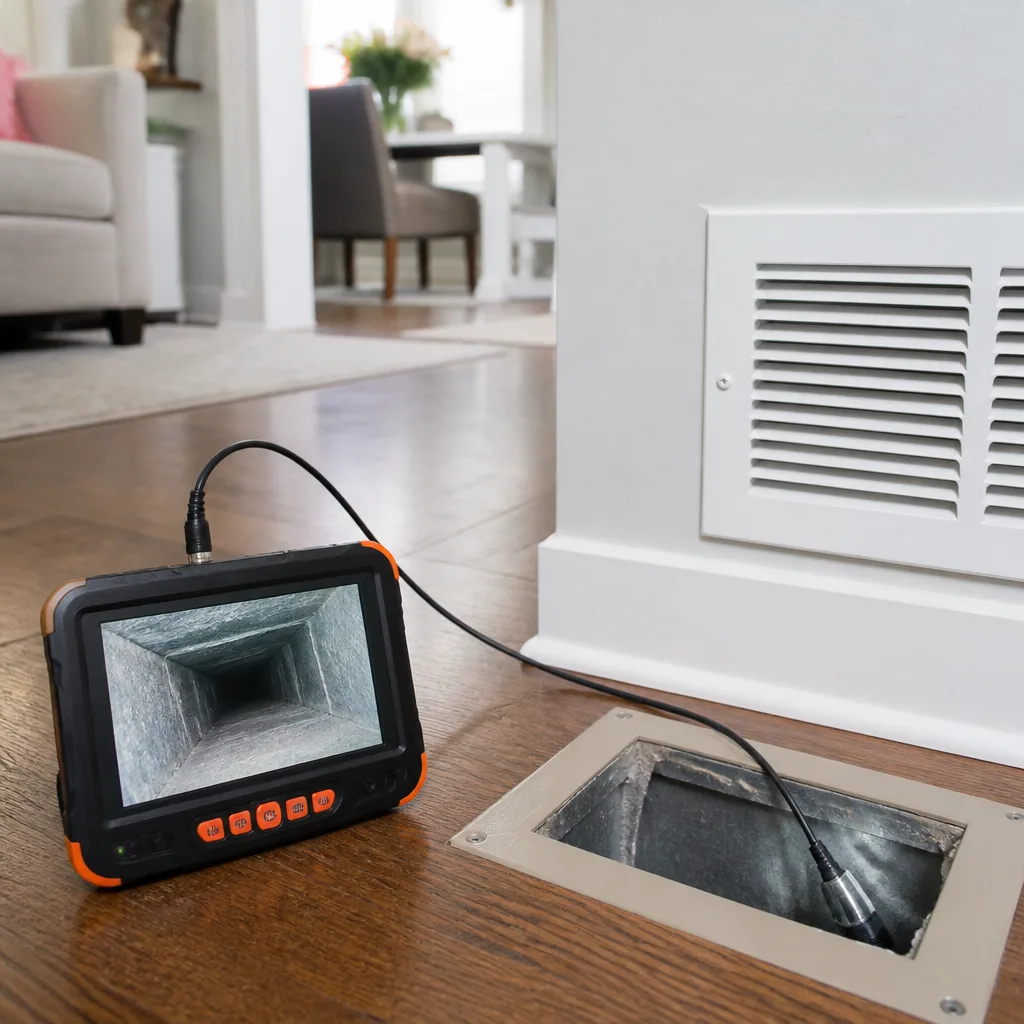 Camera inspection
 Sanitizing & deodorizing
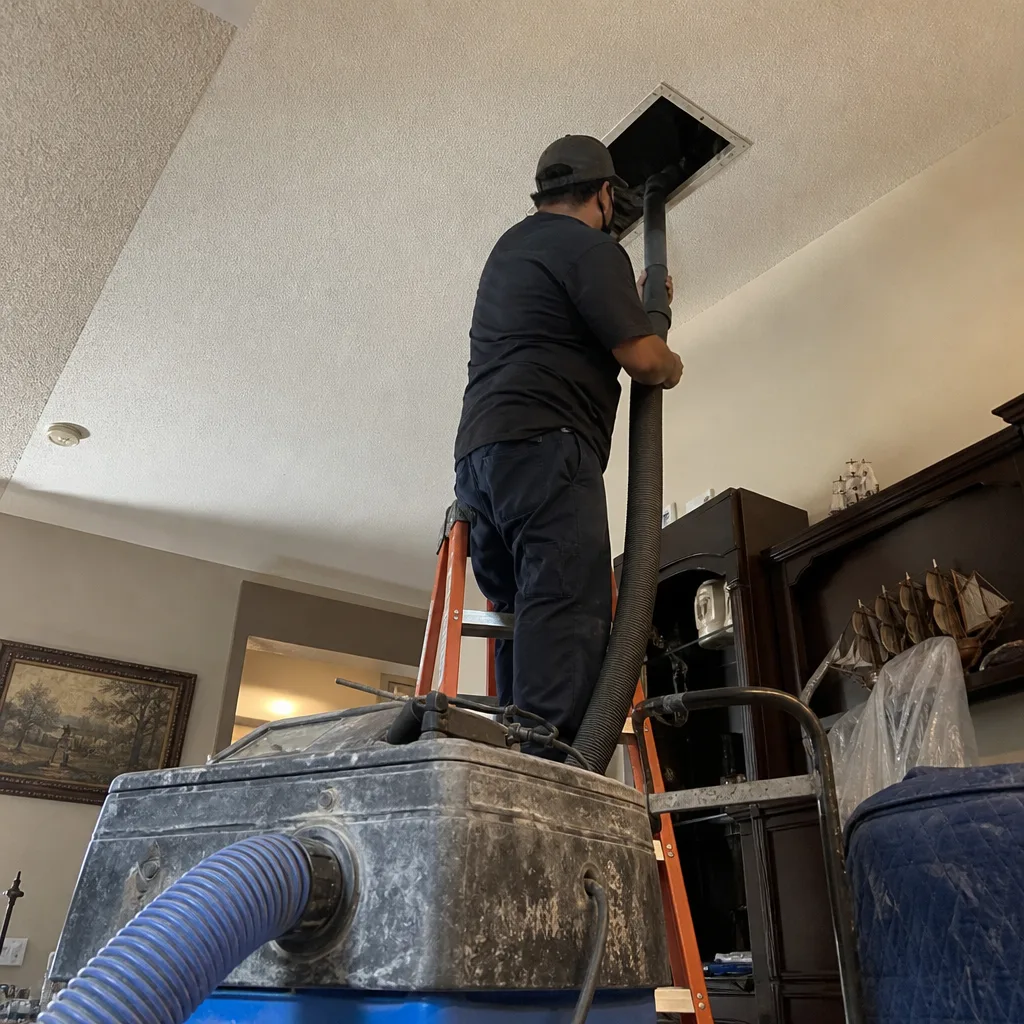
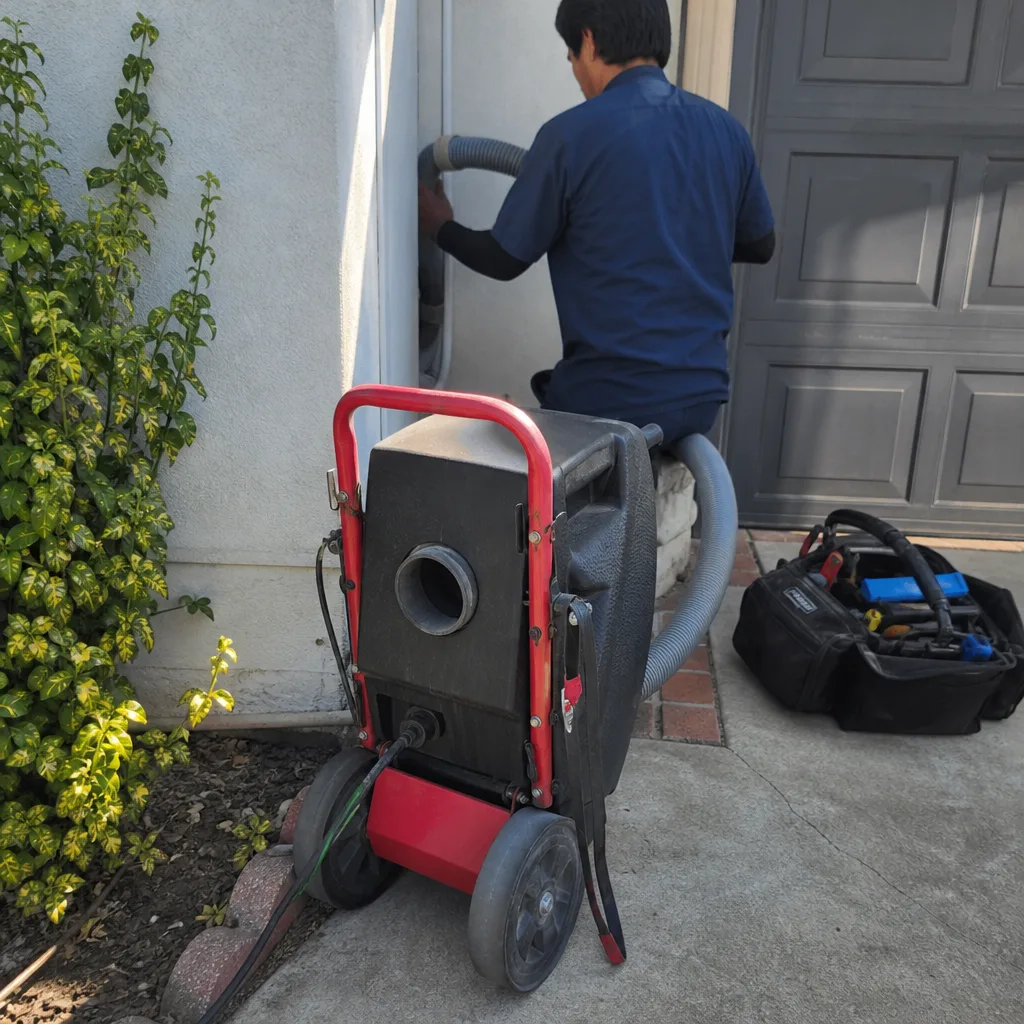
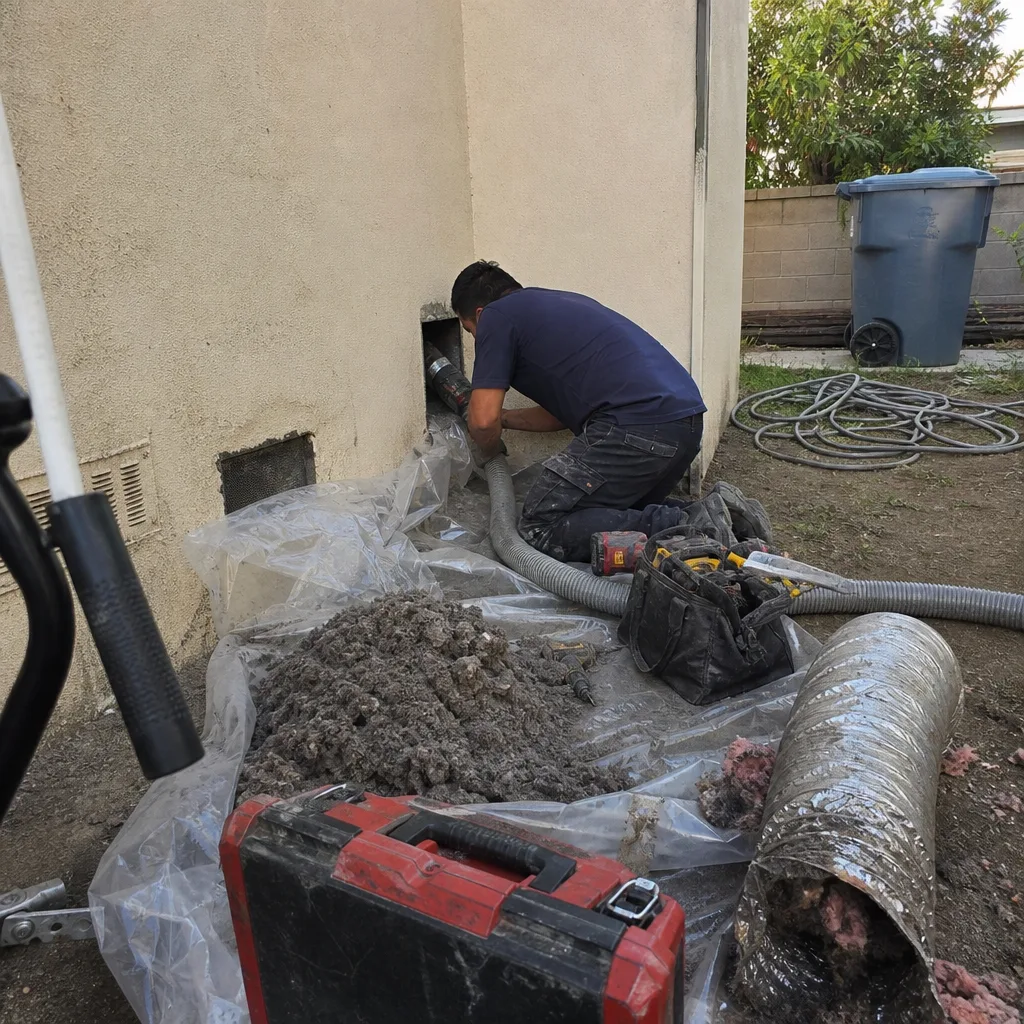
Whole-system duct and dryer vent check with before-and-after photos - you see exactly what came out of your vents
That "$99 whole-house special" is a bait ad - the real number appears once they are in your hallway, or the "clean" is a shop-vac at the register. We photograph the inside of your ducts before and after instead.
Air Duct Cleaning Emergency Preparedness Guide for Santa Ana Homes
The 2020 Southern California wildfire season pushed PM2.5 levels in Santa Ana past 200 µg/m³ on multiple consecutive days. That’s fine enough to slip straight through the MERV-8 filter most homes run and settle into the fiberglass liner of your supply ducts. Once it’s in there, it doesn’t leave on its own. This guide explains what actually contaminates a duct system during a wildfire or Santa Ana wind event, what doesn’t, and the specific steps you can take right now – including scheduling our Air Duct Cleaning services – so your home isn’t part of the post-event scramble.
Styles & brands we work with
- Whole-home duct cleaning
- Dryer vent cleaning
- Camera inspection
- Sanitizing & deodorizing
Quick Answer
Wildfire smoke contaminates duct interiors only when fine particulate (PM2.5 and smaller) is drawn past the filter and deposits inside supply ducts, return cavities, and the air handler. Homes with upgraded MERV-13 filtration, sealed ductwork, and a clean pre-season system recover in days. Homes that wait until smoke has already infiltrated face longer downtime and a more involved cleaning; see our Air Duct Cleaning Maintenance Checklist for Santa Ana Homeowners for pre-season steps. The core of emergency preparedness for Santa Ana homes is pre-event readiness: inspect, seal, upgrade the filter, and know your shutdown protocol before the smoke arrives.
Table of Contents
- Wildfire Smoke vs. Santa Ana Wind: Two Different Contamination Problems
- How Smoke Actually Gets Into Duct Interiors
- Pre-Wildfire-Season Duct Readiness Checklist
- First 24 Hours After a Major Smoke Event: A Step-by-Step Protocol
- Air Handler Coil Protection During High-Particulate Events
- Filter Upgrades and Return Air Intake Inspection for Santa Ana Homes
- When Post-Event Cleaning Is Actually Required (and When It Isn’t)
- Common Mistakes to Avoid
- When to Call a Professional
- Frequently Asked Questions
- The Bottom Line
Wildfire Smoke vs. Santa Ana Wind: Two Different Contamination Problems
Santa Ana faces two distinct airborne events, and they contaminate ductwork in fundamentally different ways. Treating them as the same problem leads to the wrong response.
Wildfire smoke is dominated by PM2.5 and ultrafine particles: combustion byproducts, carbon soot, and volatile organic compounds that condense onto surfaces. These particles are small enough to behave like a gas in some respects. They pass through standard fiberglass filters, travel through the return air system, and deposit on the interior surfaces of duct liners, blower wheels, evaporator coils, and plenum walls. The residue is oily, fine, and bonds to surfaces. It doesn’t blow out with a quick vacuum pass. It requires agitation and extraction with professional-grade equipment like Nikro source-removal systems.
Santa Ana wind events, by contrast, carry coarse mineral particulate: fine dust, sand, and soil lifted from the dry inland basins and pushed through Orange County at 40 to 60 mph. This material is larger, typically PM10 and above. Most of it gets caught by a functioning filter. The particles that do enter the system settle as a dry, gritty film in return air plenums and on blower housings. The contamination is abrasive, not adhesive. It responds to standard source-removal cleaning more readily, but it also accelerates wear on blower motor bearings and can imbalance a blower wheel if accumulation is heavy.
Here’s the distinction that matters for preparedness: a Santa Ana wind event mostly tests your filtration and sealing, while a wildfire smoke event tests everything including your air handler’s internal surfaces. We’ve pulled blower wheels from homes after major smoke seasons that had a visible carbon film baked onto each fin, reducing airflow by 15 to 20 percent. That’s not something a filter upgrade alone prevents.
For Santa Ana homeowners, this means one thing: your readiness plan has to address both particle types, because both arrive every single year.
How Smoke Actually Gets Into Duct Interiors
There’s a common misunderstanding that a closed house with the AC off is protected from wildfire smoke. In practice, most Santa Ana homes leak air aggressively. The typical single-family residence here was built between 1950 and 1990, often with unsealed duct joints, gaps at the return plenum, and chases that connect unconditioned spaces directly to the air handler. Smoke doesn’t need the fan running to enter. It follows pressure differentials.
Here’s what actually happens during a heavy smoke event:
- Stack effect and wind pressure push smoke into the building envelope through soffit vents, gable vents, can lights, and wall penetrations. Even with windows closed, a Santa Ana home may exchange its air volume multiple times per hour under 40 mph wind loading.
- The return air side of the HVAC system acts as a collection point. If the return plenum has gaps, smoke is drawn through those gaps whenever the blower runs. This bypasses the filter entirely.
- Particles that do pass through the filter deposit on the first surface they encounter. That is usually the evaporator coil, followed by the supply plenum and the first few feet of duct liner.
- Once deposited, PM2.5 and soot particles bond to surface oils and residues. They don’t re-entrain easily, which is why they persist. The air in the home may clear within days while the duct system remains contaminated for months.
The implications for preparedness are direct: sealing the return side of the system matters just as much as upgrading the filter. A MERV-13 filter in a leaky return plenum is like locking the front door while leaving the back door open. And for homes that have never had the ducts inspected, the first pre-season step is finding out where the air is actually entering – not just what’s in front of the filter grille.
In our experience working on Santa Ana homes, the most common leak points are the return chase connections at the top plate, the filter slot itself (especially on 1-inch filter frames), and the junction between the air handler cabinet and the supply plenum. These are all fixable, but they have to be found first.
Pre-Wildfire-Season Duct Readiness Checklist
The single most effective thing a Santa Ana homeowner can do for smoke readiness is to prepare the system before fire season starts. Wildfire season in Southern California now runs effectively from June through November, with the highest risk concentrated in September and October when fuels are driest and Santa Ana winds return. That means the window for pre-season work is late spring: May and early June.
Here’s the checklist we recommend, in order of priority:
- Inspect and seal the return air pathway. This includes the return plenum, the filter slot, and the connection between the return duct and the air handler. Use mastic sealant or foil tape rated for HVAC temperatures. Silicone caulk does not belong on ductwork.
- Upgrade the filter to MERV-13 if your system can tolerate it. Not every air handler can. The blower has to overcome the added static pressure, and some older single-speed motors will overheat or short-cycle. Have the static pressure measured before committing to a filter upgrade. A MERV-11 is a reasonable compromise for systems that can’t handle MERV-13.
- Inspect the return air intake grille location and condition. If the return is in a hallway ceiling adjacent to an attic access, confirm the attic hatch is sealed. If the return is in a wall cavity, check that the cavity is sealed at the top and bottom plates. Open wall cavities used as return chases pull in dirty air from unconditioned spaces.
- Have the ducts cleaned if they haven’t been in the last two to three years. Existing dust and debris in the ductwork acts as a binder for smoke particles. A clean duct surface captures far less soot than a dirty one. See our full process on the Air Duct Cleaning in Santa Ana page.
- Confirm the condensate drain line is clear and the drain pan is clean. During smoke events, soot-laden air condenses moisture on the coil, and the runoff carries carbon into the drain pan and line. A partially clogged drain line will overflow and carry that contamination into the cabinet and surrounding drywall.
- Document the system’s pre-season condition with photos. Take clear photos of the filter, the coil, the blower wheel, and the inside of the supply plenum. If you need to file a claim or dispute a post-event assessment, baseline documentation is the strongest evidence you can have.
We recommend scheduling this work before the first major heat wave, not after. Every contractor in Orange County gets deluged with calls during the first smoke day of the season, and wait times stretch from days to weeks precisely when the problem is most urgent.
First 24 Hours After a Major Smoke Event: A Step-by-Step Protocol
When a heavy smoke event hits Santa Ana, what you do in the first 24 hours determines whether your duct system stays clean or becomes a long-term reservoir of carbon soot. Here’s the protocol we recommend, based on what we’ve seen work and fail across hundreds of systems in this city.
Step 1: Shut the system down
Turn the thermostat to “Off” and, if accessible, switch off the breaker for the air handler and condenser. Do not run the fan in “On” mode, even if the system isn’t cooling. Running the blower during peak smoke actively draws contaminated air through the return side and deposits it inside the system. The single worst thing you can do during a smoke event is circulate air through a dirty system.
Step 2: Seal the return intake
Cover the return air grille with a fresh MERV-13 filter or, if the system is fully off, a piece of cardboard taped over the opening. This prevents passive smoke migration into the ductwork through the return side while the system is down.
Step 3: Do not attempt to clean filters while smoke is still present
Replacing a filter during active smoke exposure just introduces fresh particulate into the system between the old filter and the new one. Wait until outdoor air quality improves to at least an AQI of 100 before opening the filter slot.
Step 4: Once AQI drops, replace the filter
Inspect the old filter. If it shows heavy gray to black discoloration across the face, the smoke load was high and the system likely has internal deposition. If the filter shows only light discoloration at the edges, the system may have been protected. Document the condition with photos.
Step 5: Assess whether post-event cleaning is warranted
This is where a lot of Santa Ana homeowners get upsold. See the section below on when post-event cleaning is actually required. The short answer: if the filter was saturated and the system ran during peak smoke, internal cleaning is almost certainly justified. If the system was off and the return was sealed, it may not be.
Air Handler Coil Protection During High-Particulate Events
The evaporator coil is the component most vulnerable to smoke damage and the one almost no preparedness guide mentions. During a smoke event, the coil acts as a particle trap. Its cold, wet surface condenses water vapor from the air stream, and suspended particles in that air stream deposit onto the coil face. Over hours of smoke exposure, the coil accumulates a greasy carbon film that reduces heat transfer efficiency and creates a substrate for microbial growth.
Here’s the problem: once soot bonds to a coil, it cannot be removed by simple washing. The coil needs to be pulled or accessed through the plenum and cleaned with a coil-specific chemical that breaks down the carbon bond. That’s a substantial procedure, and it’s one of the repairs most cleaning companies in Orange County don’t touch because it requires refrigeration knowledge and access to the refrigerant circuit.
Protecting the coil during a smoke event comes down to two things:
- Keep the coil dry. If the system is in cooling mode during a smoke event, the coil is wet and actively condensing. Running the system with a MERV-13 filter helps, but it doesn’t prevent condensation loading. If possible, switch the system to fan-off and shut it down entirely during peak PM2.5 hours. A dry coil captures dramatically less soot than a wet one.
- Add a secondary filter at the return grille during fire season. A MERV-13 filter at the return intake combined with a standard filter at the air handler provides staged filtration. The primary filter captures the bulk of the coarse material, and the secondary filter captures the fine fraction before it reaches the coil.
If your coil appears darkened after a smoke event, or if you’ve noticed reduced cooling capacity and a musty odor from the vents, the coil is the likely culprit. That’s a service we handle directly. And since we’re an Air Duct Repair in Santa Ana contractor, we can address the coil and the surrounding ductwork in the same visit rather than referring the work out.
Honeywell and Aprilaire both make high-efficiency filter media rated for wildfire smoke conditions, and we work with their products regularly on Santa Ana systems. The key is verifying your air handler can move air through them at an acceptable static pressure before committing.
Filter Upgrades and Return Air Intake Inspection for Santa Ana Homes
Most Santa Ana homes we inspect are running MERV-8 fiberglass or pleated filters, which is the standard builder-grade spec and entirely inadequate for wildfire smoke. A MERV-8 filter captures around 70 to 85 percent of particles between 3 and 10 microns, but only 20 percent of particles in the 1 to 3 micron range and almost none of the sub-micron particles that make up the bulk of wildfire smoke. The particles that do damage to duct interiors are precisely the ones a MERV-8 filter misses.
Upgrading to MERV-13 changes the math significantly. A MERV-13 filter captures 90 percent of particles in the 1 to 3 micron range and 50 percent or more of particles down to 0.3 microns. That’s the difference between a duct system that accumulates a carbon film during smoke season and one that stays effectively clean.
But here’s what filter marketing doesn’t tell you: MERV-13 media is denser and creates more static pressure drop than MERV-8. Some systems handle it fine. Others don’t. The older single-speed PSC blower motors common in Santa Ana’s housing stock from the 1960s through the 1990s will often underperform or overheat when asked to pull against a MERV-13 filter on a hot day. The furnace limit switches will trip, the system will short-cycle, and cooling will suffer.
Before upgrading, have the static pressure measured across the filter and the coil. If total external static pressure exceeds 0.5 inches of water column with the old filter, a MERV-13 upgrade may push the system past its operating range. A lower-pressure-drop MERV-11 filter is sometimes the right call for these older systems.
The return air intake grille itself is the other half of this conversation. If the grille is undersized relative to the system’s airflow requirement, the filter will load unevenly and bypass air around the edges. We routinely find 14×20 grilles on systems that need 20×20 or larger. In those cases, a grille upgrade is the first step toward proper filtration, because the best filter in the world can’t do its job if air is flowing around it.
Nikro and Abatement Technologies both manufacture pressure-drop measurement tools and filtration specs that we use on these assessments. The point is measurement first, purchase second. Buying a MERV-13 filter without knowing the system’s static pressure is how homeowners end up with a blower motor failure in August and a $900 repair bill that had nothing to do with smoke.
When Post-Event Cleaning Is Actually Required (and When It Isn’t)
This is the section that separates honest contractors from the ones who call every homeowner in Santa Ana after a smoke event and tell them their ducts are ruined. The truth is more nuanced.
Post-event cleaning IS warranted when:
- The system ran in cooling or fan modes during peak PM2.5 hours (typically when AQI exceeded 150).
- The filter was visually saturated or bypass was occurring around the filter edges.
- The return plenum, filter slot, or duct joints have unsealed gaps, and the system was running during the event.
- The coil shows visible darkening or the condensate line is discharging dark water after the event.
- Occupants notice a persistent smoke odor from the vents two weeks after the event, even when outdoor air has cleared.
- The ducts have not been cleaned in three or more years and were already carrying a dust load before the smoke arrived.
Post-event cleaning is probably NOT warranted when:
- The system was shut down before smoke reached peak concentrations and the return was sealed.
- The filter was recently replaced and remains visually clean after the event.
- The system has sealed ductwork, a MERV-13 filter, and no measurable static pressure issues.
- The home is new construction with no leak pathways and the system never ran during the event.
If post-event cleaning is indicated, the process is materially different from a routine maintenance cleaning. Smoke residue requires agitation methods beyond simple negative-pressure vacuuming. We use professional Nikro source-removal equipment that mechanically agitates the duct walls while pulling the system under negative pressure, which is the difference between dislodging soot and just moving air past it. A shop vac stuck in a register hole does not clean a smoke-contaminated system, no matter what the $99 coupon says.
For homes with confirmed smoke deposition, we also recommend evaluating the duct liner. Older fiberglass-lined ducts absorb smoke particulate into the liner fibers and cannot be effectively cleaned in place. In those cases, repair or replacement of the affected sections is the only remedy. That’s part of why we’re structured as a full-service Air Duct Repair in Santa Ana operation, not just a cleaning crew.
One more thing worth saying: after a smoke event, run the system in fan-only mode for 20 to 30 minutes with a fresh MERV-13 filter installed and windows open. This purges loose surface particulate from the return side before it has a chance to settle. It costs nothing and reduces the total soot load that a professional cleaning has to remove.
Common Mistakes to Avoid
- Running the fan continuously during a smoke event. This is the single most common error we see in Santa Ana. Homeowners think the filter will “scrub” the air, but they’re actually drawing contaminated air into the system at a rate far higher than passive infiltration. Shut the system down.
- Replacing the filter during active smoke. The moment the filter slot opens, unfiltered smoke enters the air handler cabinet and deposits on the blower wheel and coil. Wait for the AQI to drop below 100 before touching the filter.
- Assuming duct cleaning is a scam. Some homeowners swing the other way and skip legitimate cleaning after a real smoke event. If the system ran during peak AQI and the filter was saturated, internal deposition is a physical fact, not a sales pitch. The question is who does the work and with what equipment, not whether it’s needed.
- Using a $79 coupon service after a smoke event. A cheap cleaning after smoke contamination does more harm than good. Inadequate extraction leaves dislodged soot suspended in the system, where it redistributes through the home over the following weeks. Proper smoke remediation uses professional agitation and extraction methods, which costs more because it takes more time and better equipment.
- Neglecting the dryer vent during fire season. Lint-choked dryer vents are a year-round fire risk, and the NFPA explicitly links clogged dryer vents to residential fires. During Santa Ana wind events, dry, hot conditions compound that risk. If you’re doing pre-season readiness on the HVAC side, the Dryer Vent Cleaning in Santa Ana service should be on the same checklist.
- Upgrading to MERV-13 without measuring static pressure. We covered this earlier, but it bears repeating: a filter upgrade that overloads an aging blower motor trades a smoke problem for a mechanical failure. Measure first.
- Waiting until the first smoke day to book service. Every company in Orange County is booked solid when the Santa Ana winds carry smoke into the basin. Pre-season work is schedulable, unhurried, and done properly. Emergency work is rushed by definition.
When to Call a Professional
There are specific situations where DIY duct assessment crosses the line into specialized work. If you’re seeing dark residue around return air grilles or supply diffusers, that indicates deposition inside the system. If the vents emit a smoke or acrid odor weeks after the event, the contamination is embedded in the duct liner or coil. If you can hear airflow hissing at duct joints, or if rooms are heating unevenly and the coil is darker than it should be, these are structural or mechanical issues that a vacuum can’t address. Any of these conditions warrants a professional assessment. The systems we clean in Santa Ana use Rotobrush and Nikro equipment, brands common in commercial and remediation-grade work, and that equipment matters when the goal is source removal rather than surface agitation. Anvil Air Duct Cleaning offers free estimates in Santa Ana: call (833) 620-2848 and we’ll assess the actual condition of your system, document what we find, and give you an honest recommendation on whether cleaning is justified.
Frequently Asked Questions
Whole-system air duct cleaning in Santa Ana typically runs $350 to $700 for an average single-family home, depending on the number of supply and return runs, accessibility of the air handler, and whether the system has been cleaned before. Condos and smaller homes fall on the lower end; larger two-story homes with multiple zones run higher. The variables that move the price are the linear footage of ductwork, the number of registers, and the condition of the system at the time of cleaning. Any quote given over the phone without knowing those variables is a guess. Call (833) 620-2848 for a free estimate tied to your actual system.
Cheap duct cleaning quotes typically reflect a different scope of work: a single technician with a portable vacuum that only reaches the first few feet of duct from each register, no full-system negative pressure, no agitation tools, and no time allocated for air handler or coil access. The work takes 60 to 90 minutes and removes a fraction of what a professional source-removal cleaning removes in three to four hours. For a Santa Ana home with smoke deposition in the ducts, a cheap cleaning dislodges material without extracting it, leaving soot suspended in the air stream where it redistributes through the home over the following weeks. The cost difference isn’t between similar services at different prices; it’s between different scopes of work. If the system has real contamination, the cheap quote ends up being the expensive one because you pay for it twice.
A legitimate duct cleaning company documents the work with before-and-after photos of the interior of the duct runs, the return plenum, the blower housing, and the coil. You should be able to see the difference in surface condition in the photos, not just take the technician’s word for it. At Anvil, we photograph the interior of the ducts before and after every cleaning and show those photos to the homeowner while we walk through what was found and what was removed. If a contractor can’t or won’t show you the inside of your ducts, the work wasn’t done. That’s the standard we’d recommend for any Santa Ana homeowner evaluating a cleaning company.
For most Santa Ana homes, air duct cleaning is warranted every two to three years, with more frequent service justified for homes with pets, smokers, recent construction or renovation dust, or occupants with respiratory conditions. Homes near major traffic corridors, the 5, 22, or 55 freeways, tend to accumulate particulate faster due to ambient brake dust and road soot. After a significant wildfire smoke event where the system ran during high AQI conditions, cleaning is warranted regardless of the last service date. The two-to-three-year interval is a baseline, not a guarantee.
No. If the system was shut down before peak smoke rolled in, the return was sealed, and the filter was in good condition, the system may not need professional cleaning. The deciding factors are whether the blower ran during high-AQI hours, whether the filter was saturated, and whether the return side has gaps that bypass the filter entirely. If those conditions were present, internal deposition is likely and cleaning is the right call. If they weren’t, the system probably just needs a filter change and a visual inspection.
Yes. Santa Ana wind events carry coarse mineral dust that abrades blower motor bearings, increases static pressure on the filter, and deposits a dry film throughout the return side. Over multiple wind seasons, this grit builds up on the blower wheel and throws it out of balance, which shortens motor life and increases noise. Homes with older metal-duct systems and unsealed return chases accumulate this dust much faster than newer sealed systems. Pre-season inspection and cleaning before the wind season starts is the most cost-effective way to prevent this slow deterioration.
No. The inside of a duct system is not accessible with residential tools. What appears to be a full duct run from the register is only the first few feet of a run that may extend 20 to 30 feet through walls, floors, and attic space. Smoke soot requires agitation and extraction methods that create negative pressure across the entire run, not just local vacuuming at the register opening. A shop vac with a hose taped to a drill does not clean ductwork, and the attempt gives a false sense of security while the actual contamination is still in the system. Professional source-removal cleaning uses equipment like Rotobrush and Nikro systems specifically designed for full-run access and agitation, which is not something you can replicate with consumer tools.
The Bottom Line
Santa Ana’s wildfire smoke and wind events are annual, predictable, and increasingly severe. The homes that come through them cleanest are not the ones that scramble for emergency cleaning after the smoke clears. They’re the ones that sealed their return air pathway, verified their filtration, documented their system condition, and knew their shutdown protocol before the first AQI spike of the season. Preparation is a mechanical process, not a hope. It means inspecting, measuring, sealing, and cleaning before the demand cycle starts, because once the Santa Ana winds push smoke into the basin, the window for cheap, deliberate work closes fast. For more guides & resources on protecting your home, visit our blog, or if you’re in Santa Ana and want a straight assessment of where your system stands, call (833) 620-2848 for a free estimate. We’ll look at your ducts, your filter, your coil, and your return path, and tell you what the system actually needs, not what our schedule needs it to be.
Written by the team at Anvil Air Duct Cleaning, serving Santa Ana since 2017.
See the difference
 Before
 After
 Before
 After
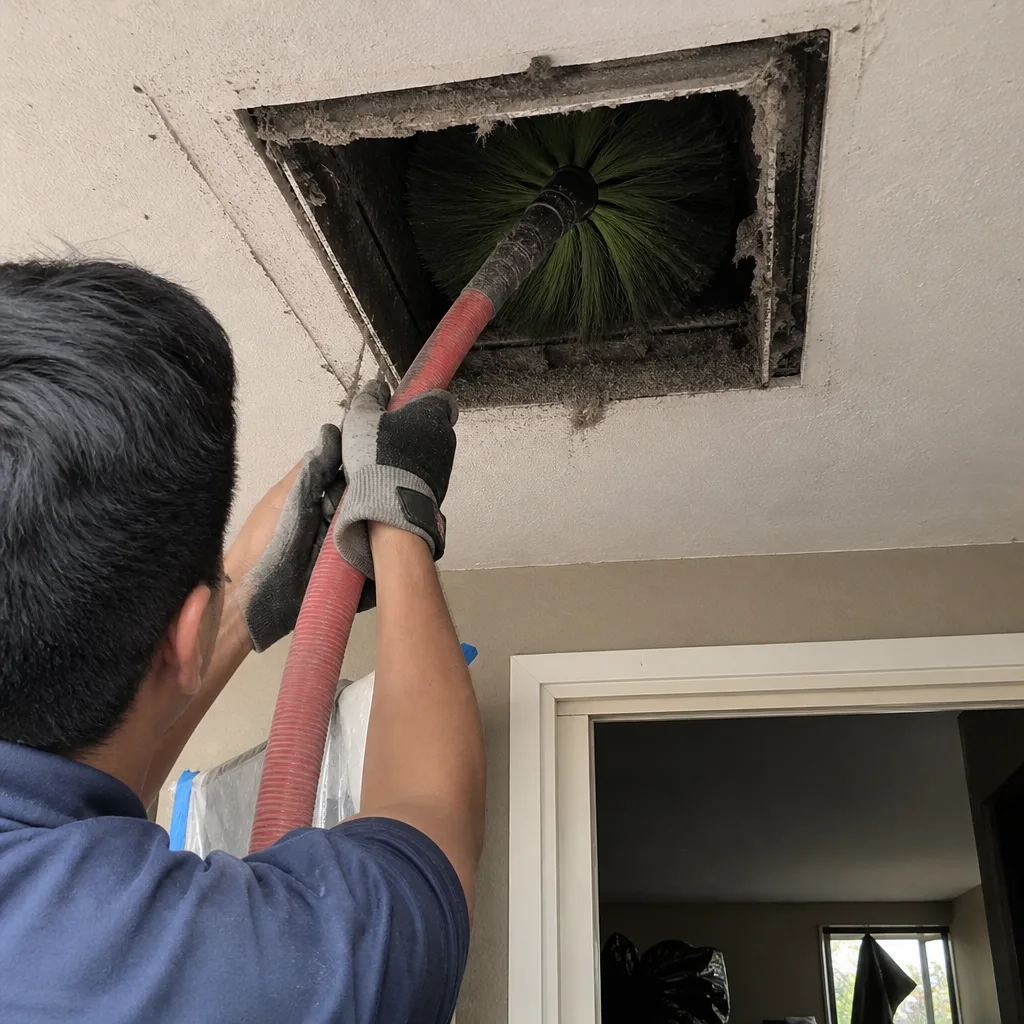 Before
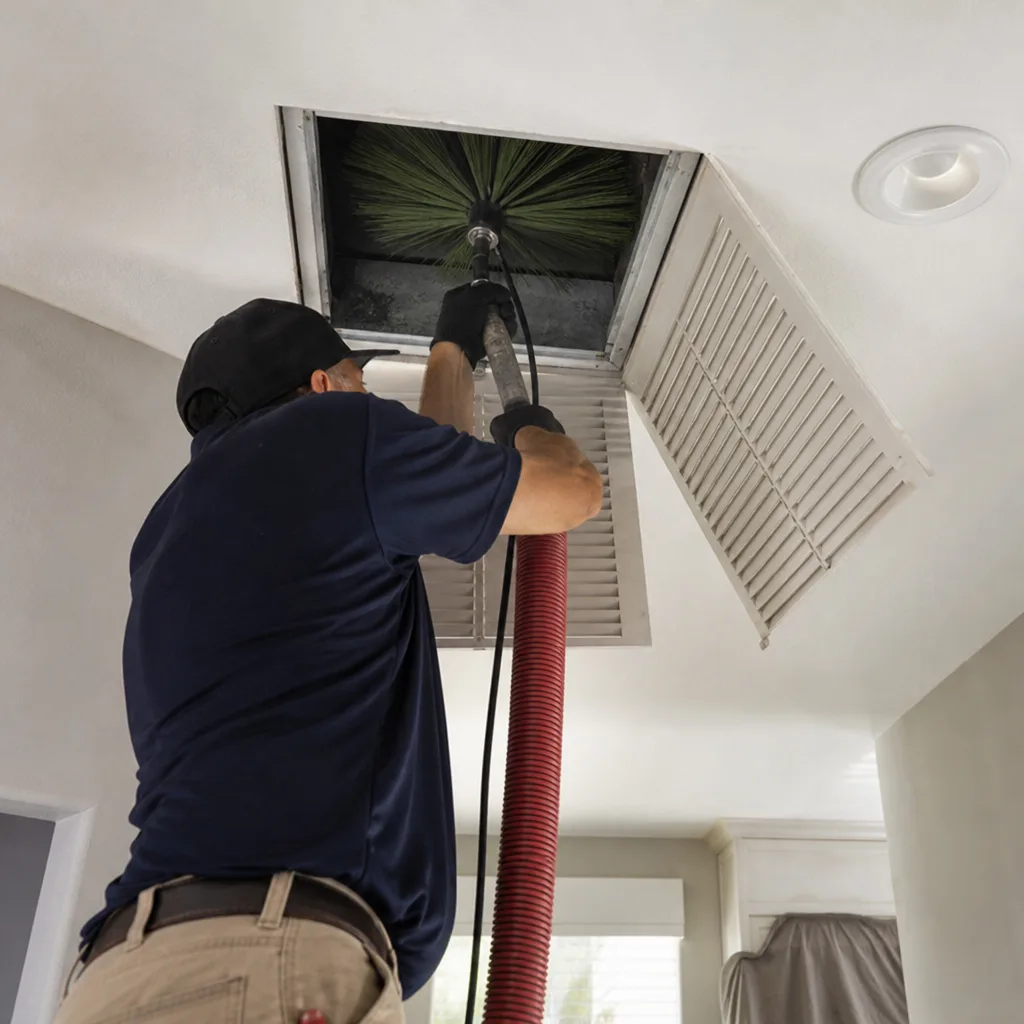 After