
Last updated November 3, 2026
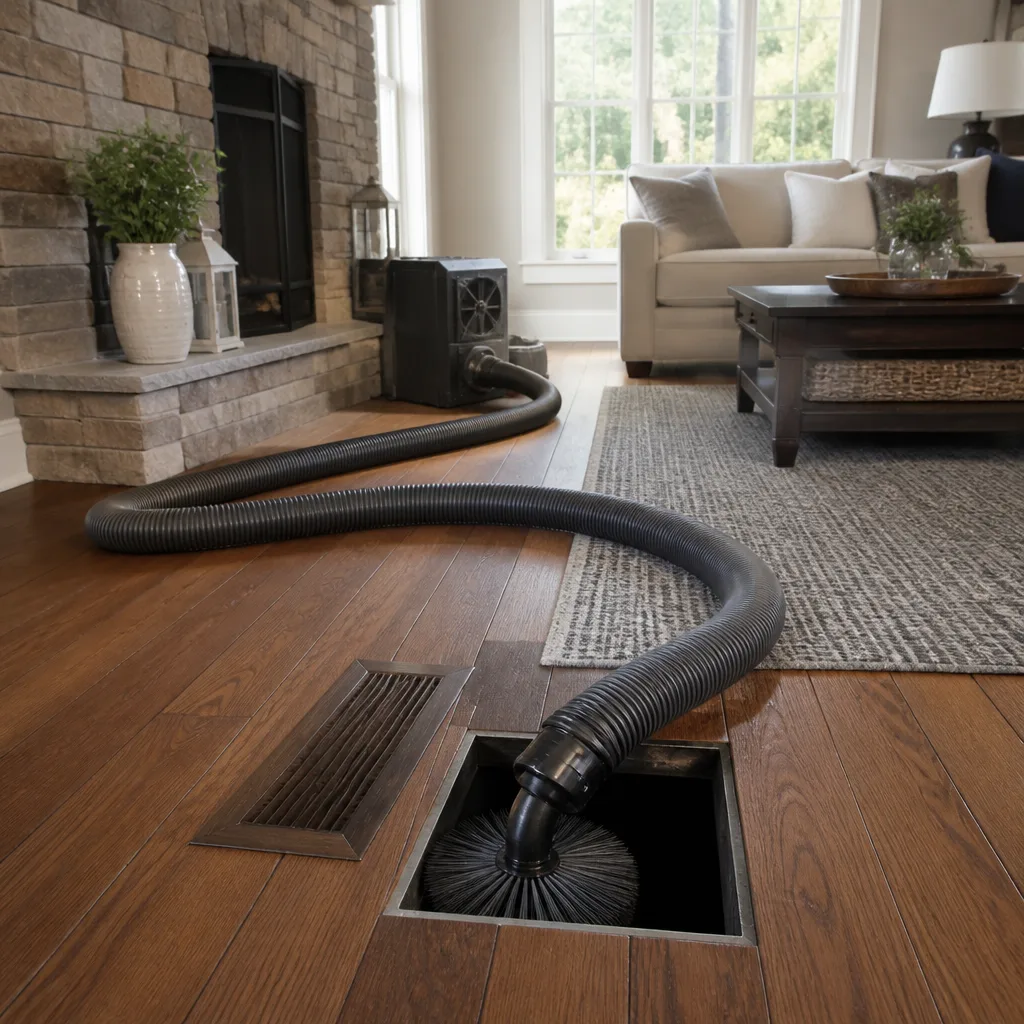 Whole-home duct cleaning
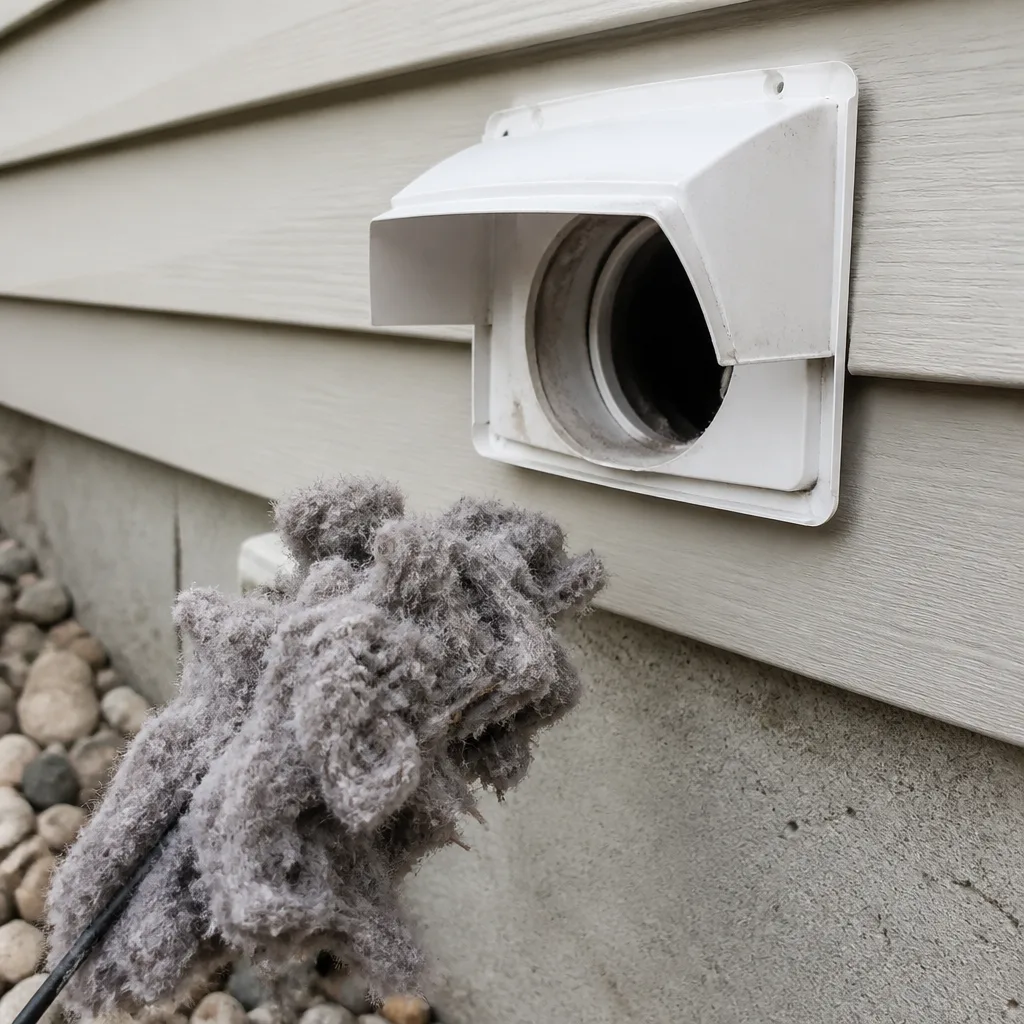 Dryer vent cleaning
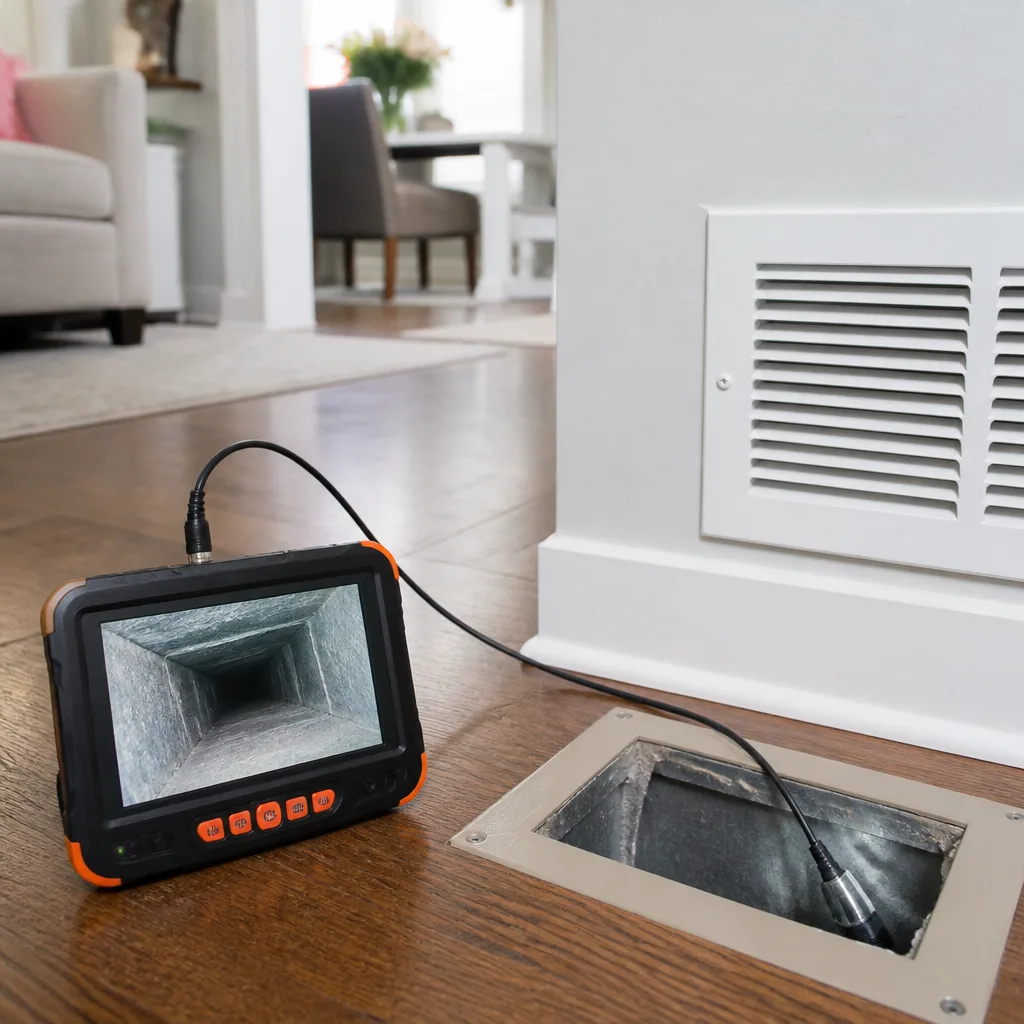 Camera inspection
 Sanitizing & deodorizing
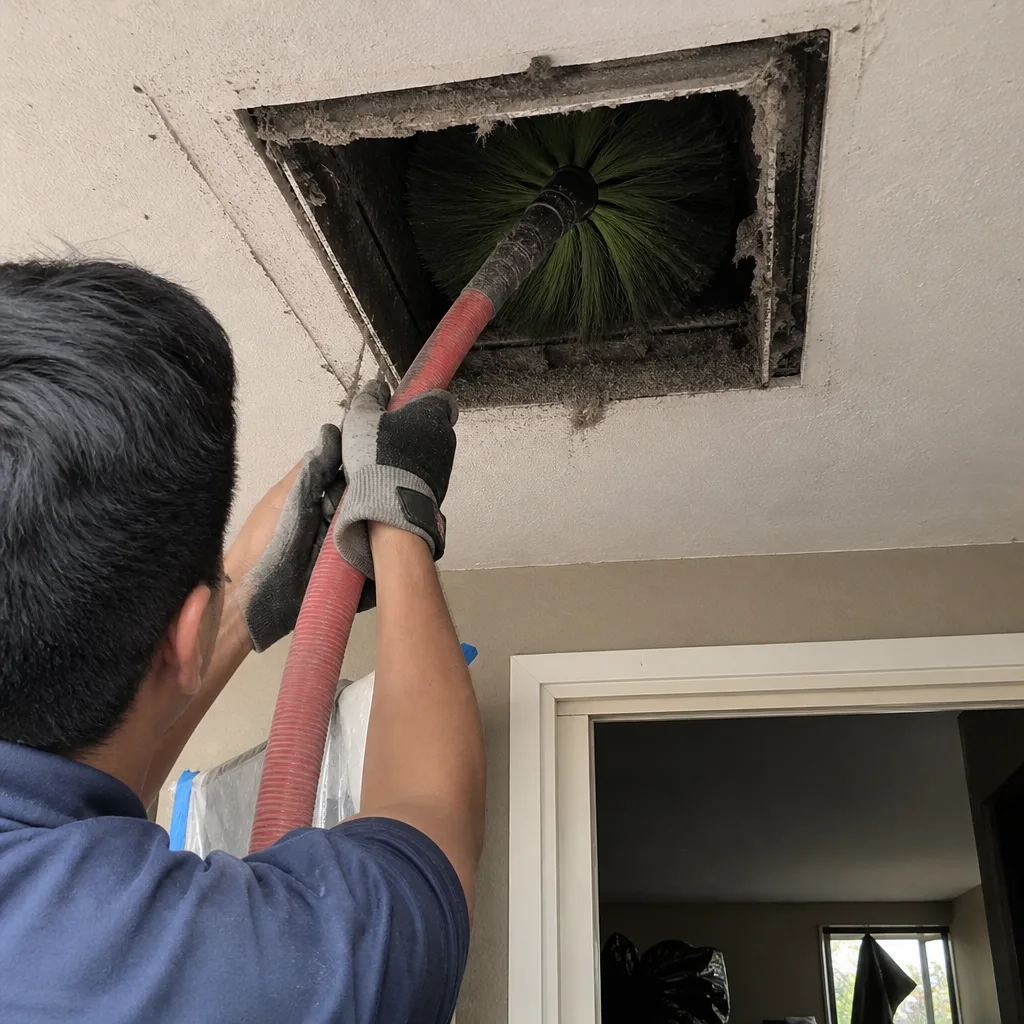
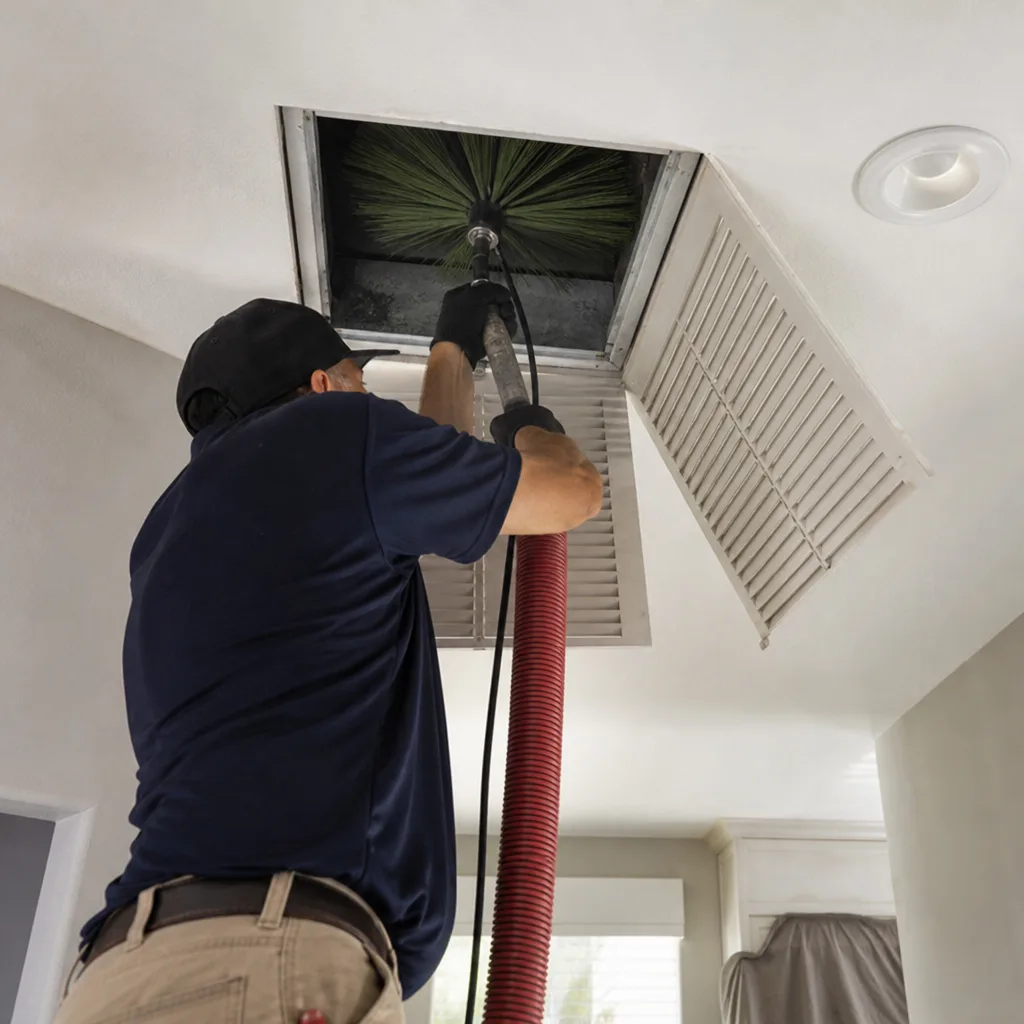
Whole-system duct and dryer vent check with before-and-after photos - you see exactly what came out of your vents
That "$99 whole-house special" is a bait ad - the real number appears once they are in your hallway, or the "clean" is a shop-vac at the register. We photograph the inside of your ducts before and after instead.
Choosing the Right Air Duct Cleaning Brand: A Buyer’s Guide for Santa Ana
Here’s something most homeowners in Santa Ana don’t realize until after they’ve paid for a subpar cleaning: there is no national air duct cleaning brand with franchise standards rigorous enough to guarantee consistent equipment use across locations. A nationally branded contractor in Santa Ana might show up with a portable unit that barely outperforms a glorified shop vac, while an independent local operator runs a Nikro commercial unit that outperforms it by every measurable metric. Our Air Duct Cleaning services and this guide will show you how to evaluate contractors based on the equipment they own, the process they document, and the questions they can answer, because those factors predict results far more reliably than the name painted on the van.
Styles & brands we work with
- Whole-home duct cleaning
- Dryer vent cleaning
- Camera inspection
- Sanitizing & deodorizing
Quick Answer
The right air duct cleaning contractor in Santa Ana is one who owns professional-grade equipment from brands like Rotobrush, Nikro, or Abatement Technologies, can show you written scope and before-and-after photos of the actual ducts, and offers repair capability rather than cleaning alone. Brand name matters less than the tool platform, because the machine dictates the depth of cleaning. Ask for the equipment model, not the company slogan.
Table of Contents
- Why the Brand Name Is the Wrong Question
- The Three Equipment Tiers: What Each Is Actually Capable Of
- Brands That Signal a Serious Operator
- A Five-Question Framework for Evaluating Any Contractor
- How to Read Google Reviews for Duct Cleaning Specifically
- Why Local Independents Often Outperform National Brands
- The Full Air Pathway: Why Cleaning Alone Is Half the Job
- Common Mistakes to Avoid
- When to Call a Professional
- Frequently Asked Questions
- The Bottom Line
Why the Brand Name Is the Wrong Question
When you hire a contractor in Santa Ana, you’re not hiring a brand. You’re hiring the person who shows up with a machine, runs it through your ducts, and either removes the contamination or doesn’t. The brand on the truck is a marketing layer. The equipment inside the truck is the service.
We’ve seen this confusion cost homeowners real money. A homeowner calls a company because they recognize the name from a radio ad. The technician arrives, walks through the house, and produces a portable vacuum that has roughly the same suction power as a carpet cleaner. The job takes forty-five minutes. The homeowner pays three hundred dollars. The ducts look the same before and after because the system never had the negative pressure to pull debris from deep inside the runs.
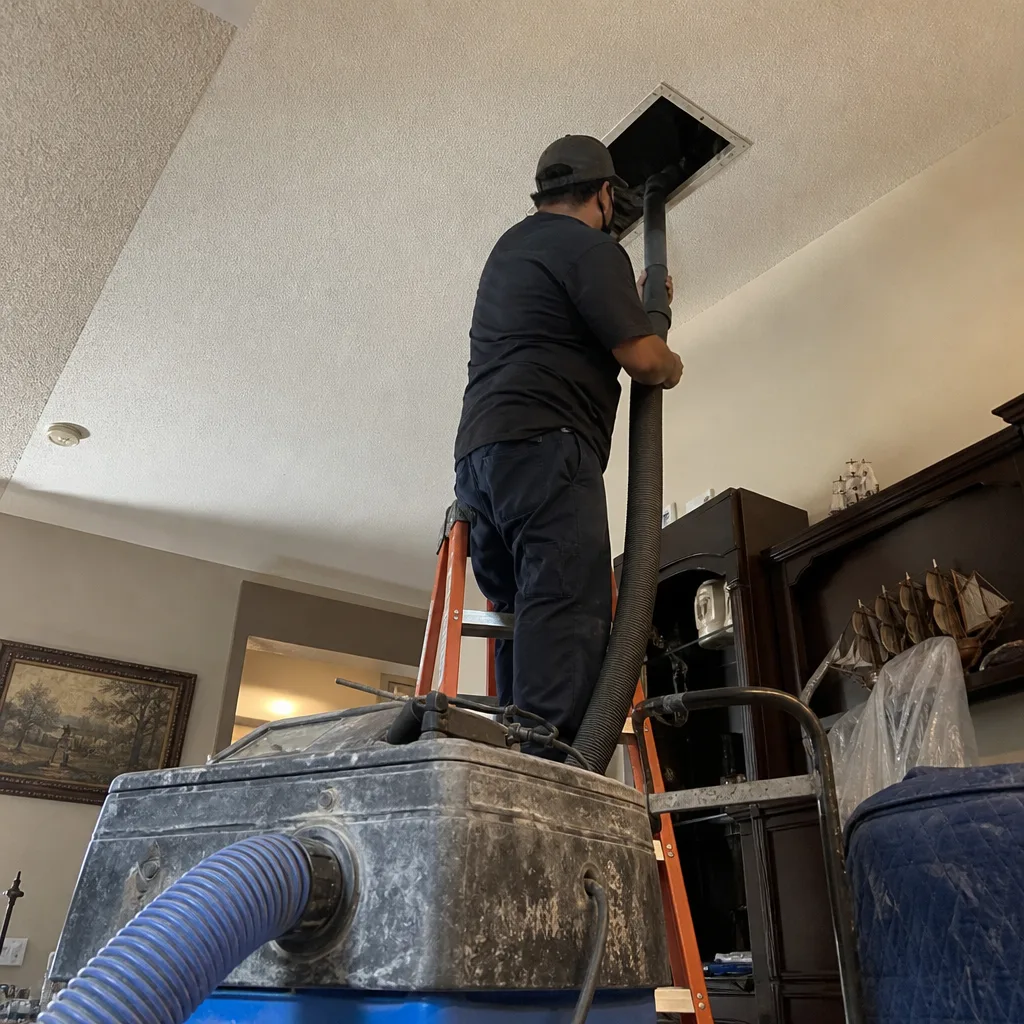
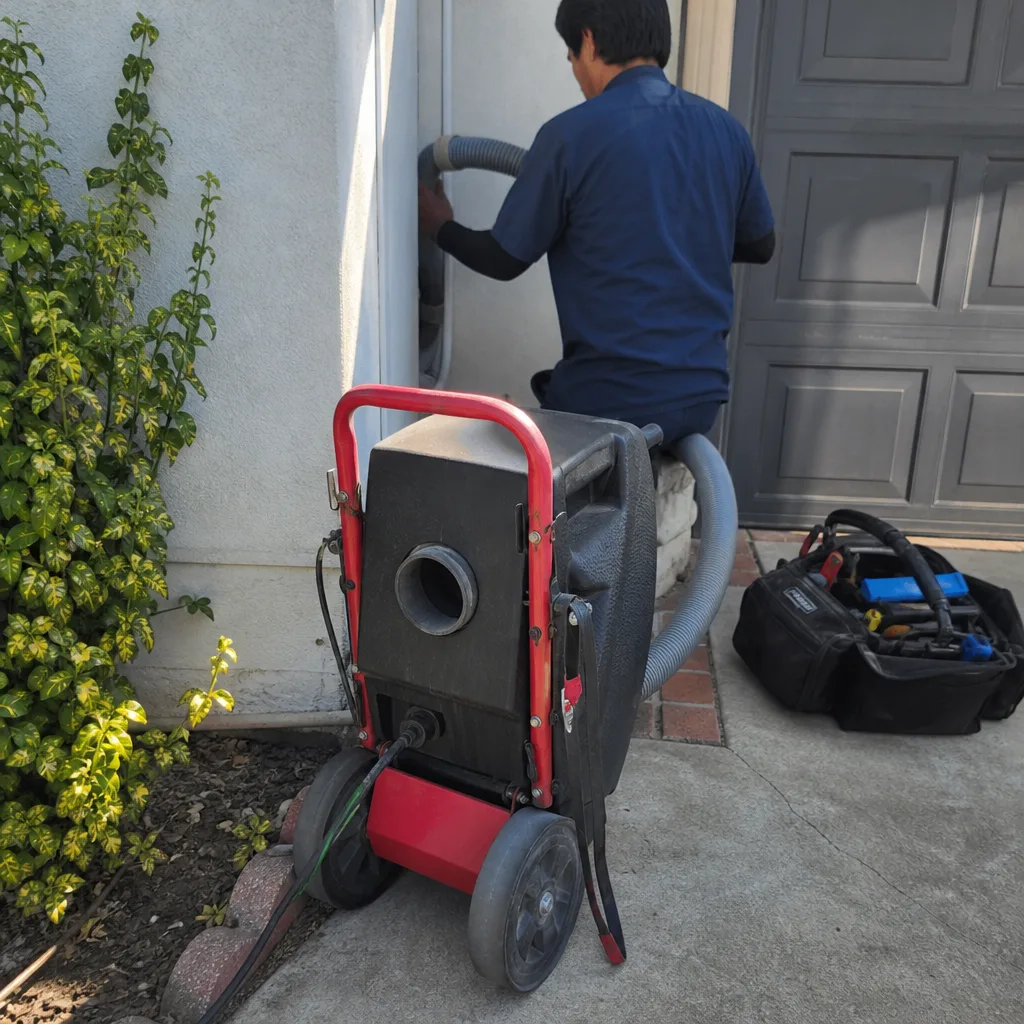
Compare that to a contractor who runs a commercial-grade negative air machine. That unit creates enough airflow to pull dust, debris, and biological material from the entire duct system. The job takes three to five hours for a typical Santa Ana home. The difference is measurable in the dust that ends up in the collection bag, not in the company’s logo.
This is why the evaluation framework in The Complete Air Duct Cleaning Guide for Santa Ana Homeowners centers on equipment verification rather than brand reputation. A company name tells you what the marketing department decided to call itself. An equipment list tells you what the technician can actually do.
The Three Equipment Tiers: What Each Is Actually Capable Of
Air duct cleaning equipment falls into three broad categories. Understanding these tiers is the single most useful thing you can do before calling contractors in Santa Ana, because the tier determines the depth of cleaning more than any other factor.
Tier 1: Portable Residential Units
These are the machines you’ll see most often in budget-priced offers. They typically operate on standard 120-volt household power and generate airflow in the range of 1,000 to 2,000 cubic feet per minute. A portable residential unit can remove loose dust from the first few feet of accessible ductwork. It cannot create the sustained negative pressure needed to pull material from deep inside a long duct run, and it struggles with the kind of fine particulate that settles in the return side of a typical Santa Ana tract home system. If a contractor’s entire operation fits in the passenger seat of a sedan, this is the tier they’re running.
Tier 2: Commercial Portable Units
This tier is where professional work becomes possible. Machines in this class include the larger Nikro and Rotobrush systems built for commercial use but available to residential contractors who have invested in them. They generate substantially more negative pressure, often in the 3,000 to 5,000 CFM range, and they pair with agitation tools that mechanically dislodge debris before the airflow removes it. The combination of agitation plus negative pressure is what separates real cleaning from surface-pass work. A contractor running this tier can clean the full length of a duct run, not just the visible sections near the registers.
Tier 3: Truck-Mounted Systems
Truck-mounted units are gas or diesel powered, generate 10,000 CFM or more, and represent the ceiling of residential capability. They are uncommon in Santa Ana because the market skews toward residential and light commercial work, and the equipment cost is substantial. When you do find a contractor running a truck-mounted system, you’ve found someone who invested heavily in capability. The practical difference for a typical 1,500 to 2,800 square foot Santa Ana home is marginal compared to a well-run Tier 2 operation, but the equipment signal is unambiguous.
Most homeowners should look for a contractor operating at Tier 2. That’s where professional-grade brands like Rotobrush and Nikro live, and it’s the level at which thorough cleaning of a full residential system becomes mechanically possible.
Brands That Signal a Serious Operator
Not every equipment brand carries equal weight. Here’s what we run at Anvil Air Duct Cleaning and why specific brands matter.
Rotobrush systems are built around a rotating brush head that mechanically agitates the duct wall while a vacuum pulls the loosened material out simultaneously. The value of the rotating brush is that it breaks the bond between debris and the duct surface. Dust that has been sitting in a Santa Ana home’s ducts through multiple dry, dusty summers doesn’t just float away with airflow. It has to be mechanically dislodged first. Rotobrush handles that.
Nikro produces the negative air machines and HEPA-filtered vacuums that handle the extraction side. Nikro equipment is common in commercial and industrial settings, including remediation work. A contractor running Nikro extraction equipment is signaling that they take airborne particulate seriously enough to invest in the same filtration standards used in mold and asbestos abatement, even if their residential work never touches those categories.
Abatement Technologies sits at the intersection of air quality and containment. Their equipment is built for situations where keeping particulate out of the occupied space matters as much as removing it from the ducts. Contractors with Abatement Technologies in their lineup are typically equipped to handle more than routine cleaning, and they’re using HEPA-standard filtration on their extraction equipment.
You don’t need to memorize these names. You need to ask the contractor what they run and then compare the answer against this list. If the answer is a brand you’ve never heard of, or a generic “professional equipment” with no specificity, keep looking.
A Five-Question Framework for Evaluating Any Contractor
Use these five questions on every contractor you call in Santa Ana. The answers tell you more in five minutes than an hour of reading reviews.
- “What specific equipment model do you run?” A serious contractor answers immediately with a brand and model. “Rotobrush, Nikro, Abatement Technologies” is a credible answer. “Oh, you know, the standard stuff” is not. The contractor should be proud of their equipment investment, not vague about it.
- “Is the system under negative pressure during cleaning?” Correct answer: yes, using a HEPA-filtered negative air machine. This is the mechanically non-negotiable requirement for actual duct cleaning. Without negative pressure, the contractor is blowing debris around or suctioning only at the register face, not cleaning the duct interior.
- “What does your written scope include?” You want a defined list: how many vents, how many returns, whether the main trunk line is included, whether the blower and plenum are cleaned, what the time estimate is. A contractor who won’t put scope in writing before starting is a contractor who will have a conversation with you after the work about what “clean” means. That’s a conversation you never want to have.
- “Do you provide before-and-after photos of my actual ducts?” Any contractor with a proper camera or scope can show you the duct interior before and after. We consider documentation standard practice, not an upsell. If a contractor treats this as a special request or says it’s not necessary, treat that as a red flag. You deserve proof the work happened.
- “If you find damaged ducts, what happens?” This question separates cleaning-only crews from full-service contractors. A cleaning-only crew will either ignore the damage or refer you to a third party. A contractor with air duct repair in Santa Ana capability can address structural issues on the same call. That matters because cleaning a duct system with holes or disconnected sections is like mopping a floor with a leak in the ceiling.
How to Read Google Reviews for Duct Cleaning Specifically
Most homeowners read reviews wrong for this industry. A five-star review that says “friendly, on time, would recommend” tells you nothing about whether the ducts were actually cleaned. Duct cleaning is a service where the customer cannot easily see the result, which means reviews skew toward personality factors unless the reviewer knows what to look for.
Here’s what we’ve learned from watching this market in Santa Ana: the specific language in a review predicts the quality of the work.
Reviews that signal a real cleaning:
- Mentions of before-and-after photos being shown or provided. This means the contractor documented the work.
- Specific references to the amount of debris removed: “the collection bag was full of dust and construction debris.”
- Descriptions of the process taking multiple hours. A thorough cleaning of a standard Santa Ana home is not a forty-five minute job.
- References to the equipment itself: “they ran a big HEPA unit in the hallway.”
- Mention of repair or structural findings: “they found a disconnected return and fixed it on the spot.”
Reviews that signal a surface-pass job:
- Generic praise with no process detail: “great service, friendly techs.”
- Emphasis on speed as the primary virtue: “in and out in under an hour, amazing!”
- No mention of any equipment, any debris, or any duration.
- Reviews that cluster around a very low price point: “got it done for $49, can’t beat that.”
Read for specificity. The more a reviewer describes the actual mechanics of what happened, the more likely the job was real. Vague reviews of vague work are a pattern, not a coincidence.
Why Local Independents Often Outperform National Brands
The national brand you recognize from television has a business model built on lead generation and marketing efficiency, not technical depth. The actual work in Santa Ana is performed by whichever local subcontractor or franchise operator won the territory, and the equipment they run varies wildly from market to market. There is no national standard that requires a franchisee to run a Rotobrush or Nikro system. There is only the local operator’s willingness to invest.
A local independent contractor’s reputation lives and dies in one geography. The owner’s name is on the business, often literally. When a local contractor in Santa Ana does bad work, the community finds out quickly. That accountability mechanism is stronger than any national brand’s compliance department.
But “local” alone is not a credential. The right local independent will have three things: a documented process, professional-grade equipment you can verify, and a written scope. Industry affiliations like NADCA membership signal training and process adherence, but require verification. California contractor licensing is mandatory and worth checking on the CSLB website. A local contractor who combines documented process with the right equipment is the sweet spot.
At Anvil Air Duct Cleaning, we’re a Santa Ana-based operation running professional equipment from Rotobrush, Nikro, and Abatement Technologies. We repair, not just clean, because our technicians are trained to diagnose what they find inside the ducts. We’re part of the Anvil Air Duct Cleaning home of services that treats the air system as a connected whole.
The Full Air Pathway: Why Cleaning Alone Is Half the Job
Here’s exactly what we do when we evaluate a home in Santa Ana. We treat the system as one connected pathway: return ducts pulling air in, the blower moving it, supply ducts pushing it out, and the dryer vent exhausting to the exterior. Each component affects the others.
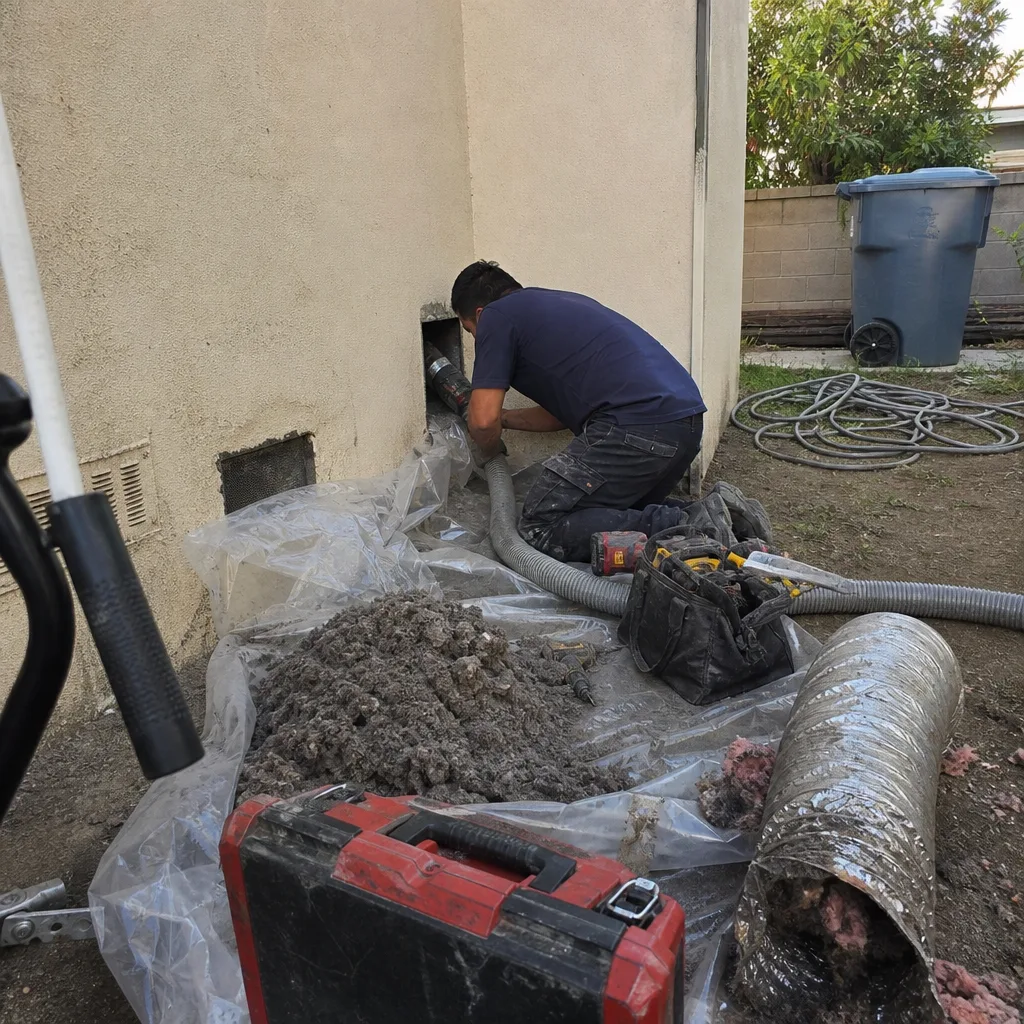
A return duct caked with dust means the blower runs harder and moves less air. A supply duct with a disconnected joint means conditioned air is being pumped into the attic or wall cavity. A dryer vent clogged with lint is a fire-risk reduction issue and a system efficiency problem simultaneously. Cleaning one part of this pathway while ignoring the rest solves a fraction of the problem.
This is why we’re fluent across major system brands like Honeywell, Aprilaire, and Guardsman. The home’s existing HVAC configuration dictates how the duct system behaves, and a technician who only knows one brand’s workflow will adapt poorly to whatever is actually installed. We adapt to the home, not the other way around.
For homeowners who’ve had surface-only cleanings before, the repair angle matters. A cleaning that doesn’t address a disconnected duct or a crushed flex run hasn’t fixed the root cause of the air loss. Our air duct cleaning in Santa Ana work includes the diagnostic eye that catches those issues, and our repair capability means we can act on them rather than writing a referral for someone else.
The Dryer Vent Connection
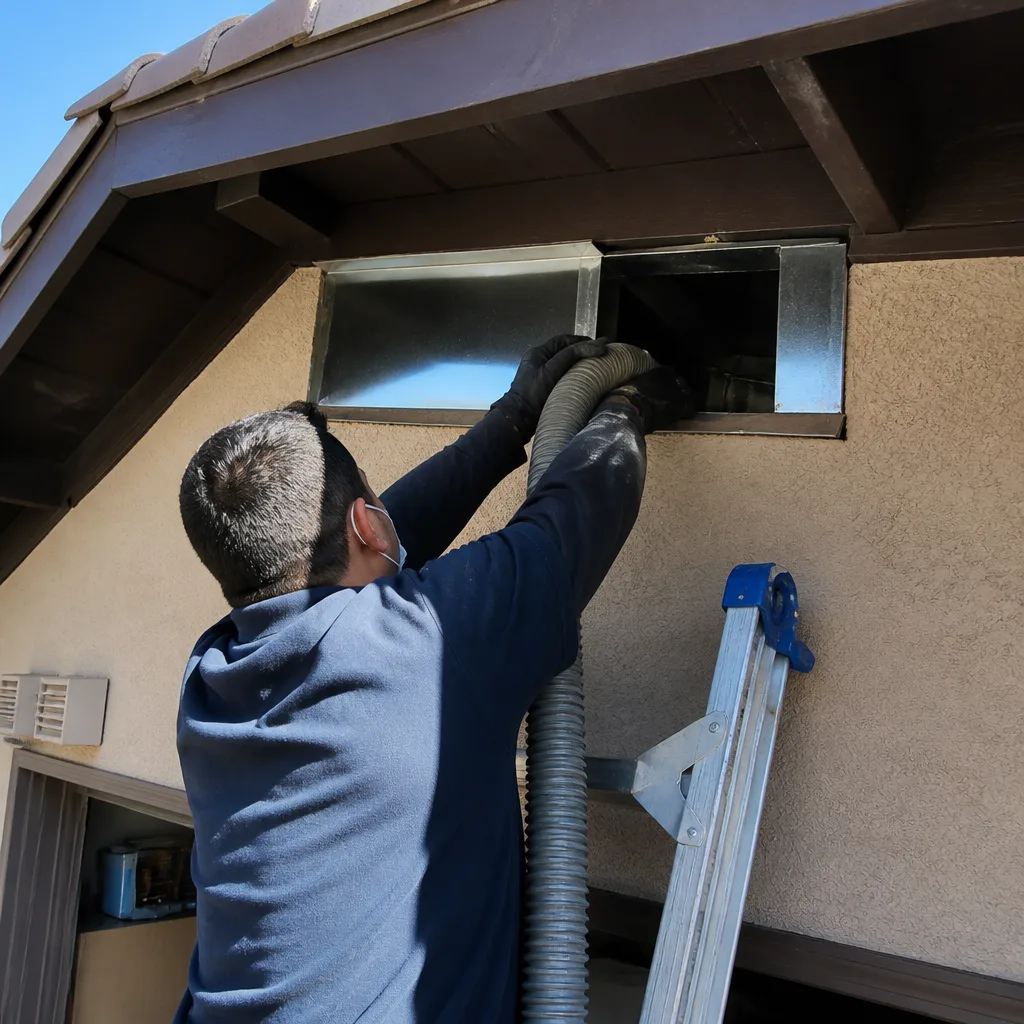
Dryer vent cleaning deserves its own mention in any buyer’s guide because it’s the component with the clearest safety connection. Lint accumulation in dryer vents is a recognized fire-risk according to NFPA guidance, and Santa Ana homes with longer vent runs or multiple bends are at higher risk for accumulation. This is part of dryer vent cleaning in Santa Ana, and it’s not a luxury add-on. It’s the part of the air pathway where the consequences of neglect are most tangible.
Common Mistakes to Avoid
- Hiring based on the lowest price. A $49 duct cleaning special in Santa Ana is priced that way because the contractor expects to finish in under an hour. A real cleaning takes hours and costs accordingly. The low price is not a discount. It’s a different, shallower service.
- Assuming a national brand means consistent quality. The brand is a franchise agreement with marketing terms. The equipment in the van is whatever the local franchisee chose to buy. Verify equipment regardless of brand recognition.
- Accepting work without a written scope. If scope is verbal, the definition of “done” becomes a negotiation after the fact. A written scope protects both parties and gives you a document to check against the work.
- Skipping the before-and-after photos. You wouldn’t hire a dentist who refuses to show X-rays. You shouldn’t hire a duct cleaner who won’t show duct interiors. Photos are the only verification available to the homeowner.
- Treating dryer vents as optional. A clogged dryer vent is both a fire hazard and an efficiency drain. Leaving it out of the job because it costs extra only makes sense if you also skip the oil change because the car still runs.
- Hiring a cleaner with no repair capability. Every duct system in an older Santa Ana home has some level of degradation. A cleaner who can’t repair will either ignore it or send you to someone else. You want one contractor who handles the full pathway.
- Believing a clean-looking register means clean ducts. The visible face of the register says nothing about the sixteen feet of duct behind it. The only way to know is to look inside with a camera. Any contractor who doesn’t offer this is not doing the job you’re paying for.
When to Call a Professional
If you’ve lived in your Santa Ana home for five or more years and have never had the ducts cleaned, you’re in the window where a professional evaluation makes sense. The same applies after a remodel, after a pest issue, or if you see dust accumulating on surfaces shortly after cleaning the home. A persistent musty smell from the vents when the system runs is another signal. We don’t recommend waiting until symptoms are obvious, because by the time a duct system is visibly dirty at the registers, the interior is typically far worse. Anvil Air Duct Cleaning offers The Complete Air Duct Cleaning Guide for Santa Ana Homeowners and free estimates in Santa Ana. Call (833) 620-2848 and we’ll evaluate the system, document what we find, and give you a written scope before any work begins.
Frequently Asked Questions
Ask what specific equipment model they run, whether the system is under negative pressure during cleaning, whether they provide a written scope, whether they show before-and-after photos, and how they handle duct repairs found during the job. A contractor who answers all five with specificity is operating at a professional level. A contractor who hedges on any of them is unlikely to deliver a thorough cleaning.
Professional duct cleaning for a standard single-family home in Santa Ana typically ranges from $350 to $700 for a complete system, depending on the number of ducts and returns and the level of contamination. Prices below $200 for a full system are almost always a surface-pass job using portable residential equipment. A legitimate contractor will give you a written scope with the price before starting.
The difference is equipment tier and process depth. A contractor running a portable residential unit can offer a low price because the job takes under an hour and doesn’t require commercial-grade extraction equipment. A contractor running Rotobrush agitation plus Nikro negative air incurs real equipment costs and real labor hours. The cheaper quote is not the same service at a better price. It’s a shallower service at a lower price.
Require before-and-after photos of your actual duct interiors. A professional contractor will have a scope camera and will document the condition before cleaning and the result after. If a contractor cannot or will not provide this documentation, assume the work was not thorough. Photos are the homeowner’s only real verification tool, because the ducts themselves are inaccessible without equipment.
For most Santa Ana homes, every three to five years is a reasonable interval, adjusted for factors like pets, renovations, smokers in the household, or nearby construction activity. Homes with significant dust accumulation from the dry Santa Ana climate may benefit from more frequent attention. The right interval is determined by inspection, not by a predetermined calendar.
No, and we say that clearly because it’s a common DIY assumption. A shop vac cannot produce the negative pressure needed to pull debris from deep inside a duct run, and it has no agitation mechanism to break the bond between debris and the duct wall. What it can do is disturb the debris at the register face and push some of it back into the duct system. Professional equipment exists for a reason. Call (833) 620-2848 for an evaluation instead of spending a weekend on a job that won’t work.
The Bottom Line
Forget the brand. A national name on the van guarantees nothing about the equipment inside it. The right contractor for a Santa Ana home is one who owns commercial-grade equipment from recognized professional brands like Rotobrush, Nikro, or Abatement Technologies, provides written scope and photographic verification, and treats cleaning plus repair as a single responsibility rather than two separate jobs. Ask the five questions. Read reviews for specificity, not star ratings. And when you find a contractor who answers clearly and documents their work, keep them, because that level of transparency is rarer in this industry than it should be.
Written by the team at Anvil Air Duct Cleaning, serving Santa Ana since 2017.
See the difference
 Before
 After
 Before
 After
 Before
 After