
Last updated November 2, 2026
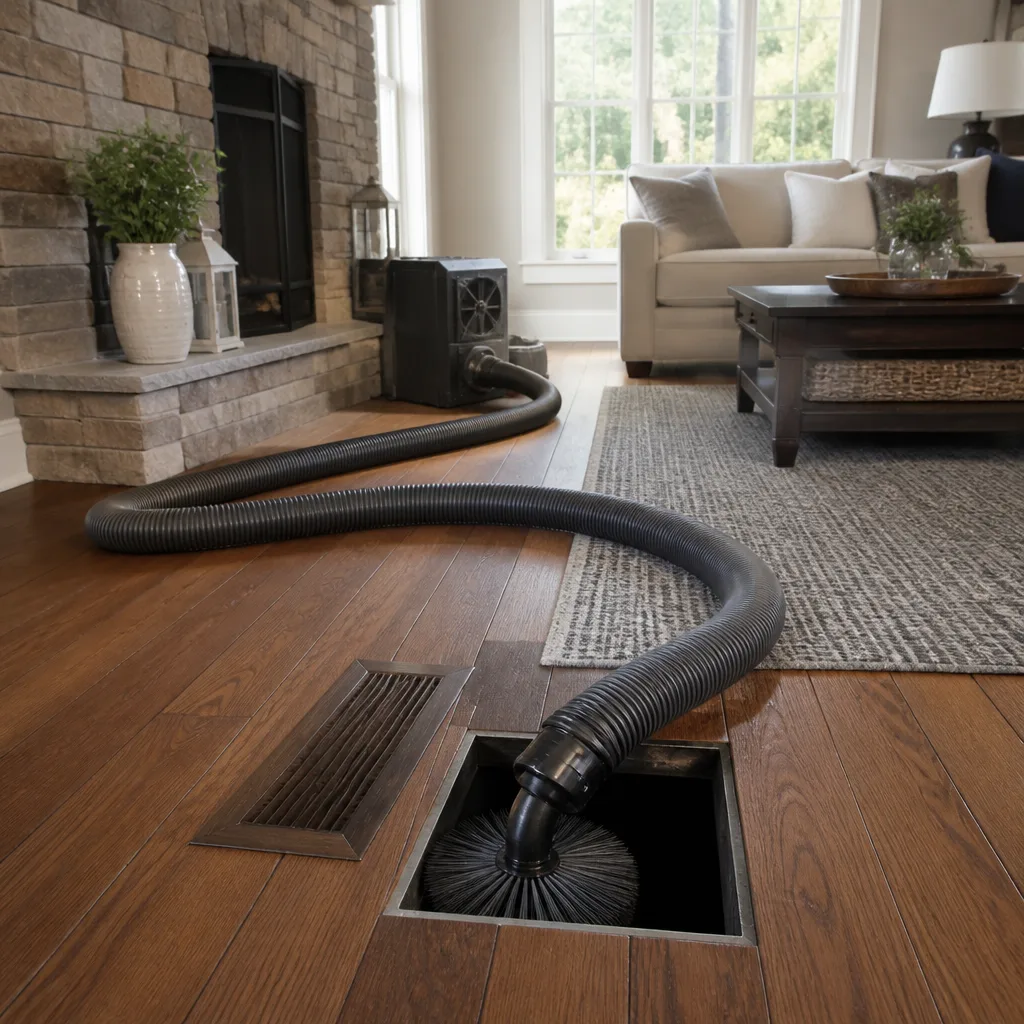 Whole-home duct cleaning
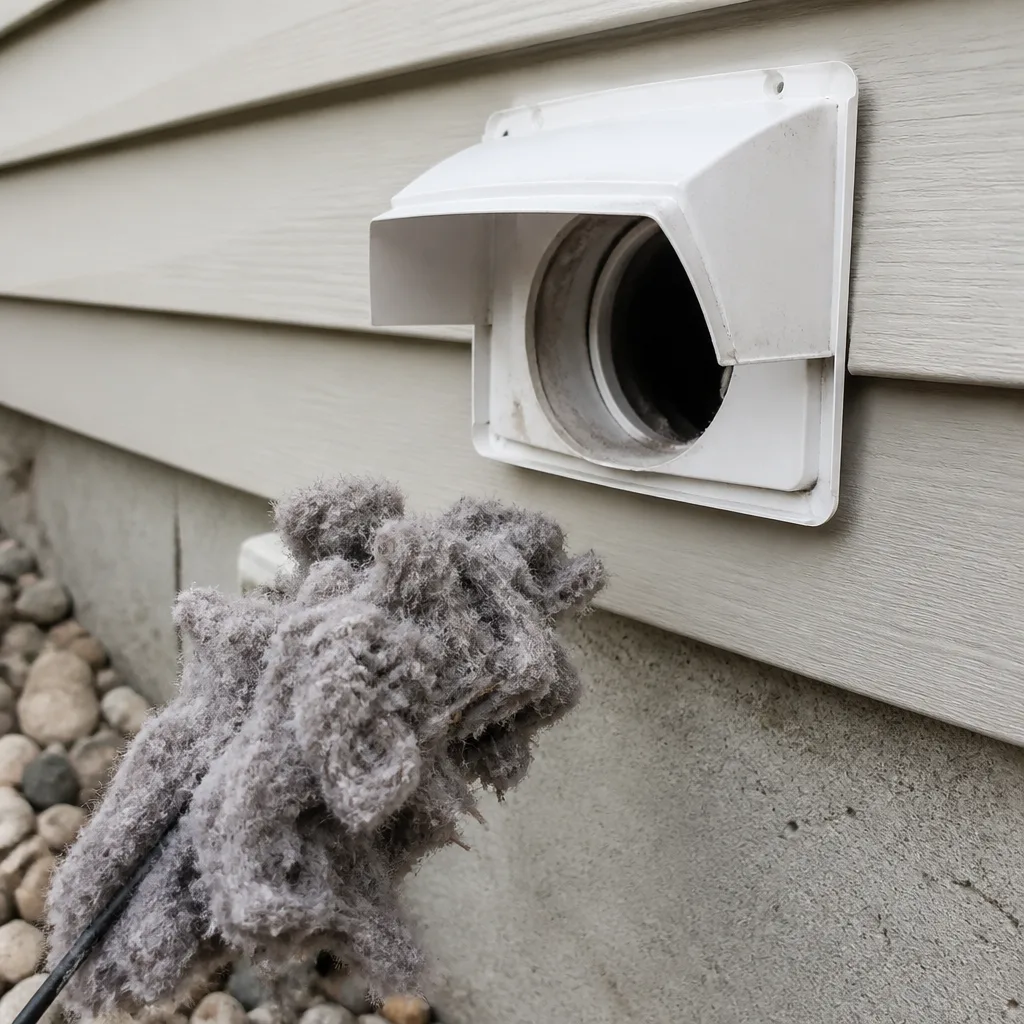 Dryer vent cleaning
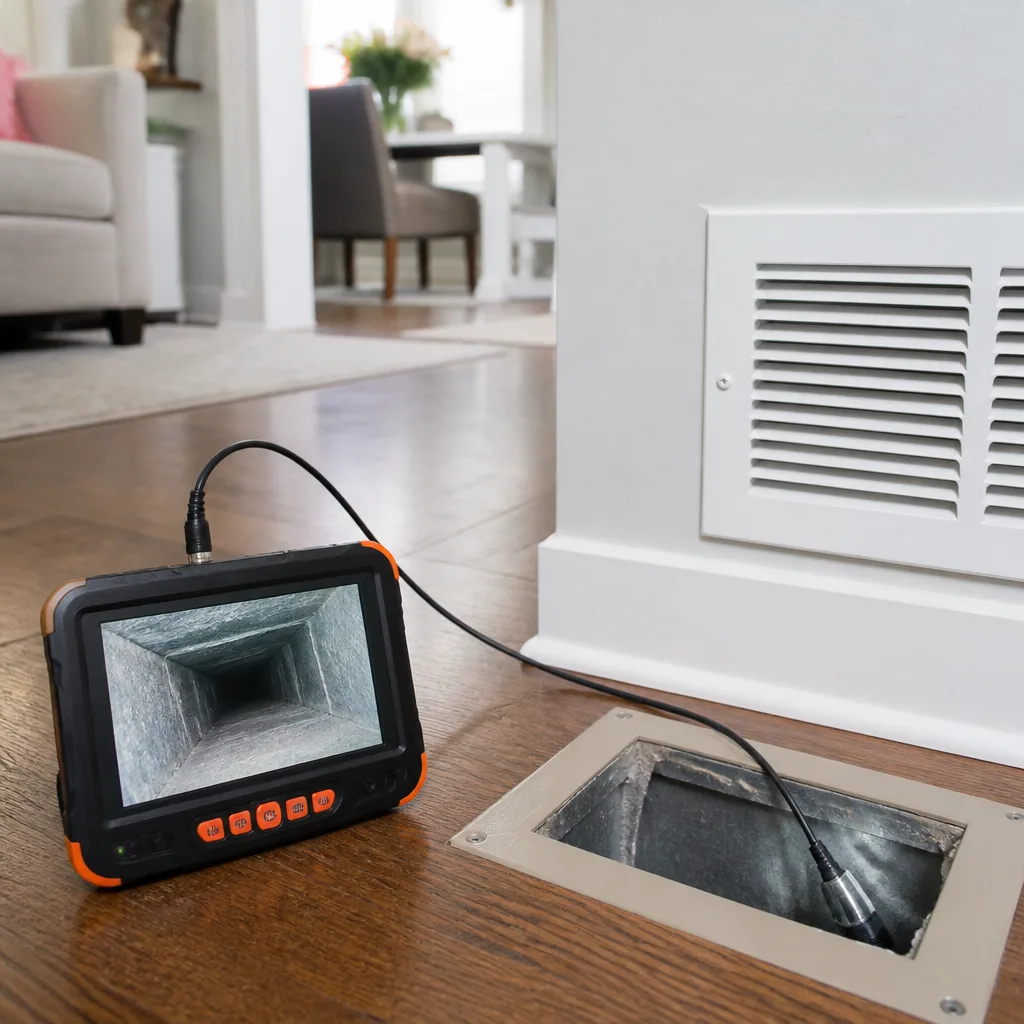 Camera inspection
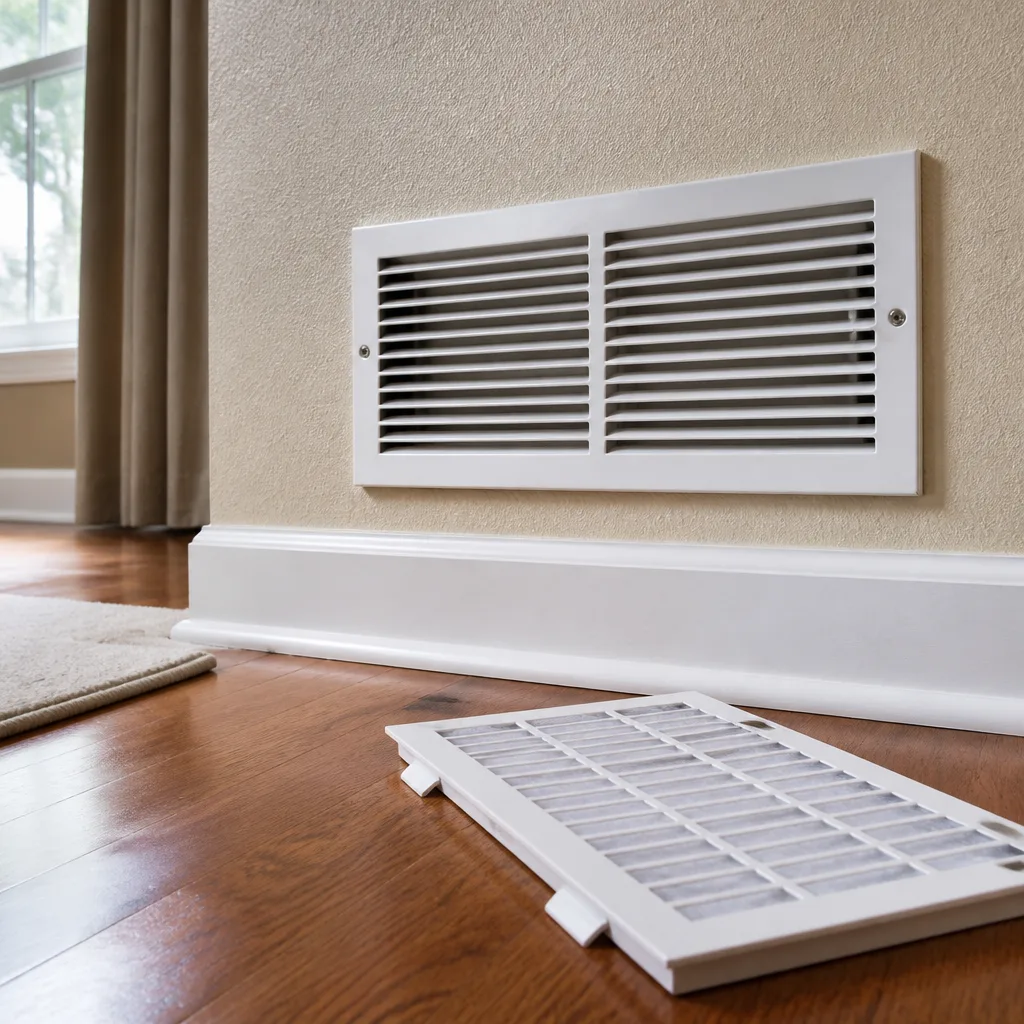 Sanitizing & deodorizing
Whole-system duct and dryer vent check with before-and-after photos - you see exactly what came out of your vents
That "$99 whole-house special" is a bait ad - the real number appears once they are in your hallway, or the "clean" is a shop-vac at the register. We photograph the inside of your ducts before and after instead.
How to Hire an Air Duct Cleaning Contractor in Santa Ana: A Step-by-Step Guide
The most common duct cleaning scam in Southern California isn’t outright fraud. It’s a $99 “whole-house special” performed with a residential shop vac that moves less than 150 CFM, when proper negative air machines operate at 2,000+ CFM or higher. The job looks done. It isn’t. This guide is built for Santa Ana homeowners who want to know exactly what separates a real duct cleaning contractor from someone who rented a portable unit for the day, and how to verify the difference before signing anything.
Styles & brands we work with
- Whole-home duct cleaning
- Dryer vent cleaning
- Camera inspection
- Sanitizing & deodorizing
Quick Answer
To hire an air duct cleaning contractor in Santa Ana, verify three things before you sign: the equipment is professional-grade with at least 2,000 CFM of negative air pressure and HEPA filtration, the written estimate itemizes linear feet of ductwork and registers rather than quoting a flat teaser price, and the company’s California CSLB license is active. Then confirm the scope includes access points at the plenum, not just register-level vacuuming. Get itemized written estimates from at least two contractors, and insist on before-and-after photos of the actual ductwork.
Table of Contents
- The Equipment Test: What Actually Cleans Ducts
- NADCA Membership: What It Actually Means
- What a Legitimate Written Estimate Must Include
- Santa Ana Red Flags: Door-Hangers, Mold Scares, and Bait-and-Switch Pricing
- Verifying License and Insurance in California
- The 10 Questions to Ask Before Hiring
- What a Professional Duct Cleaning Should Look Like
- Common Mistakes to Avoid
- When to Call a Professional
- Frequently Asked Questions
- The Bottom Line
The Equipment Test: What Actually Cleans Ducts
Here’s the uncomfortable truth most Santa Ana homeowners don’t hear until after they’ve paid for a cleaning that did nothing: the equipment matters more than the technician’s intentions. A well-meaning person with a Shop-Vac and a brush attachment cannot clean ductwork. Physically cannot. The airflow is too weak, the brush is too short, and there’s no way to capture what gets dislodged.
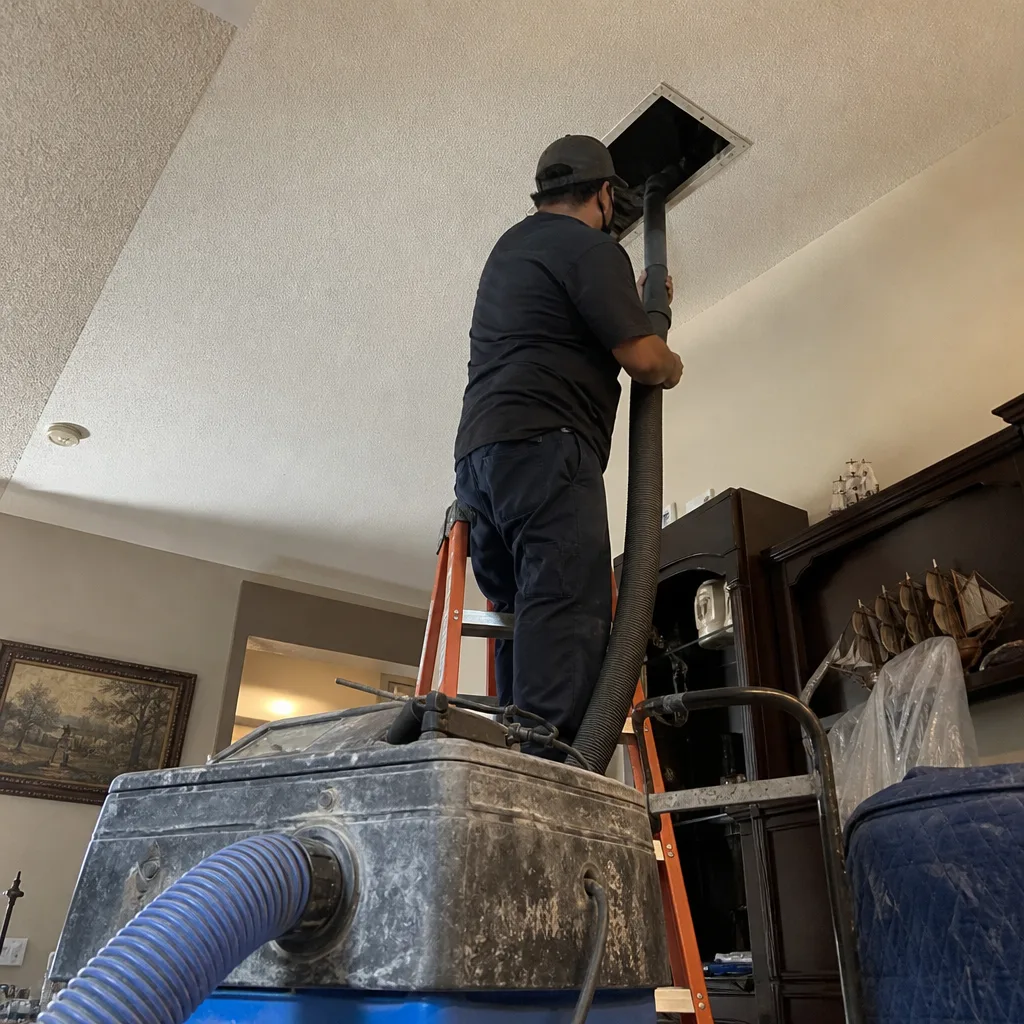
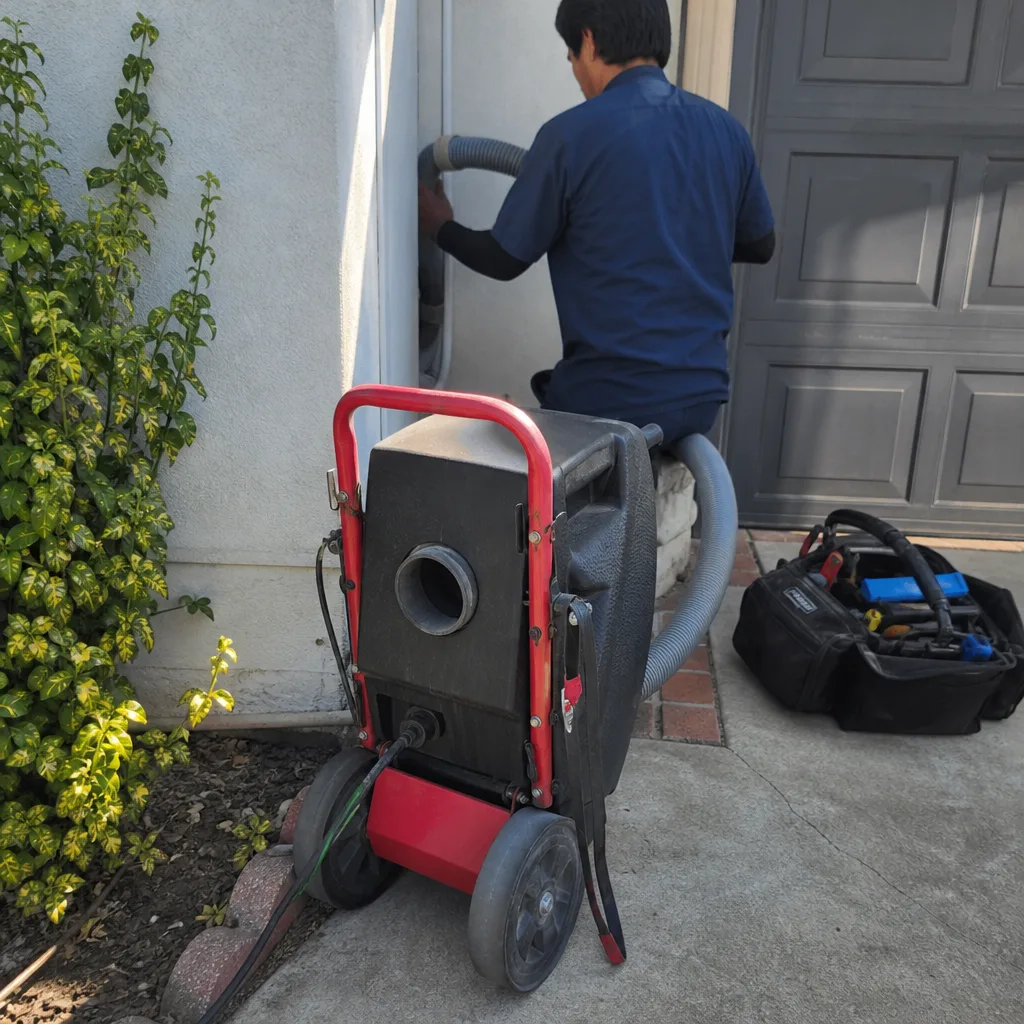
Professional duct cleaning relies on negative air pressure. That means a powerful vacuum unit creates suction at one end of the duct system while agitation tools knock debris loose inside. The vacuum pulls everything out through a HEPA-filtered collection system. This is how commercial buildings and hospitals get their ductwork cleaned, and it’s the same principle that applies to a 1,400-square-foot ranch home near Santa Ana’s Morrison Park neighborhood or a two-story house in Floral Park.
Here’s the equipment checklist to ask any contractor about before you schedule:
- CFM rating of the vacuum unit: Professional negative air machines operate at 2,000+ CFM. Portable rental units and shop vacs typically move 100-400 CFM. Ask for the specific number. If the contractor hesitates or doesn’t know, that’s your answer.
- Brush system type: Rotary brush systems that spin and agitate debris off duct walls are standard in professional work. Ask what brush system matches your duct dimensions, because a brush that’s too small for an 8-inch main trunk line won’t reach the walls.
- HEPA filtration on the vacuum: Without HEPA filtration, dislodged particulate is vented back into your home or out a window. HEPA filters capture 99.97% of particles at 0.3 microns. This matters in Santa Ana, where wildfire smoke from the Santa Ana Mountains and seasonal Santa Ana winds already push fine particulate through older homes’ windows and framing gaps.
- Access point capability: Serious contractors cut or open access points at the plenum and main trunk, not just through register openings. Ask how they access the main supply trunk.
We run Rotobrush and Nikro systems in our fleet because these are the machines commercial remediation contractors use. A Nikro negative air unit paired with a rotary agitation brush pulls debris from the full length of the duct run, not just the last three feet near the register. When you’re comparing quotes in Santa Ana, ask specifically about the equipment brand and CFM before you ask about price. The price conversation is meaningless until you know what machine is showing up. For a deeper look at what professional-grade cleaning involves, see our Air Duct Cleaning in Santa Ana page.
NADCA Membership: What It Actually Means
NADCA is the National Air Duct Cleaners Association, and its certification is the closest thing this industry has to a meaningful standard. But here’s what most homeowners in Santa Ana get wrong: some contractors say “NADCA certified” when they’ve merely paid a membership fee. Others say “NADCA standards” without ever having passed the certification exam.
Here’s what NADCA membership actually requires:
- Certified technicians: The company must have at least one Air Systems Cleaning Specialist (ASCS) on staff who passed a proctored exam covering HVAC system design, contamination sources, and cleaning methodology. Recertification is required every two years with continuing education credits.
- Written standards adherence: NADCA publishes the ACR (Assessment, Cleaning, and Restoration) standard, which specifies equipment types, cleaning procedures, and post-cleaning verification. A member company is obligated to follow it.
- Ethics requirements: NADCA’s code of ethics bars bait-and-switch pricing and requires written agreements. A contractor who violates it can lose certification.
What NADCA membership does NOT mean: it doesn’t verify customer satisfaction, doesn’t inspect equipment fleets, and doesn’t audit pricing practices. And it’s not a government license. Any contractor in Santa Ana can legally clean ducts without NADCA certification, because California doesn’t require duct cleaners to hold a specific duct-cleaning license. Duct cleaning falls under general contracting or HVAC contracting scope.
So how do you use NADCA in your hiring decision? Ask the contractor to name their ASCS-certified technician and the certification number. Then verify it on NADCA’s online directory. A legitimate operation answers this in five seconds. A false claimant will stall, change the subject, or claim they’re “in the process of certifying.”
We carry professional-grade Rotobrush, Nikro, and Abatement Technologies equipment because the work demands it. Abatement Technologies in particular is known in remediation circles, and having that class of machine in the lineup changes what a cleaning can accomplish in a Santa Ana home with decades of accumulated dust, pet dander, and construction debris in the return cavities. For homes where the ductwork itself is compromised, our Air Duct Repair in Santa Ana service addresses structural problems during the same visit.
What a Legitimate Written Estimate Must Include
Here’s exactly what a real estimate looks like, and it’s the single most effective tool you have for filtering out bad operators in Santa Ana before they ever set foot in your home.
A legitimate written estimate for air duct cleaning in Santa Ana must itemize:
- Linear feet of ductwork: The estimate should state the total linear footage of supply ducts, return ducts, and main trunk lines being cleaned. If it just says “whole house” with no footage, that’s a guess dressed up as a promise.
- Number of registers and returns: Count your own first. A 3-bedroom Santa Ana home typically has 8-12 supply registers and 1-2 return grilles. The estimate should match within one or two. If it doesn’t, the estimator didn’t actually walk the house.
- Equipment to be used: The estimate should name the negative air machine and brush system. “Professional truck-mounted system” without a brand or at least a machine class is vague enough to mean anything.
- Scope of access points: Where will they cut or open access? The main supply plenum, the return drop, or both? A cleaning that only accesses registers leaves the main trunk untouched, which is where the debris actually accumulates.
- Total price, not a teaser: A single flat price for the entire system, agreed before work starts. Not a per-vent price that multiplies, not a “starting at” price that doubles once they’re in the attic.
- What’s included and excluded: Does the price cover the blower fan, the coils, and the return plenum? Or just the ducts themselves? Both approaches are legitimate, but you need to know what you’re paying for.
If a Santa Ana contractor hands you a one-page sheet that says “Duct cleaning: $199” and nothing else, that’s not an estimate. That’s a sales script. You deserve line items, and any legitimate operator is happy to provide them. Our estimates follow this same structure because homeowners who’ve been burned before are exactly the ones who read every line, and they should.
Santa Ana Red Flags: Door-Hangers, Mold Scares, and Bait-and-Switch Pricing
Every market has its local pressure tactics, and Santa Ana has a few that keep showing up in the neighborhoods around Bristol Street, the Washington Square area, and up toward the 55. Recognizing them before you make the call is the cheapest insurance you’ll ever buy.
The Door-Hanger Special
A glossy flyer on your front door offering $79 or $99 duct cleaning for the “whole house.” Here’s the math that makes this impossible: a legitimate cleaning takes 3-5 hours with two technicians running a 2,000+ CFM negative air machine. The equipment alone costs tens of thousands of dollars. At $99, the operator loses money, which means either the job takes 45 minutes with a portable unit, or the $99 is a foot-in-the-door price that becomes $900 once they’re in your attic. In Santa Ana’s denser neighborhoods, these flyers circulate in waves, often after windy periods when dust accumulation is visible on registers.
The Mold Upsell Without Testing
A technician opens a register, shines a flashlight, and announces you have toxic mold that requires a $3,000 remediation package. Genuine mold testing requires sampling and lab analysis, not visual inspection. Duct interiors accumulate dust and sometimes dark staining that isn’t mold at all. If a contractor pushes mold remediation without taking samples and sending them to a lab, walk away. An honest professional who suspects a problem will recommend third-party testing and stop there.
Bait-and-Switch Pricing
The quote sounds reasonable on the phone, but the technician arrives and discovers “complications” that require additional fees: extra access points, longer duct runs than expected, a “specialized” brush, a filter upgrade. These should have been identified during a walkthrough estimate, not discovered after the truck is parked. One flat price per system, agreed before work starts, is the only structure that protects you. If a contractor won’t commit to that in writing, keep looking.
The Fake Before-and-After
Some operators show stock photos or images from a different home. Legitimate contractors in Santa Ana will offer to show you real photos from your own ducts during the process, including the before state of the return trunk and the after state once the negative air machine has pulled the system clean. If a contractor won’t commit to showing your own ductwork photos, ask why.
Verifying License and Insurance in California
California is one of the easier states in which to verify a contractor’s legitimacy, and you should do it before you sign anything. The California Contractors State License Board (CSLB) maintains a public database that takes two minutes to search.
Here’s the step-by-step verification process for a Santa Ana duct cleaning contractor:
- Go to the CSLB license lookup page: Search by company name or license number. The license must be active, not suspended, expired, or revoked.
- Check the classification: Duct cleaning in California typically falls under C-20 (Warm-Air Heating, Ventilating and Air-Conditioning Contractor) or C-61/D-42 (limited specialty for duct cleaning). Either is appropriate, but the license must exist. A general B license with no HVAC classification is a gray area that legitimate duct cleaners don’t rely on.
- Verify the name matches: The business name on the estimate should match the CSLB registration. DBA names should be listed on the license record.
- Check for workers’ compensation coverage: If the company has employees, California requires workers’ comp insurance. The CSLB record shows whether it’s on file. This matters because an uninsured worker injured in your home creates liability for you.
- Ask for a certificate of insurance: Request a current insurance certificate naming their liability coverage. Call the insurer listed to verify the policy is active. Two telephone minutes that save you from a major headache.
In our experience, legitimate Santa Ana contractors welcome license verification. The ones who get defensive about a CSLB lookup are telling you something. Trust that signal.
The 10 Questions to Ask Before Hiring
Print this list or keep it open on your phone during estimate calls. These ten questions will reveal more about a Santa Ana duct cleaning contractor than any online review.
- What is the CFM rating of your negative air machine? The answer should be a specific number over 2,000. “It’s commercial grade” without a number is not an answer.
- What brand of vacuum and brush system do you run? Rotobrush, Nikro, Abatement Technologies: these are the names that indicate a real investment in equipment. A generic “professional equipment” answer means nothing.
- Do you use HEPA filtration on the vacuum unit? The answer must be a straightforward yes. Follow up by asking the filter’s efficiency class if you want to see if they know their own machine.
- How do you access the main trunk line and return plenum? They should describe cutting or opening access points, then sealing them properly afterward. Register-only access is a red flag.
- What does your written estimate itemize? Linear feet, register count, equipment used, access points, and total price. If they describe a flat number and nothing else, move on.
- Is your CSLB license active, and under what classification? Have them tell you the license number, then verify it yourself. Don’t let them offer to “look it up for you.”
- Are your technicians NADCA-certified, and can you provide the ASCS number? Again, verify independently. The certification number must appear in NADCA’s directory.
- Will you show me before-and-after photos of my own ducts? Photos from your system, taken during the service. Not a gallery of past jobs.
- What is your total flat price for the system, and what does it include? They should give you a number that includes all supplies, returns, main trunk, and the blower area. No per-vent multipliers, no “we’ll see what we find” pricing.
- Do you also assess duct condition and offer repair if needed? A cleaning that reveals a disconnected branch or a crushed return section is only half the job. A contractor who can diagnose and repair structural duct issues, rather than referring you out, saves you a second service call and a second markup. See our Air Duct Repair in Santa Ana page for the scope of repair work that a duct inspection should cover.
What a Professional Duct Cleaning Should Look Like
When a legitimate crew shows up at a Santa Ana home, the process follows a sequence that hasn’t changed much in decades because it works. Here’s what a proper cleaning looks like, step by step:
- System inspection: The technician walks the home, pulls register covers, inspects the return cavity, and may use a camera to view the interior of the main trunk. This takes 20-30 minutes and happens before any equipment is set up.
- Equipment setup: The negative air machine is connected at the main return or plenum. The vacuum creates negative pressure that pulls the entire duct system into suction. Protective floor coverings go down, and the work area is sealed off from the rest of the home.
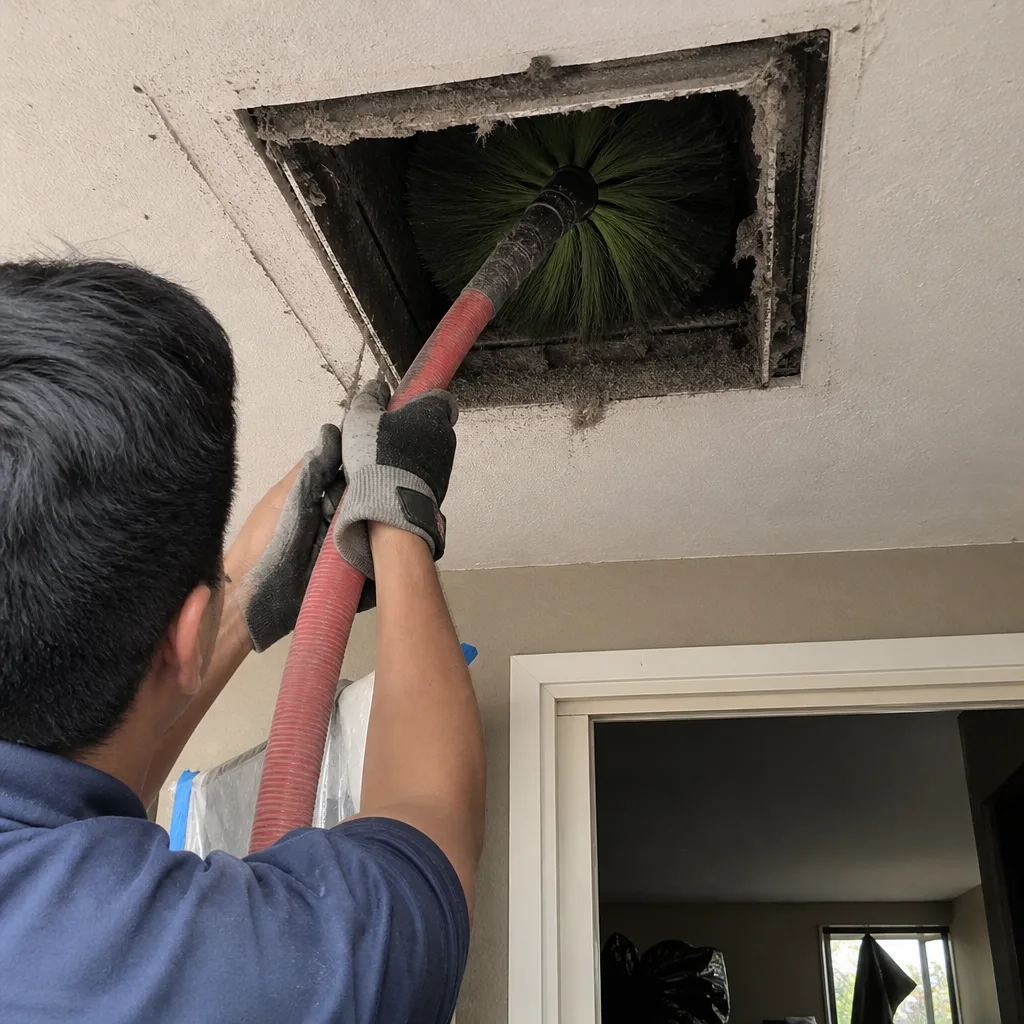
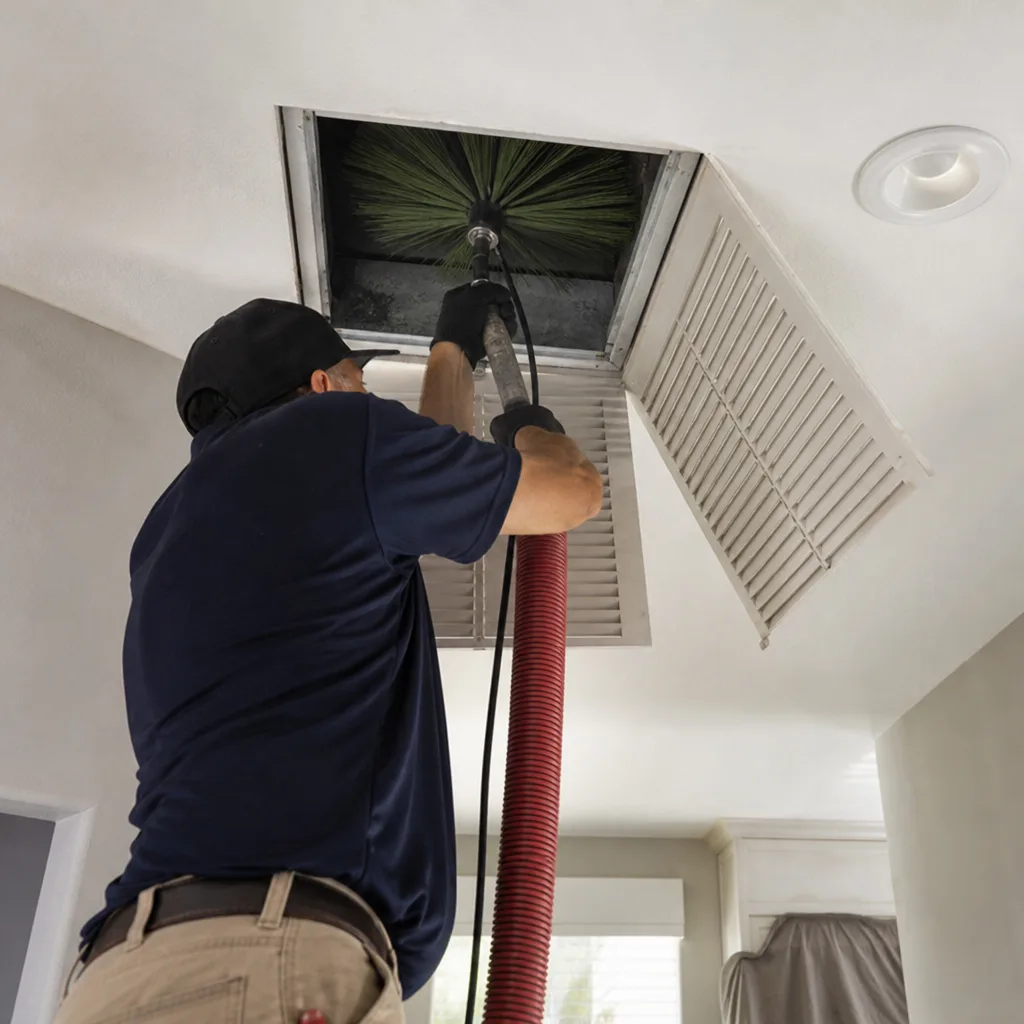
- Agitation: Rotary brushes or air whips are run through the supply ducts, dislodging debris from the walls. This is the step that separates real cleaning from vacuuming, because it’s the brush contact that removes built-up debris, not just loose dust.
- Return and blower area: The return ducts, return plenum, and the blower fan assembly are cleaned. Return-side contamination is often heavier than supply-side, especially in Santa Ana homes where the return runs through the garage or attic crawlspace.
- Access point sealing: Any access points cut into the ductwork are sealed with metal or airtight caps and sealed with mastic or foil tape, not duct tape.
- Photo documentation: Before, during, and after photos of your actual ductwork. The after photos should show clean metal interior surfaces in the main trunk, not just cleaner register openings.
A 2,500-square-foot home in Santa Ana’s West Floral Park or Park Santiago neighborhoods typically takes 3 to 5 hours for a complete cleaning. If a crew promises the whole job in 45 minutes, they’re either not doing the work or they’re running equipment that can’t. We won’t pretend speed is the goal. The goal is a system that’s actually clean, verified with photos, and running with less resistance than when we arrived.
Common Mistakes to Avoid
- Hiring based on price alone. The $99 special and the $800 legitimate cleaning are not the same service. One removes visible dust from register openings; the other removes the accumulated debris from the entire duct system. If price is your only filter, you’ll get the former.
- Skipping the equipment question. Asking “do you clean ducts?” gets a yes from everyone. Asking “what is the CFM rating on your negative air machine?” separates real operators from fly-by-nighters in five seconds.
- Ignoring the access point issue. A cleaning that only works through existing registers cannot reach the main trunk sections between them. In many Santa Ana homes, the main trunk runs through the attic or slab foundation and hasn’t been directly accessed since the house was built.
- Trusting a mold announcement without lab testing. Visual identification of mold in a dark duct is not reliable. Any contamination claim should be backed by third-party laboratory analysis before you spend remediation-level money.
- Forgetting to verify the CSLB license. A business card and a magnetic truck sign are not a license. The two-minute CSLB lookup is free, and it’s the difference between hiring a licensed contractor and paying cash to someone with no legal obligation to stand behind the work.
- Accepting an estimate with no linear footage or register count. An estimate that says “whole house, $X” with no itemization means the contractor hasn’t actually measured your system. You’re paying for a guess.
- Not asking about repair capability during the estimate. If the cleaning reveals a disconnected duct section, a crushed return, or a leaking plenum seam, a pure cleaning company will charge you for the cleaning and refer the repair elsewhere. A contractor who can address structural findings on the same visit, like our Air Duct Repair in Santa Ana service, resolves the full problem in one trip.
When to Call a Professional
Duct cleaning is not a DIY project, and here’s the technical reason: effective cleaning requires negative pressure across the entire duct system, which requires a machine that weighs hundreds of pounds and pulls 2,000+ CFM. No rental unit comes close. Attempting to clean ducts with a consumer vacuum stirs up debris that settles in the system or blows back into your living space. And if your Santa Ana home has flexible duct sections, aggressive DIY brushing can tear the inner liner. The time to call a professional is when you see visible dust accumulation on register covers, when airflow from certain rooms has noticeably weakened, when occupants experience allergy symptoms that worsen at home, or after major construction that generated drywall dust throughout the house. Anvil Air Duct Cleaning offers free estimates in Santa Ana with a walked measurement of your system. Call (833) 620-2848 to schedule yours.
Frequently Asked Questions
Air duct cleaning in Santa Ana typically costs $450-$900 for a complete whole-home system cleaning, including all supplies, returns, main trunk, and blower area. Homes with extensive duct runs, multiple returns, or systems that haven’t been cleaned in 10+ years will land at the higher end. The total depends on measured linear footage and register count, not a per-vent multiplier. A $99 quote cannot pay for the equipment, labor, and time a legitimate cleaning requires. Call (833) 620-2848 for a walked estimate with itemized pricing for your Santa Ana home.
Cheaper duct cleaning quotes typically mean one of three things: the contractor is using a portable rental unit instead of a professional negative air machine, they’re skipping the main trunk and return plenum entirely, or the low price is a foot-in-the-door that becomes a much larger invoice once they’re in your attic. A legitimate Santa Ana duct cleaning requires professional equipment, 3-5 hours of labor, and proper access point sealing. If the price can’t support that, the work isn’t happening. Get itemized quotes from at least two contractors and compare equipment and scope, not just the bottom line. Call (833) 620-2848 for a detailed written estimate.
You verify the work by requesting before-and-after photos of your own ductwork, specifically the interior of the main trunk line and return plenum, taken during the service. Legitimate contractors in Santa Ana document the condition of the ducts at the start, during agitation, and after the negative air machine has been disconnected. Photos from your actual system, not a portfolio of past jobs, are the proof. If a contractor is reluctant to show you the interior of your ducts before work begins, that reluctance should concern you. Our process includes photo documentation of your system at each stage.
Most Santa Ana homes benefit from professional duct cleaning every 3-5 years, though the NADCA standard recommends assessment and cleaning as needed based on visible conditions. Homes with shedding pets, smokers, recent construction, or occupants with allergies and asthma fall on the 2-3 year cycle. Homes with older ductwork near the coast, where moisture and salt air accelerate dust accumulation, may also need more frequent attention. The honest answer is that your eyes tell you: if register covers show visible dust buildup or you notice dust re-accumulating on surfaces within days of cleaning your home, the ducts are the source.
Yes, though no cleaning seals a house by itself. Santa Ana wind events push fine dust and particulate through window frames, door seals, and attic ventilation. Once that dust is in the home, it cycles through the HVAC system and accumulates in the return cavities, blower assembly, and duct interiors. A professional duct cleaning removes that accumulated material so the system isn’t recirculating it. However, the source of the intrusion still needs to be addressed through weather sealing and filtration. A HVAC contractor can also assess whether your filtration is adequate for Santa Ana’s particulate load. Our Air Duct Cleaning in Santa Ana service includes a full system assessment alongside the cleaning, so you understand where the contamination originated, not just that it’s gone.
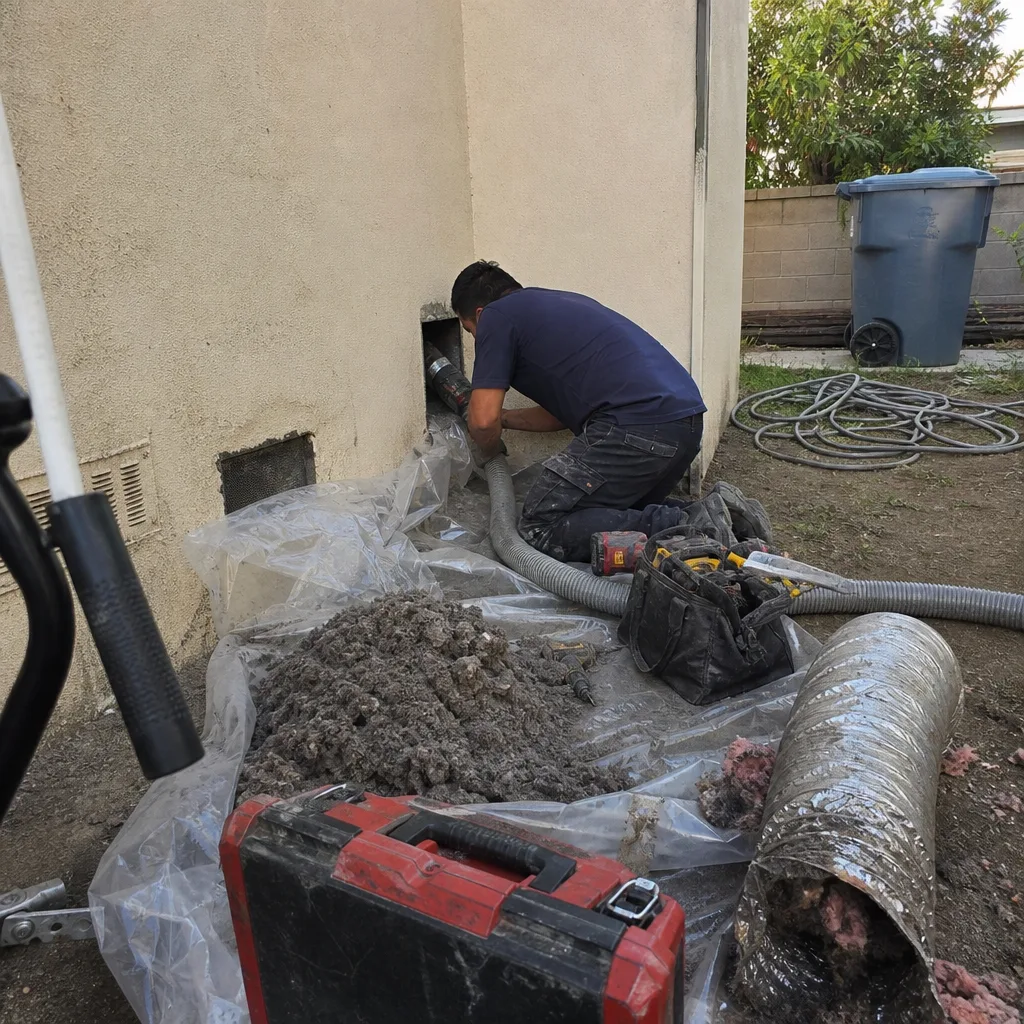
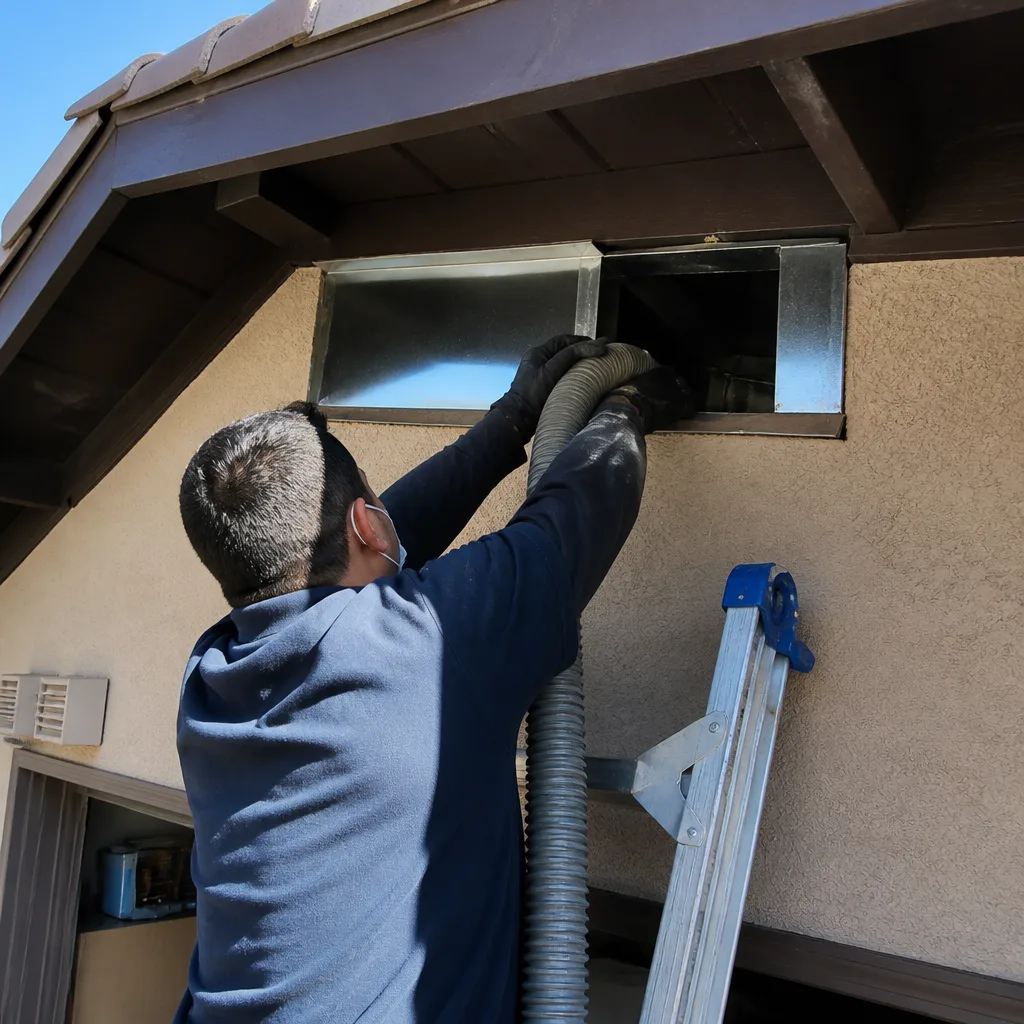
No, dryer vent cleaning is a separate service with a different purpose and different access points. Air duct cleaning addresses the HVAC distribution system: supply ducts, return ducts, main trunk, and plenums. Dryer vent cleaning addresses the exhaust pathway from your dryer to the exterior vent cap, which accumulates lint and is a recognized fire-risk reduction measure per NFPA guidance. The two systems never connect. A home that needs both services, which is common in Santa Ana homes where dryers vent through long roofline runs, should schedule both. Our Dryer Vent Cleaning in Santa Ana page explains the separate scope and why it matters for fire safety and dryer efficiency.
The Bottom Line
Hiring an air duct cleaning contractor in Santa Ana comes down to verification, not trust. Verify the equipment: professional negative air machines at 2,000+ CFM with HEPA filtration, from recognized brands like Rotobrush, Nikro, or Abatement Technologies. Verify the license through CSLB’s public database. Verify the estimate: linear footage, register counts, access points, one flat price. And verify the work with before-and-after photos of your own ducts. The contractors who welcome these questions are the ones doing legitimate work. The ones who bristle at them are doing something else. Anvil Air Duct Cleaning serves Santa Ana homeowners with professional-grade equipment and a three-service scope covering air duct cleaning, dryer vent cleaning, and air duct repair. Call (833) 620-2848 for a free walked estimate. We repair, not just clean, and we’ll show you the proof in your own ducts. Learn more about our approach at the Anvil Air Duct Cleaning home page.
See the difference
 Before
 After
 Before
 After
 Before
 After