
Last updated November 2, 2026
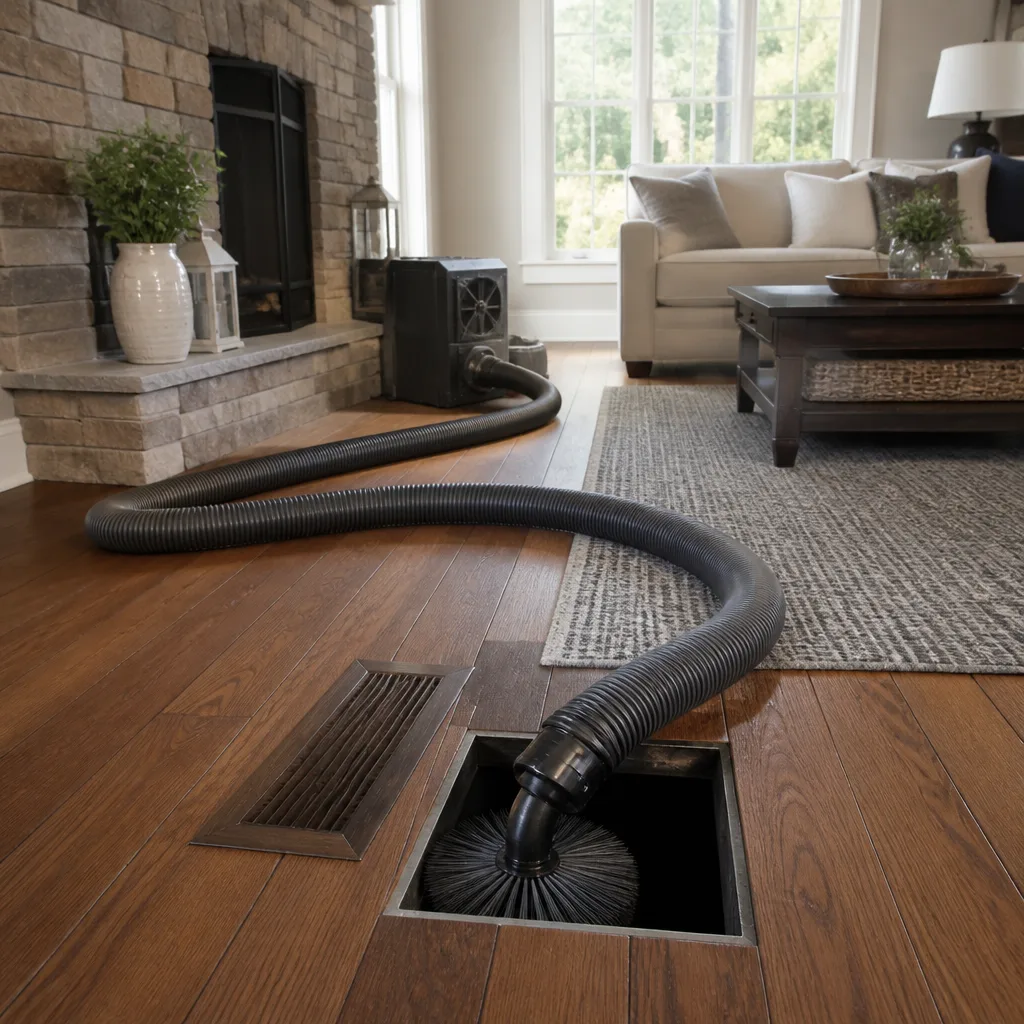 Whole-home duct cleaning
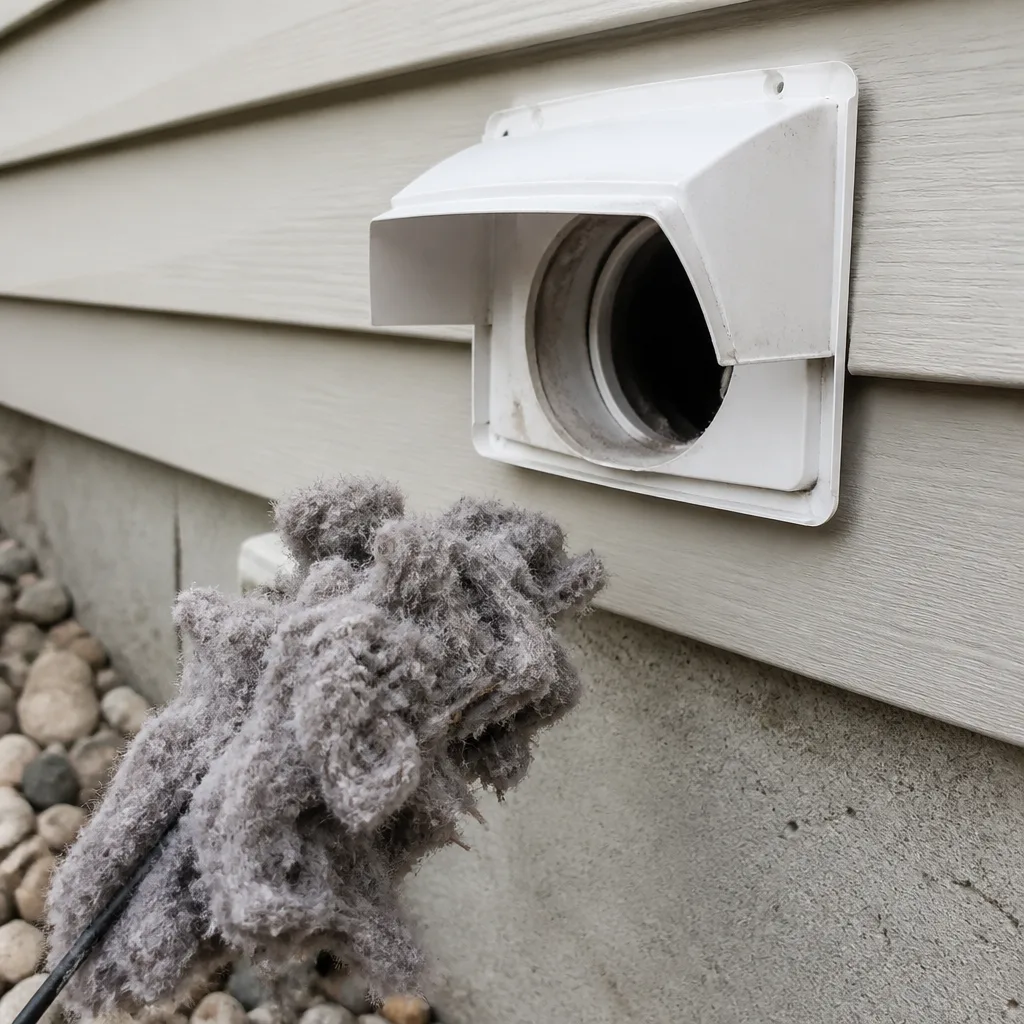 Dryer vent cleaning
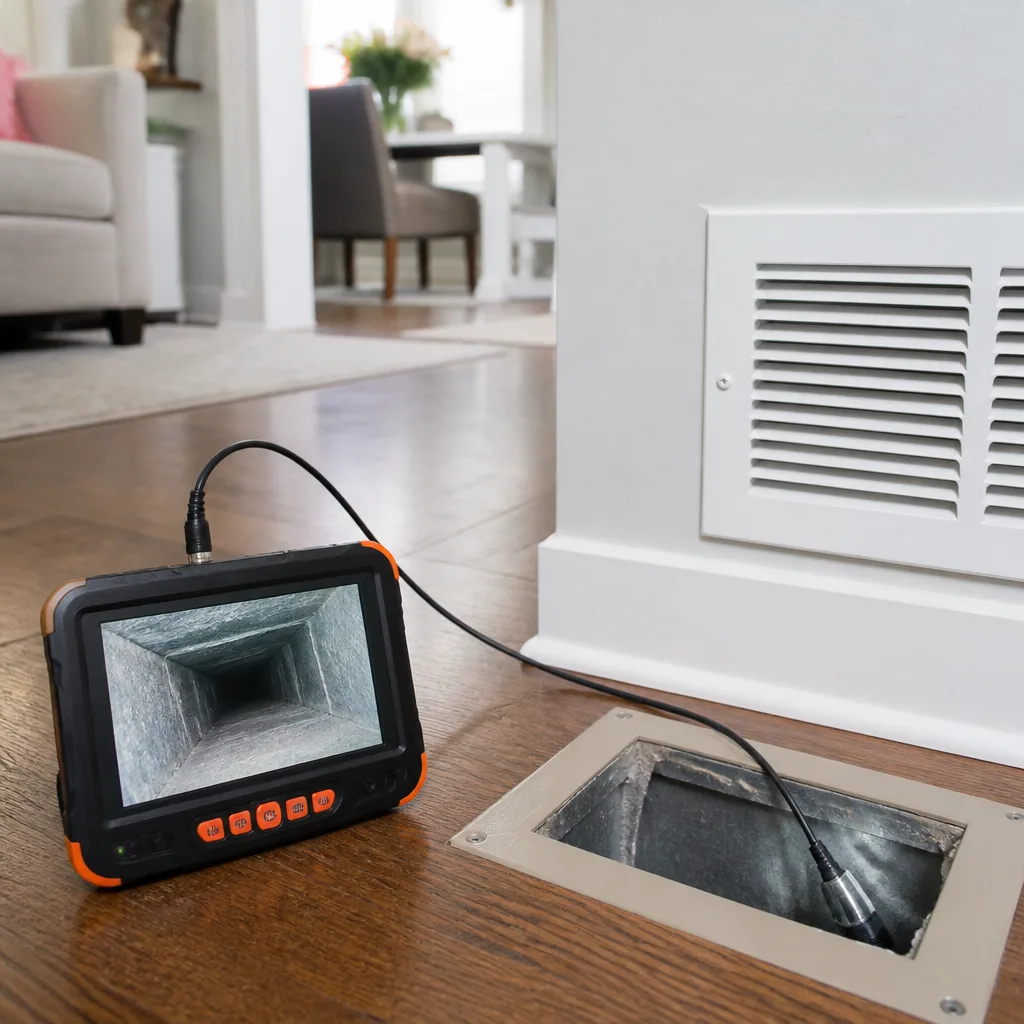 Camera inspection
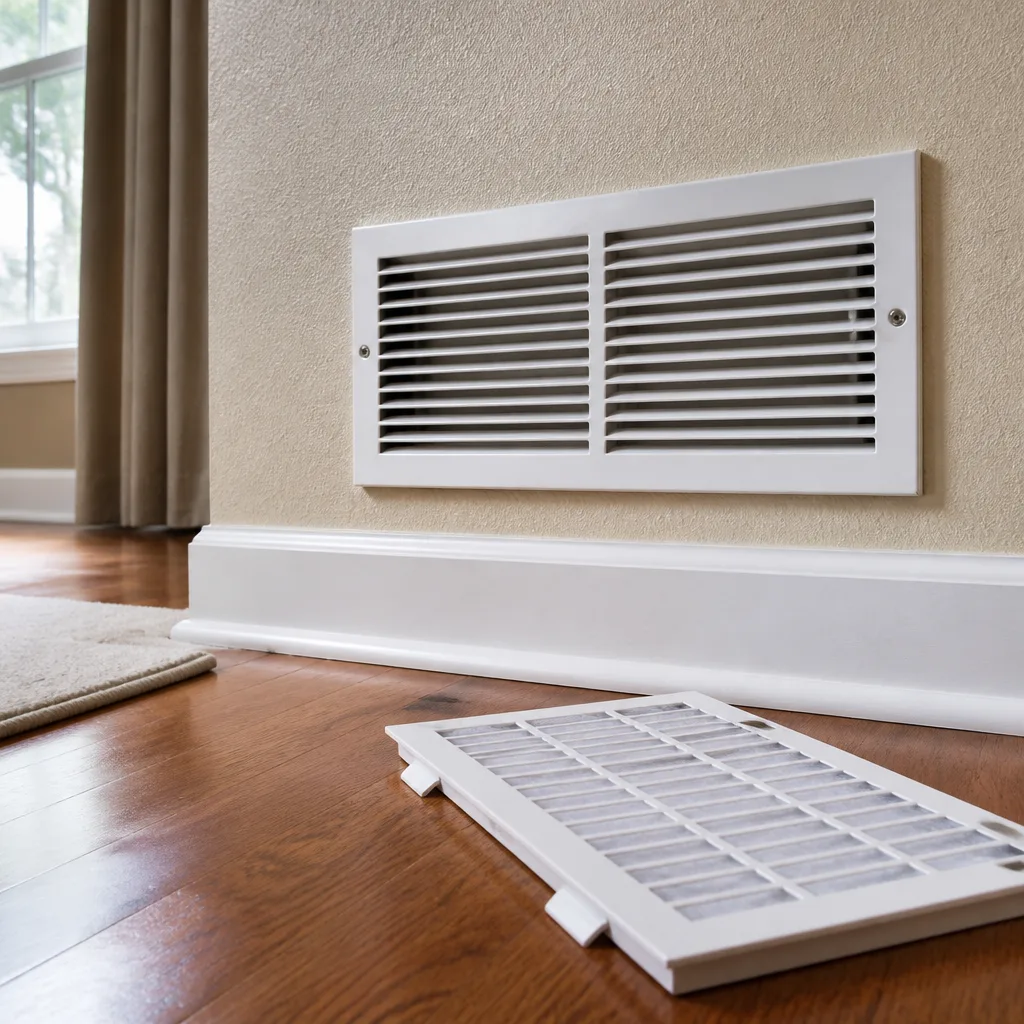 Sanitizing & deodorizing
Whole-system duct and dryer vent check with before-and-after photos - you see exactly what came out of your vents
That "$99 whole-house special" is a bait ad - the real number appears once they are in your hallway, or the "clean" is a shop-vac at the register. We photograph the inside of your ducts before and after instead.
Air Duct Cleaning Warning Signs: A Santa Ana Homeowner’s Reference Guide
Most homeowners in Santa Ana blame their HVAC unit when rooms feel stuffy, energy bills creep up, or allergy symptoms worsen indoors. The unit gets serviced, the filter gets changed, and nothing improves. That’s because the problem frequently isn’t the furnace or the condenser at all. It’s the network of ducts running through your attic, walls, or slab foundation, quietly wasting conditioned air, collecting dust, and signaling distress in ways that are easy to miss if you don’t know what to look for. This guide walks you through the specific warning signs that indicate your Santa Ana home’s air ducts need attention, how to tell a duct problem from an equipment problem, and what your next step should be.
Quick Answer
The most reliable warning signs that your air ducts need cleaning in Santa Ana are visible dust or debris blowing from supply registers, room-to-room temperature differences of more than 5°F, a musty odor that appears within 10 minutes of system startup, and a steady climb in your SCE bill without a matching change in usage. If you’re seeing combinations of these signs, the duct network – not the HVAC unit – is the likely failure point.
Styles & brands we work with
- Whole-home duct cleaning
- Dryer vent cleaning
- Camera inspection
- Sanitizing & deodorizing
Table of Contents
- The 15% Signal: When Your SCE Bill Is Telling You Something
- Santa Ana Housing Stock and Why It Matters for Duct Health
- Visible Signs: What You Can See, Sweep, and Capture with a Phone Camera
- Odor Signs: The 10-Minute Musty Test
- Temperature Differentials: The 5°F Rule That Flags Duct Leakage
- Noise and Airflow: What the System Sounds Like When Ducts Are Failing
- Self-Inspection Protocol: Flashlight, Phone Camera, and 20 Minutes
- Beyond Cleaning: Signs That Point to Repair or Abatement
The 15% Signal: When Your SCE Bill Is Telling You Something
A 15% increase in your Southern California Edison bill during a month with nearly identical usage patterns is one of the clearest quantifiable warning signs of duct leakage or blockage, yet almost every homeowner we talk to in Santa Ana blames the thermostat, the utility rate, or the age of the AC unit first. The logic is understandable, but the physics points elsewhere. When ducts leak, the system runs longer to reach the thermostat setpoint. When ducts are restricted by debris, the blower works harder to push air through. Both conditions consume more electricity while delivering less comfort. That’s what shows up on the bill.
Here’s the diagnostic sequence we use to separate a duct problem from an equipment problem:
- Compare your current SCE bill against the same month last year, not last month. Santa Ana’s seasonal temperature swings make month-over-month comparisons misleading.
- Check the usage days and kilowatt-hours, not the dollar amount. Rate changes can mask or exaggerate usage shifts.
- Look at your cooling degree days. If usage is up 15% but outdoor temperatures were comparable, the system is working harder than it should.
- Rule out the obvious equipment culprits first: a dirty condenser coil, a failing capacitor, or a clogged filter. If those are clean and the bill is still up, the ducts are the next suspect.
- Walk the visible duct runs in your attic or crawl space. A simple flashlight inspection often reveals detached sections, collapsed flex duct, or gaps at the plenum connections.
We’ve seen Santa Ana homes where a single disconnected return duct in the attic was pulling 140°F attic air into the system all summer. The AC unit was fine. The bill wasn’t. Air duct repair in Santa Ana is often the real fix in these cases, not another equipment service call.
Santa Ana Housing Stock and Why It Matters for Duct Health
Santa Ana’s housing stock has a distinctive profile that directly influences duct failure patterns. Large portions of the city were built between the 1950s and 1970s, during the peak of Southern California’s post-war expansion. Many of these homes feature slab-on-grade construction, which means supply and return ducts were run through the foundation or through the attic. Both configurations create specific vulnerabilities that newer construction methods don’t share.
Slab-on-grade homes with underfloor ducts face a persistent moisture risk. The ducts sit in or below the concrete, where groundwater, irrigation runoff, and plumbing leaks can introduce humidity into the duct interior. That moisture, combined with the darkness of an enclosed duct, creates conditions where microbial growth thrives. Homeowners often notice a persistent musty smell that no amount of drywall cleaning or air freshening removes. The smell lives in the ducts.
Homes from the popcorn ceiling era, roughly 1955 through 1980, frequently still have their original flex duct. Flex duct is a wire coil wrapped in insulation and an outer vapor barrier. It was never designed to last 40-plus years. In Santa Ana’s attic heat, which can exceed 140°F in August, the plastic outer liner becomes brittle, the inner liner separates, and the insulation breaks down. What starts as a small tear gradually becomes a duct that’s more hole than duct.
The third major factor is return air design. Many mid-century Santa Ana homes were built with undersized or poorly located return ducts, sometimes a single central return in a hallway. When filters clog or returns are blocked, the system pulls air from wherever it can: wall cavities, attic spaces, and even the garage. That’s unfiltered air entering your living space, carrying whatever’s in those spaces. If you can smell car exhaust in the house when the AC runs and the garage door was recently opened, your return path is compromised.
Visible Signs: What You Can See, Sweep, and Capture with a Phone Camera
Some duct warning signs don’t require tools to detect. They’re visible, repeatable, and documentable with a phone camera, which matters if you want a record before calling a contractor. The key is knowing what’s normal dust and what’s duct debris.
Take down a supply register in a room you use daily. Look at the inside of the register, the visible duct opening, and the wall or floor surface around it. You’re checking for several things:
- Debris accumulation inside the duct opening: A thin film of fine dust is normal. Visible clumps, pet hair mats, or sand-like grit are not. In Santa Ana, fine particulate from the 5, 22, and 55 freeways makes its way into homes and settles in ducts.
- Debris streaks on the register face: Dark streaks radiating from the register grille indicate air is blowing particulate onto the surface. This is a sign the duct interior is loaded and the system is distributing it.
- Staining around the register: Dark or brown staining on the drywall or carpet around a supply register can mean moisture in the duct is wicking through building materials. This is a duct issue and possibly a repair issue, not a cosmetic one.
- Visible dust in the air during operation: Turn the system on and shine a flashlight across the beam of light in a dark room. If you can see particulate streaming from the register for more than a few seconds after startup, the ducts are a distribution source, not just a storage site.
One habit we recommend to Santa Ana homeowners: sweep or vacuum a room thoroughly, let it sit unused for a day, then run the HVAC for 30 minutes. Check the surfaces. If new dust has settled on flat surfaces, the ducts are actively distributing it. This is one of the most reproducible home tests for duct contamination.
Learn more about what a full duct service involves at the Anvil Air Duct Cleaning home guide.
Odor Signs: The 10-Minute Musty Test
Odors are the most commonly reported duct warning sign in Santa Ana homes, but they’re also the most commonly misdiagnosed. Two different homes can have the same smell for entirely different reasons. The diagnostic key is timing and persistence.
Run your system for 10 minutes from a cold start. If a musty, stale, or earthy odor appears within that window and fades when the system turns off, the smell is likely coming from inside the ducts or from the air handler cabinet. A smell that’s present all the time, regardless of system operation, is coming from somewhere else: carpet, drywall, or a plumbing leak. The distinction matters because it tells you where your money should go.
Three odor patterns we see repeatedly in Santa Ana:
- Musty at startup, fades within minutes: This is typically dust and debris that’s been heated by the plenum and is releasing stored odors. Cleaning usually addresses it.
- Musty at startup, never fully fades while running: This suggests moisture inside the duct system or air handler. In slab-on-grade Santa Ana homes, condensation from undersized ducts or groundwater intrusion is the usual culprit. This may point to air duct repair in Santa Ana rather than cleaning alone.
- Sharp, acrid smell when heat runs for the first time each season: This is dust burning off the heat exchanger, normal to a degree. But if it lasts more than 30 minutes or recurs, the duct interior may be heavily loaded with particulate.
What about a dead animal smell? It’s unmistakable, and it’s a whole different category. Rodent intrusion in attic ducts is common in older Santa Ana neighborhoods with mature citrus trees. Our technicians regularly open ducts in the Washington Square or French Park areas and find evidence of rodents that entered through torn flex duct or disconnected fittings. That’s not a cleaning situation alone. The duct needs repair, the interior needs sanitization, and the entry point needs to be sealed.
Temperature Differentials: The 5°F Rule That Flags Duct Leakage
Uneven room temperatures are a classic duct warning sign, but most homeowners accept them as a quirk of the house. Here’s the threshold that separates a quirk from a duct problem: if any two rooms in your Santa Ana home differ by more than 5°F on a hot afternoon when all the doors are open and the system is running, the duct network is not distributing air evenly. That’s not an equipment shortfall. The unit is making conditioned air. The ducts are losing it or misdirecting it.
The rooms to compare are rooms on the same floor and same orientation, not the hottest room against the coolest room in the house. Compare the bedroom at the end of the hall to the one next to it. Compare the kitchen to the dining room. If those adjacent spaces are more than 5°F apart, something in the duct layout or condition is wrong.
Common temperature differential findings in Santa Ana homes:
- Far bedrooms always hot: Long flex duct runs through hot attics lose a significant percentage of cooling capacity through the duct walls, especially when the insulation is degraded. The room at the end of the run suffers most.
- One room always cold, even with the vent closed: A disconnected or torn duct in the attic will dump conditioned air directly into the attic space. The room gets a fraction of the airflow, while the attic gets cooled for free.
- Upstairs consistently 8-10°F warmer than downstairs on hot afternoons: Some stacking effect is normal, but a gap that large often means return air isn’t getting pulled from the upper floor. The system can’t cool air it never receives.
Buy a cheap infrared thermometer for $25. Walk the house on a hot afternoon with the system running and record readings. Five minutes of data will tell you more than an hour of online research. If you want a professional diagnosis, air duct cleaning in Santa Ana includes a visual inspection of accessible ductwork – and if we find structural issues, we repair them on the same call.
Noise and Airflow: What the System Sounds Like When Ducts Are Failing
Your duct system has a normal acoustic signature. When it changes, that’s a warning sign. The sounds to listen for are specific, and each points to a different underlying condition.
A whistling or high-pitched rushing sound from a specific register usually means airflow restriction at that point. Common causes include a register damper that’s partially closed, furniture blocking the register, a flex duct that’s been kinked during installation, or a duct interior that’s significantly narrowed by debris buildup. The restriction creates a pressure increase, and the moving air goes from laminar to turbulent, which you hear as a whistle.
A banging or popping sound when the system starts and stops is often the metal ductwork expanding and contracting from temperature and pressure changes. Duct sections that are undersized, improperly supported, or detached at the joints will bang more than they should. In Santa Ana’s ranch-style homes, the ducts in the attic are subjected to extreme temperature swings daily, which amplifies the effect.
A rumbling or flapping sound from the attic while the system runs may indicate a section of flex duct that’s come loose from its support straps and is moving with the airflow. This is a repair item, not a cleaning item. It also means the duct interior is exposed to attic air, pulling in insulation fibers and dust.
Then there’s the soft indicator: airflow. Hold your hand near a register in October, then again in March. The airflow should feel roughly the same. If a register that used to blow strongly now produces a weak stream, or if you notice some registers are strong while others are barely moving air, the duct network has developed a problem. Leaks, collapse, or blockage changes airflow long before temperatures become extreme enough to notice.
Self-Inspection Protocol: Flashlight, Phone Camera, and 20 Minutes
You can produce useful diagnostic information before you ever call a contractor. This protocol takes about 20 minutes and requires two tools: a bright flashlight and your phone camera. The goal is to create a visual record of what’s happening inside your ducts, not to perform repairs yourself.
- Turn the system off at the thermostat. You don’t want the blower starting while you’re working near registers.
- Choose three inspection points: one supply register in the room you use most, one supply register in a room that feels different (hotter, colder, stuffier), and one return register, if accessible.
- Remove each register cover. Most lift off or unscrew with a standard screwdriver. Set the hardware aside where it won’t roll away.
- Shine the flashlight into the duct opening. Point it at an angle, not straight down. You’re looking for the interior surface. What you should see is smooth metal or flex duct liner. What you’re checking for: gray or black accumulations, visible debris, water stains, loose insulation, or gaps where the duct meets the register box.
- Insert your phone camera into the opening as far as you comfortably can and take a series of photos. The flash will illuminate several feet of duct interior. Even a blurry photo often shows blockages that a direct line of sight misses.
- Check the register boot. That’s the metal box the register attaches to. Run your finger along the inside. In Santa Ana’s dry climate, you might feel fine, gritty particulate that’s settled in the boot, which indicates the duct upstream is carrying more.
- Replace the register covers and turn the system back on. Note any changes in airflow you perceive immediately after the inspection.
What you’re documenting now becomes your baseline. If you clean the ducts and want to verify the work, or if you want to compare before and after photos, you’ll have a record. This is also the quickest way to catch a contractor who claims work that wasn’t done. After a legitimate professional cleaning with Rotobrush or Nikro equipment, the duct interior should look visibly different than it did before.
Beyond Cleaning: Signs That Point to Repair or Abatement
Not every duct warning sign is resolved by cleaning. Some symptoms indicate structural damage or contamination that requires a different response. Knowing the difference before you call saves time and prevents paying for a cleaning that won’t solve the problem.
Duct collapse or crushing. Flex duct that’s been walked on, stretched too tight, or degraded by attic heat can collapse inward, severely restricting or blocking airflow. In Santa Ana homes with original ductwork from the 1960s and 1970s, the wire coil inside the flex duct can rust and fail. A collapsed duct can’t be cleaned back to health; it needs replacement. This is core air duct repair work. Our approach is to repair, not just clean. We fix the structural root cause of air loss and contamination, not just the symptom.
Rodent or pest intrusion. If you hear scratching in the attic, find droppings near the outside of your HVAC equipment, or smell urine when the system runs, animals have likely entered the duct system. Cleaning removes the contamination, but if the entry point isn’t sealed and the damaged duct sections aren’t repaired, the animals return. The full air pathway needs attention.
Mold or heavy microbial growth. A small amount of surface dust is normal. Visible fuzzy growth, especially green, black, or white colonies on the duct interior, is not. This is a remediation-level situation that requires specialized equipment and methods. Our lineup includes Abatement Technologies equipment, which signals remediation-grade air quality capability beyond routine residential cleaning.
Persistent moisture in the duct. If you’ve repeatedly cleaned or checked ducts and moisture keeps returning, the source is structural: a leaking slab, a broken irrigation line near a foundation vent, or condensation from undersized ducts in a humid crawl space. Cleaning will not fix a moisture source. The duct needs repair, and the moisture source needs correction.
The practical rule: if a warning sign has a smell, a stain, or a sound associated with it, the problem is likely structural and cleaning alone won’t resolve it. If the issue is dust, debris, or general staleness, cleaning is the appropriate response. A thorough inspection tells the difference. Our technicians work across system brands including Honeywell, Aprilaire, and Guardsman equipment, so the diagnosis accounts for whatever HVAC configuration is already in your Santa Ana home.
Common Mistakes to Avoid
- Blaming the AC unit for every comfort problem. In our experience, a significant portion of “AC performance” complaints in Santa Ana homes trace back to the duct network, not the equipment. Don’t spend on equipment service calls before checking the ducts.
- Using a standard vacuum to clean your own ducts. A household vacuum lacks the reach and agitation to dislodge debris bonded to duct walls. Professional equipment like Rotobrush systems uses rotating brushes and high-velocity air movement that a shop vac can’t replicate.
- Waiting for the smell to be constant before acting. Occasional mustiness at system startup is an early-stage signal. If you address it early, the fix is usually straightforward. If you wait until the smell is constant, you may be dealing with moisture damage or growth.
- Assuming a new filter fixed the problem. A filter protects the equipment and captures some airborne particulate, but it doesn’t clean the duct interior. The ducts can remain loaded with dust and debris that continues to blow into rooms.
- Hiring the lowest bid and accepting a surface-level cleaning. Duct systems are hidden, which makes cutting corners easy and verification hard. We’ve seen “cleanings” that amounted to a technician vacuuming the first few feet of duct from each register. That doesn’t address the full air pathway.
- Ignoring dryer vents as part of the air system. Dryer vents are a standard part of the air pathway and a recognized fire-risk point per NFPA guidance. Dryer vent cleaning in Santa Ana isn’t a separate, optional task – it’s part of managing the complete air system in your home.
See the difference
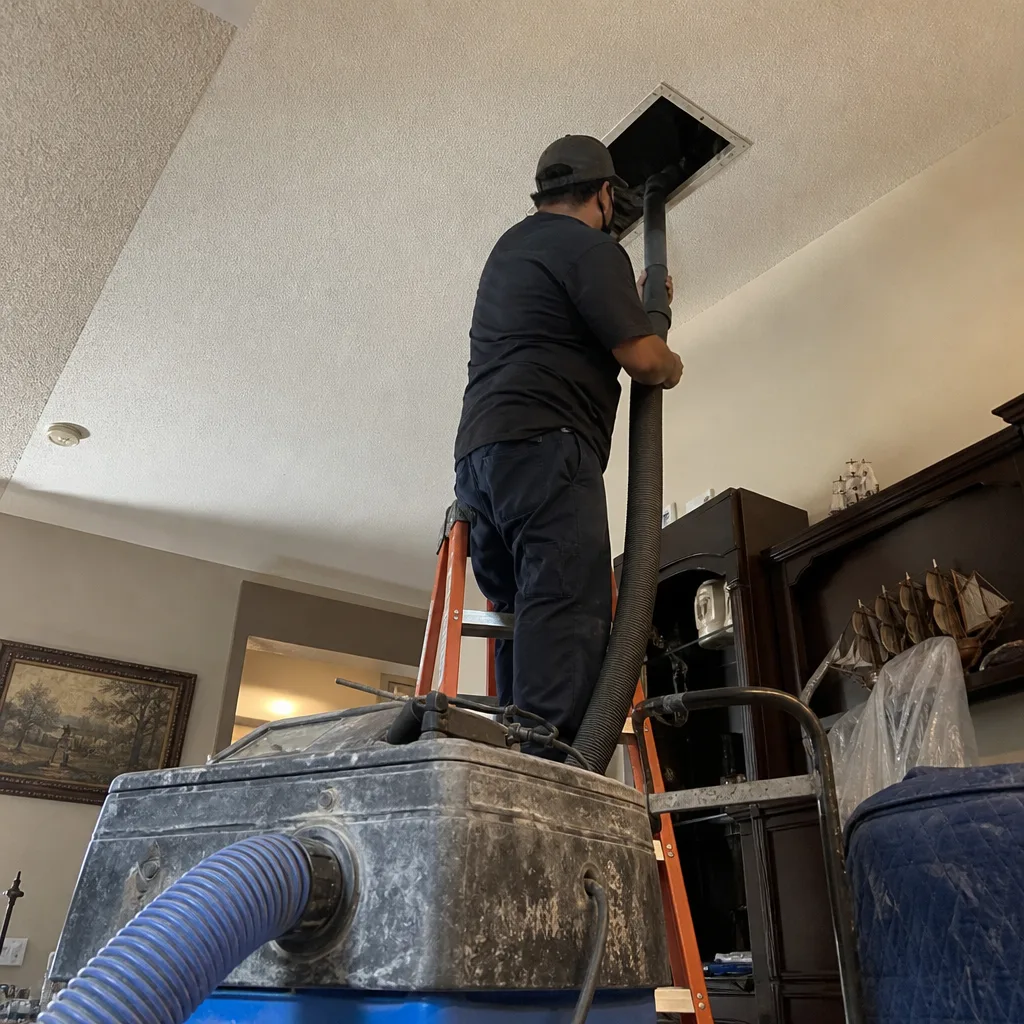 Before
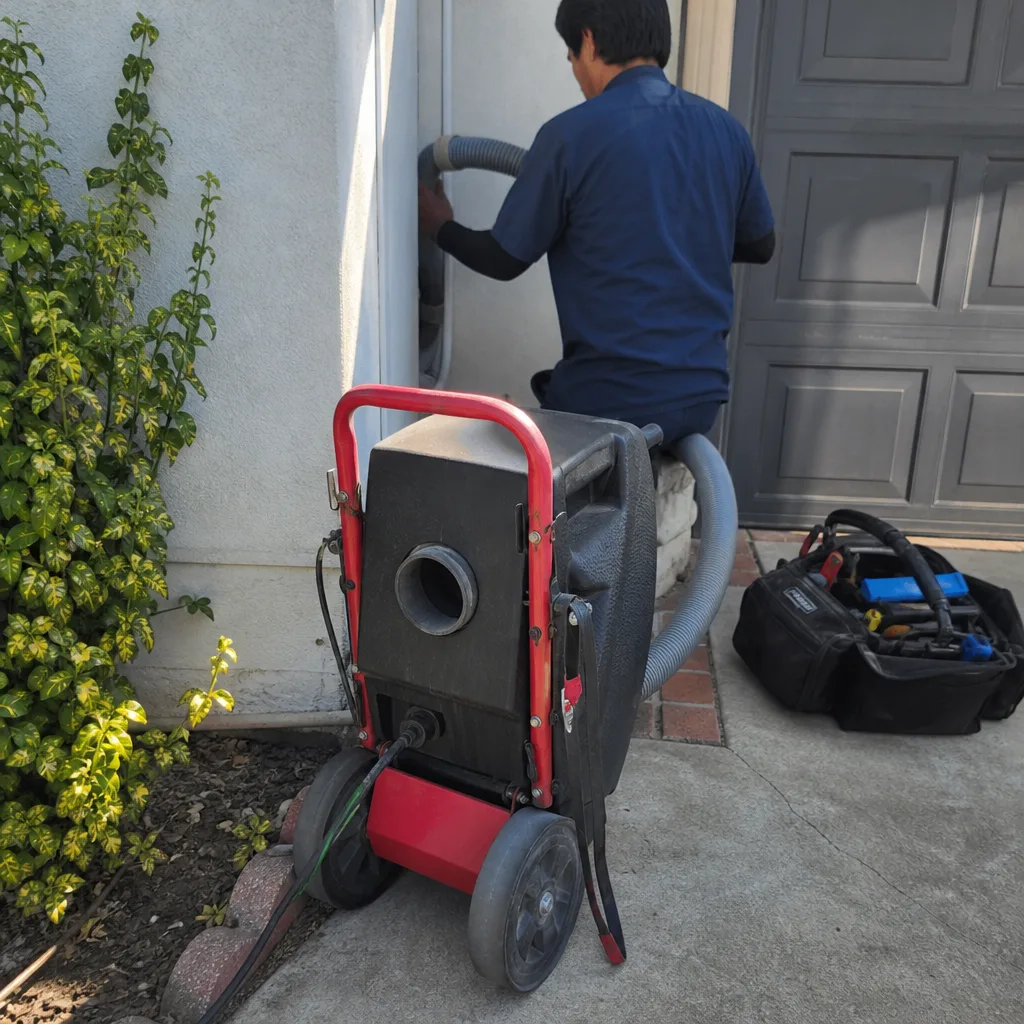 After
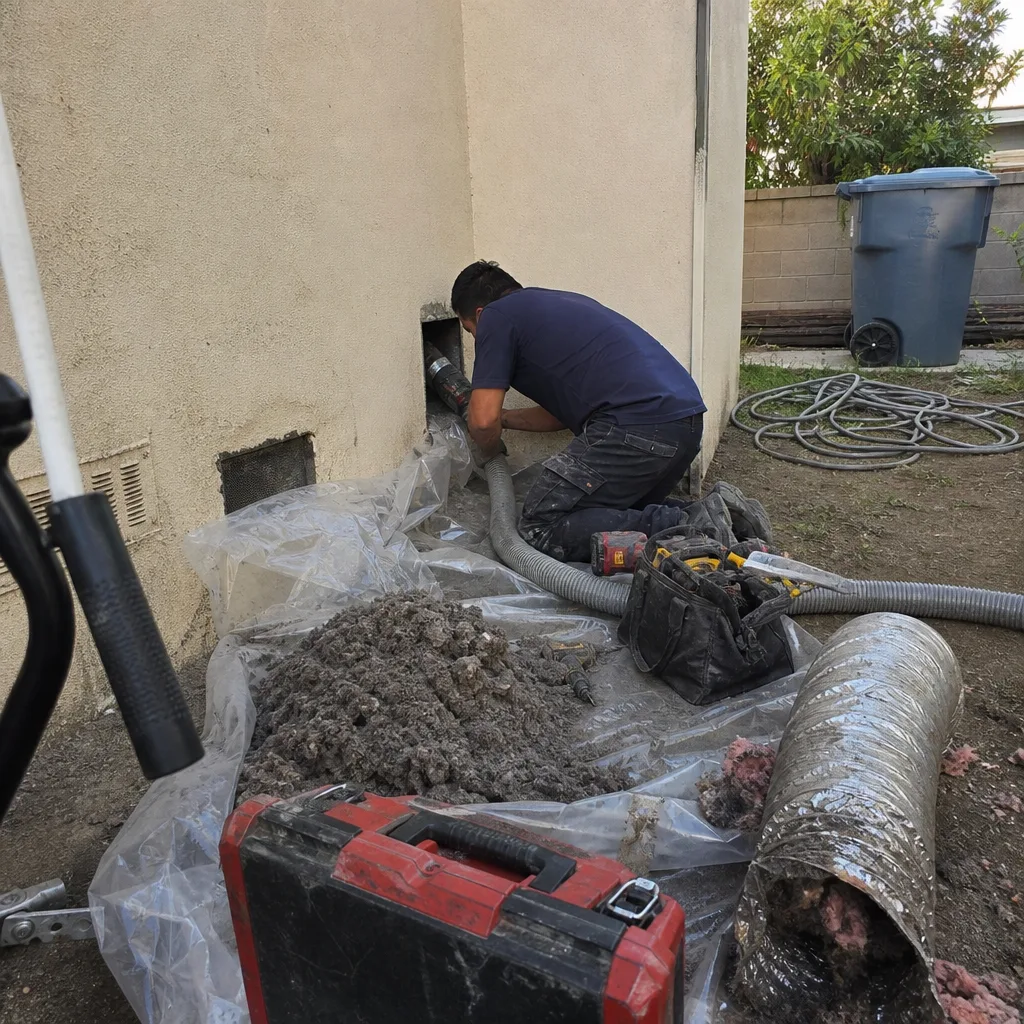 Before
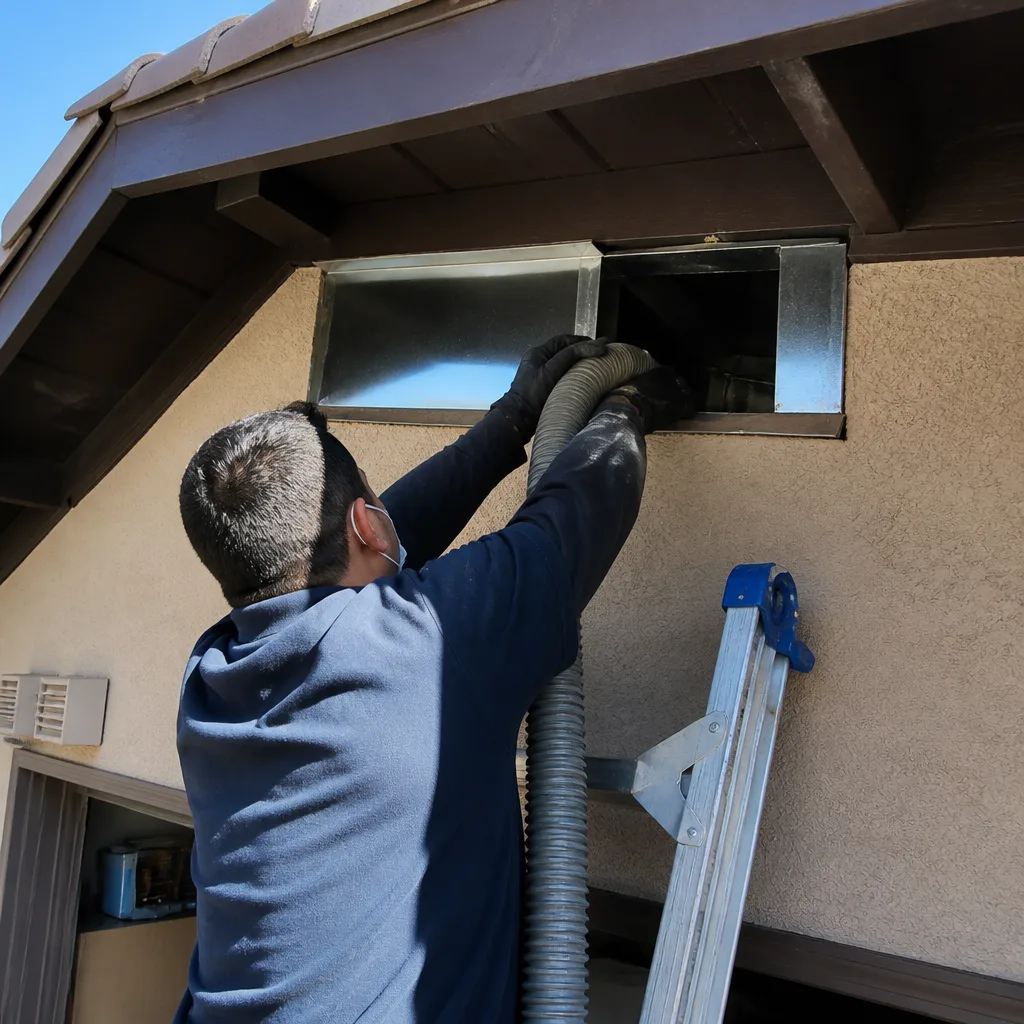 After
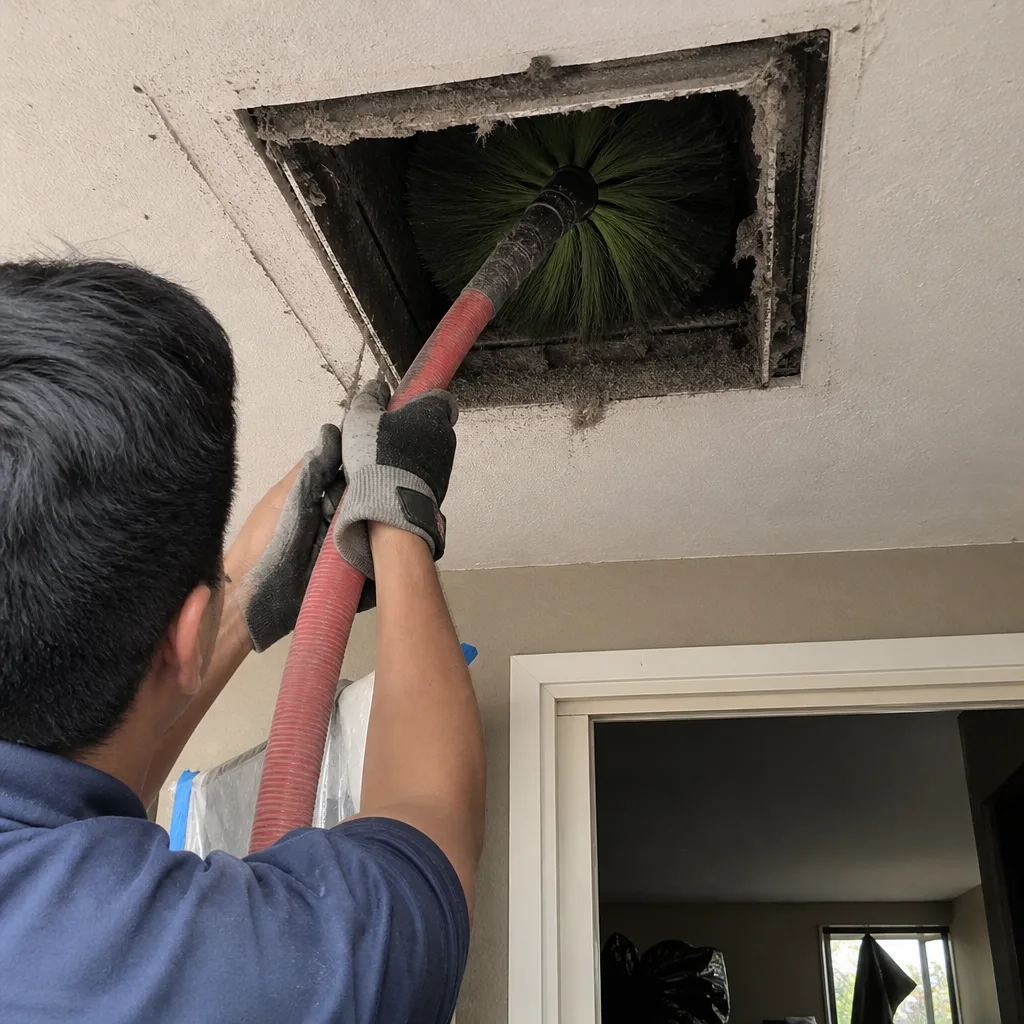 Before
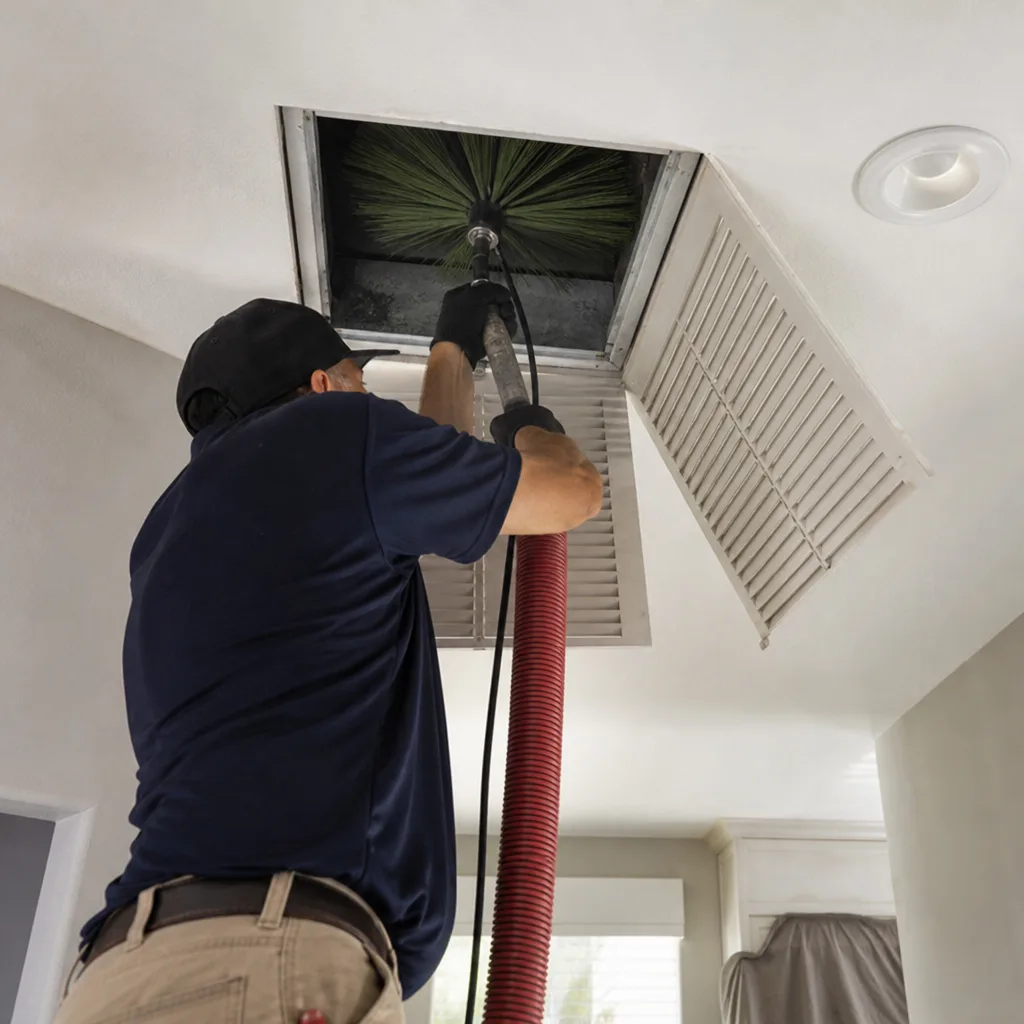 After
When to Call a Professional
Call a professional if you’re seeing two or more of the warning signs covered in this guide: a 15% or greater unexplained increase in your SCE bill, visible debris streaming from registers, room differentials over 5°F, musty odor within 10 minutes of startup, or airflow changes you can feel. Call sooner if you find evidence of water, mold, or rodents in the ducts, because those situations get worse quickly and cleaning alone won’t resolve them. A professional inspection with camera documentation provides a baseline you can check against after the work is done. Anvil Air Duct Cleaning offers free estimates in Santa Ana. Call (833) 620-2848 and we’ll inspect, document, and give you a straight answer on what your ducts actually need.
Frequently Asked Questions
Look for visible dust blowing from supply registers when the system starts, a musty odor within the first 10 minutes of operation, rooms that differ by more than 5°F, or a rising SCE bill without a change in usage patterns. Any two of these signs together indicate the ducts are the likely problem. For a definitive answer, call (833) 620-2848 for a free inspection and camera documentation of your duct interior.
Air duct cleaning in Santa Ana is typically priced per system, not per vent, because duct layouts vary by home age and construction type. We quote one flat price per duct system before any work begins, so there are no per-vent add-ons or surprise invoices. Slab-on-grade homes with underfloor ducts require a different cleaning approach than attic-flex homes, which is why a quick visual inspection precedes any quote.
Cheap duct cleaning quotes often come from operators who vacuum the first few feet of each duct run and call it finished, or who quote a low teaser price and add charges once they’re on site. Professional cleaning with Rotobrush or Nikro equipment agitates the entire interior duct surface and extracts debris from the full run, not just the register openings. If a quote sounds too low to be true for the work described, ask what equipment they use and whether the price covers the entire system.
Service should include before-and-after photos of the duct interior, taken with a camera at multiple access points. You can also perform the register camera check described in this guide before and after the work. Finally, the duct interior should look visibly different: smooth surfaces rather than coated in dust, no debris piles at the register boots, and reduced dust settling in rooms after the system runs. Ask any contractor about their photo documentation policy before you book.
In Santa Ana’s dry, dusty climate, ducts often benefit from cleaning every 3 to 5 years, though homes with pets, recent renovations, or heavy freeway proximity may need attention sooner. The best gauge is the condition of the duct interior, not a calendar. If you’re noticing the warning signs described in this guide, it’s time regardless of the last cleaning date.
Yes. Ducts that have accumulated dust, pollen, pet dander, and outdoor particulate from Santa Ana’s freeway corridors become a distribution system for those contaminants every time the blower runs. If symptoms improve when you leave the house and worsen when the system is running, the ducts are contributing to the problem. Cleaning removes stored particulate, and structural repairs prevent new contamination from entering.
The Bottom Line
Duct warning signs reward early attention. A minor dust accumulation becomes a major air quality problem over time, and a small duct tear becomes a significant energy loss through a Santa Ana summer. The signs covered in this guide – rising bills, visible debris, persistent mustiness, uneven temperatures, and airflow changes – are measurable and actionable. You don’t need to guess. You can inspect, document, and call for a professional diagnosis with confidence. When you’re ready, Anvil Air Duct Cleaning serves Santa Ana with professional-grade equipment and straight answers. Call (833) 620-2848 for a free estimate.
Written by the team at Anvil Air Duct Cleaning, serving Santa Ana since 2017.