
Last updated November 3, 2026
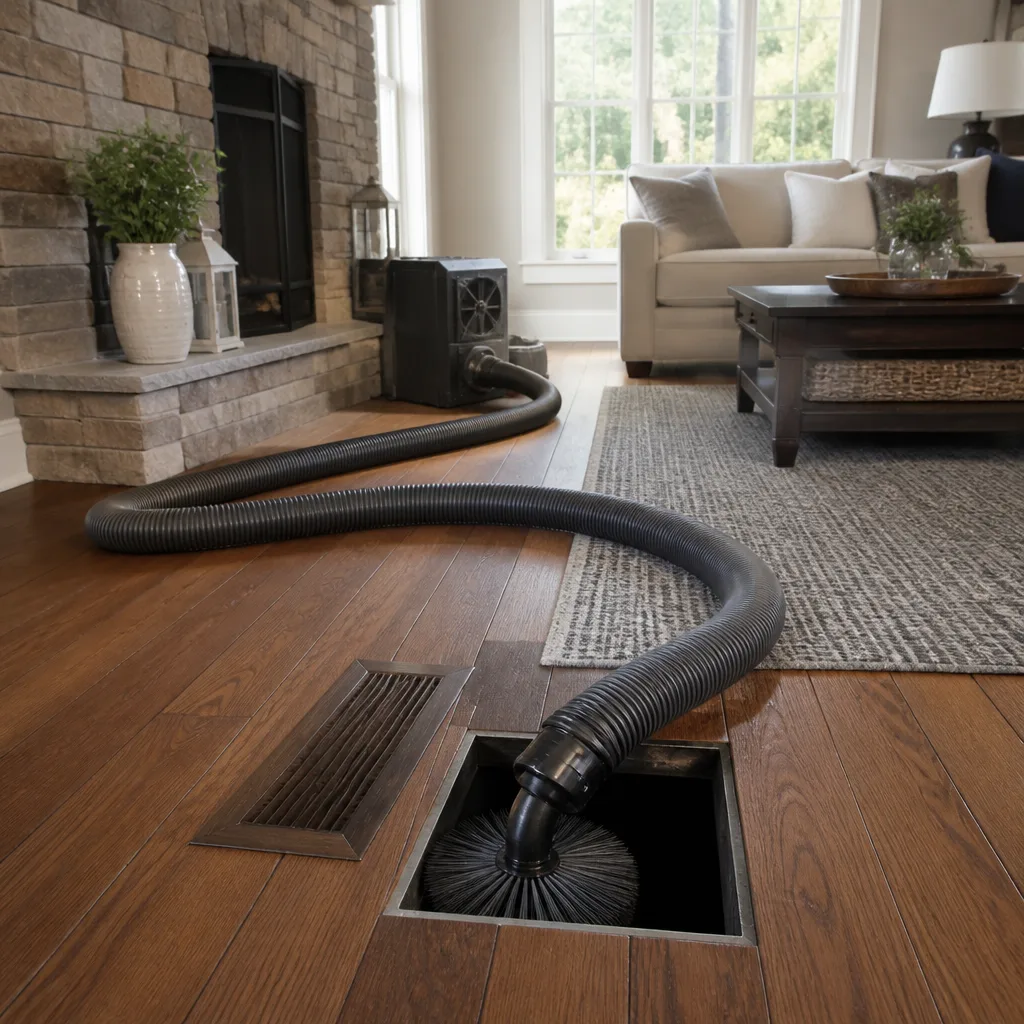 Whole-home duct cleaning
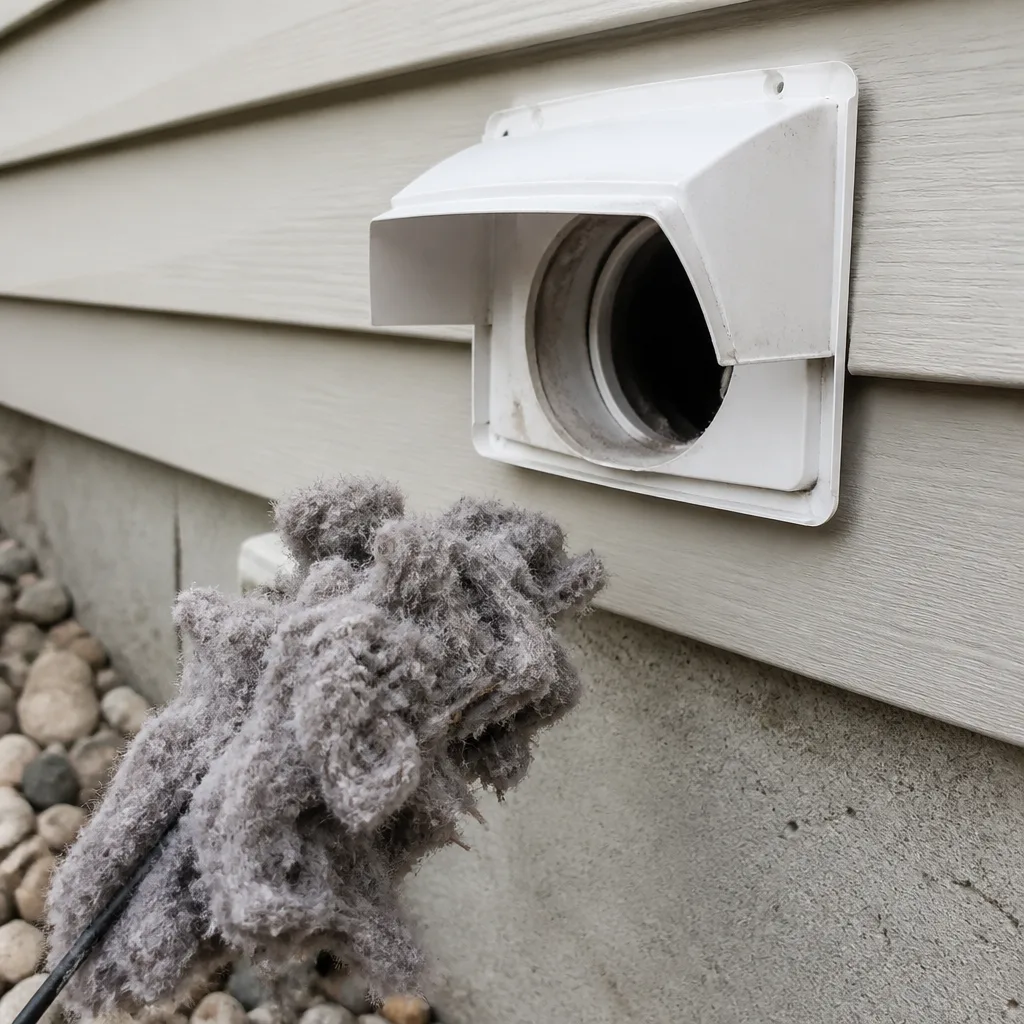 Dryer vent cleaning
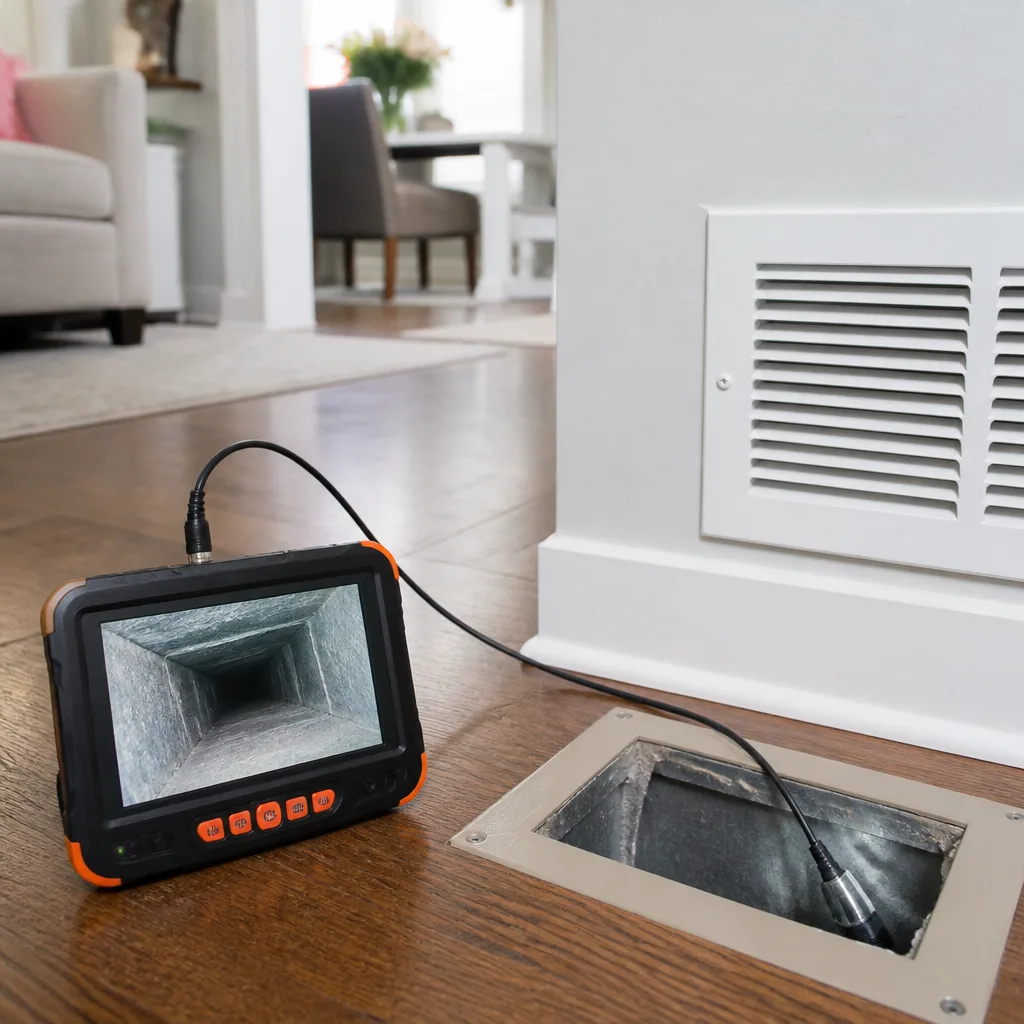 Camera inspection
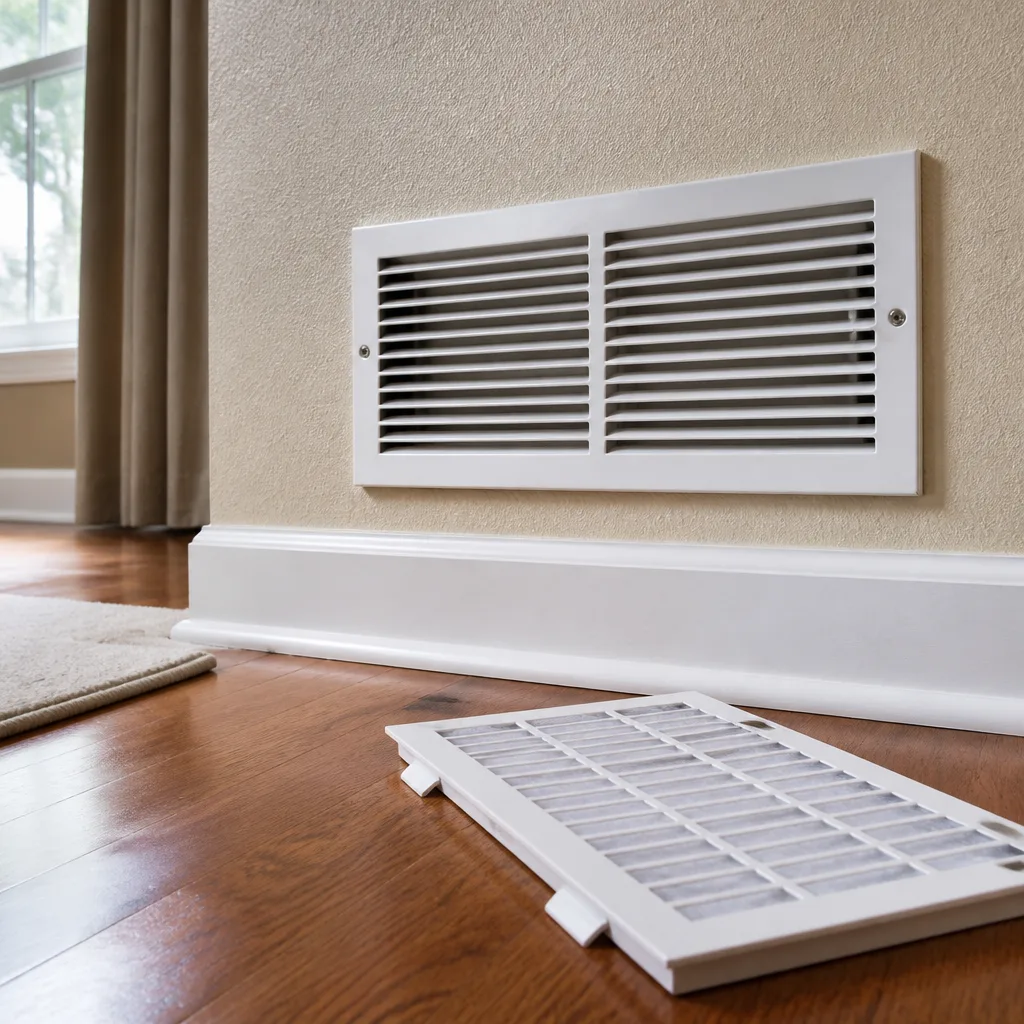 Sanitizing & deodorizing
Whole-system duct and dryer vent check with before-and-after photos - you see exactly what came out of your vents
That "$99 whole-house special" is a bait ad - the real number appears once they are in your hallway, or the "clean" is a shop-vac at the register. We photograph the inside of your ducts before and after instead.
The Complete Air Duct Cleaning Guide for Santa Ana Homeowners
Santa Ana winds can push PM2.5 particulate levels past EPA hazardous thresholds in under an hour, yet most air duct cleaning guides never mention wind events once. That’s a problem because the air inside your home is being filtered through ducts that accumulate everything those winds carry. This guide was written from the ground up for Santa Ana conditions: wildfire ash, hot dry winds, 1970s tract-home construction, and the specific duct materials found throughout Orange County. For a deeper dive, see our The Complete Guide to Air Duct Cleaning in Santa Ana. You’ll learn what actually needs cleaning, what legitimate equipment looks like, how to spot a surface-only job, and when your ducts genuinely need attention versus when they don’t.
Styles & brands we work with
- Whole-home duct cleaning
- Dryer vent cleaning
- Camera inspection
- Sanitizing & deodorizing
Quick Answer
Air duct cleaning in Santa Ana means removing accumulated wildfire ash, wind-driven particulate, construction debris, and biological growth from your HVAC system using professional-grade negative-pressure equipment such as Nikro or Rotobrush systems. A legitimate cleaning includes a pre-inspection with camera verification, cleaning of both supply and return sides plus the blower motor and evaporator coil, and takes 3 to 6 hours for a typical single-family home. Most Santa Ana homeowners should evaluate Air Duct Cleaning services on a conditions-based schedule rather than a fixed calendar cycle, especially after Santa Ana wind events or nearby wildfire smoke exposure.
Table of Contents
- Why Santa Ana Is Different: Climate, Wind, and Your Ducts
- Duct Material Matters: Flex vs. Rigid Sheet Metal in OC Homes
- What a Legitimate Pre-Cleaning Inspection Looks Like
- Why Negative Air Pressure Is the Non-Negotiable Baseline
- An Honest Frequency Framework: When to Clean, When to Wait
- What If the Cleaning Reveals Damaged Ducts
- The Dryer Vent: The Overlooked Half of the Air Pathway
- What Does Air Duct Cleaning Actually Cost in Santa Ana
- Common Mistakes to Avoid
- When to Call a Professional
- Frequently Asked Questions
- The Bottom Line
Why Santa Ana Is Different: Climate, Wind, and Your Ducts
National duct cleaning guides assume a baseline that doesn’t apply here. Most of the country deals with humidity-driven mold and pollen as the primary duct contaminants. Santa Ana has a different contamination profile entirely, and it’s shaped by geography. The Santa Ana Basin sits in a bowl surrounded by mountains, and when the offshore winds kick up in fall and early winter, they channel dry air from the high desert through canyons and into the basin at speeds that regularly exceed 40 mph. That wind picks up fine particulate from the Mojave, agricultural dust from the Inland Empire, and, during fire season, ash from burns as far as 60 miles away.
What lands in your ducts is a fine, gray-brown powder that behaves differently than the fluffy dust most national guides describe. It’s denser, more abrasive, and it packs into corners and flex duct ribbing rather than floating loose. We see this in Santa Ana homes regularly: ducts that haven’t been cleaned in a decade will have a noticeable accumulation of this wind-driven material even in homes where occupants ran premium filters the entire time. The reason is simple: your HVAC system pulls outside air through return vents and small gaps in the ductwork itself, and during wind events that outside air is carrying a heavy particulate load.
The Santa Ana wind cycle also creates uneven contamination. Homes on the east side of Santa Ana closer to the canyons, and homes with west-facing return plenums, tend to accumulate particulates faster than homes in more sheltered pockets. Ceiling returns in older single-story homes are particularly vulnerable because warm air carrying particulate rises into the attic space and gets drawn back through the return ductwork. This is not a failure of your system; it’s the physics of living in a wind corridor with a pressure differential between attic and living space.
What this means practically: if you live in Santa Ana and you’ve noticed a fine dust settling on furniture within days of cleaning, your ducts may be acting as a particulate reservoir that redistributes wind-driven contamination back into your living space every time the blower cycles on. A thorough cleaning that addresses both the supply side and the return side can meaningfully reduce that reload cycle.
Duct Material Matters: Flex vs. Rigid Sheet Metal in OC Homes
Santa Ana’s housing stock spans several construction eras, and the duct material in your home depends heavily on when it was built. Homes built from the 1950s through the early 1970s typically have rigid sheet metal ducts: galvanized steel trunks with rectangular branch lines. Homes built from the mid-1970s through the 1990s, which covers a large share of Santa Ana’s single-family inventory, usually have a mix of sheet metal trunk lines with flexible duct branches. Homes built or remodeled after 2000 often have almost entirely flex duct systems.
The cleaning method has to match the material. Rigid sheet metal can handle aggressive mechanical agitation: rotating brushes, high-pressure air whips, and direct contact tools are appropriate and effective. The interior surface is smooth enough that debris doesn’t embed deeply, and the structural integrity of the duct means a technician can work without worrying about tearing the walls of the duct.
Flex duct is a different animal. The interior liner is a thin plastic film over a wire coil, and it’s easily damaged by the wrong tool. A rotating brush designed for sheet metal can tear the liner, create pinhole leaks, or collapse the wire coil if applied to flex duct with too much downward force. Proper flex duct cleaning uses gentler agitation: air whips with soft tips, lower-pressure compressed air, and more reliance on the negative air extraction to do the work. The duct has to be inspected first to confirm it’s in good enough condition that cleaning won’t accelerate its failure.
This distinction is where a lot of Santa Ana homeowners get burned. A tech shows up with a brush head on a drill, runs it through flex duct like it’s sheet metal, and leaves behind ducts that leak air into the attic where you can’t see it. The homeowner paid for cleaning and got damage. When we clean flex duct, we’re checking liner integrity before, during, and after the cleaning. If the liner is already degraded to the point that cleaning would cause more harm than good, the honest answer is that the duct needs replacement, not cleaning. Learn more about our approach to air duct repair in Santa Ana.
What a Legitimate Pre-Cleaning Inspection Looks Like
Here’s exactly what we do before any brush touches a system, and what you should expect from any contractor you invite into your home. This is the step that separates serious duct work from surface-only cleaning, and it’s the step that gets skipped most often because it takes time and requires equipment that budget operators don’t carry.
- Visual inspection of accessible ductwork. A technician should remove supply register covers and return grilles and actually look at what’s inside. This reveals the obvious: visible dust accumulation, construction debris like drywall chunks and paint overspray, dead insects or rodent activity, and deteriorated liner in flex duct. If a technician never removes a register cover before starting, that’s a red flag.
- Camera inspection of the trunk line and branch ducts. The human eye can’t see past the first few feet of a branch duct. A proper inspection uses an articulating camera snake pushed through the duct system to document what’s actually in there: how much debris, what type, whether there’s standing water or moisture damage, and whether the duct has separated at a joint. The camera footage gives you a baseline so you can compare before and after.
- Static pressure testing. This is the least commonly performed step, and it’s one of the most informative. A technician measures the pressure drop across your system while the blower is running. High static pressure indicates restricted airflow, which can come from a dirty evaporator coil, a collapsed duct, crushed flex, or an undersized return. Cleaning may address some of this, but if the pressure reading points to structural restriction, you need to know that before the cleaning starts.
- Checking for disconnected or collapsed sections. In Santa Ana homes with attic-installed ductwork, it’s not unusual to find a branch line that has pulled loose from the main trunk. This happens when installers used undersized collars or insufficient zip ties, and it gets worse over time as the house settles and the attic heats and cools. A disconnected branch means you’re paying to condition attic air while one room never gets comfortable. We flag this during inspection because cleaning a disconnected duct is pointless.
If a contractor’s pre-inspection consists of looking at one return register and giving you a price, that’s not an inspection. That’s a sales call. A legitimate pre-inspection in Santa Ana should take 30 to 45 minutes and generate documentation: photos, camera footage if you request it, pressure readings, and a clear explanation of what was found. You should be able to see the problem with your own eyes before you pay to fix it.
Why Negative Air Pressure Is the Non-Negotiable Baseline
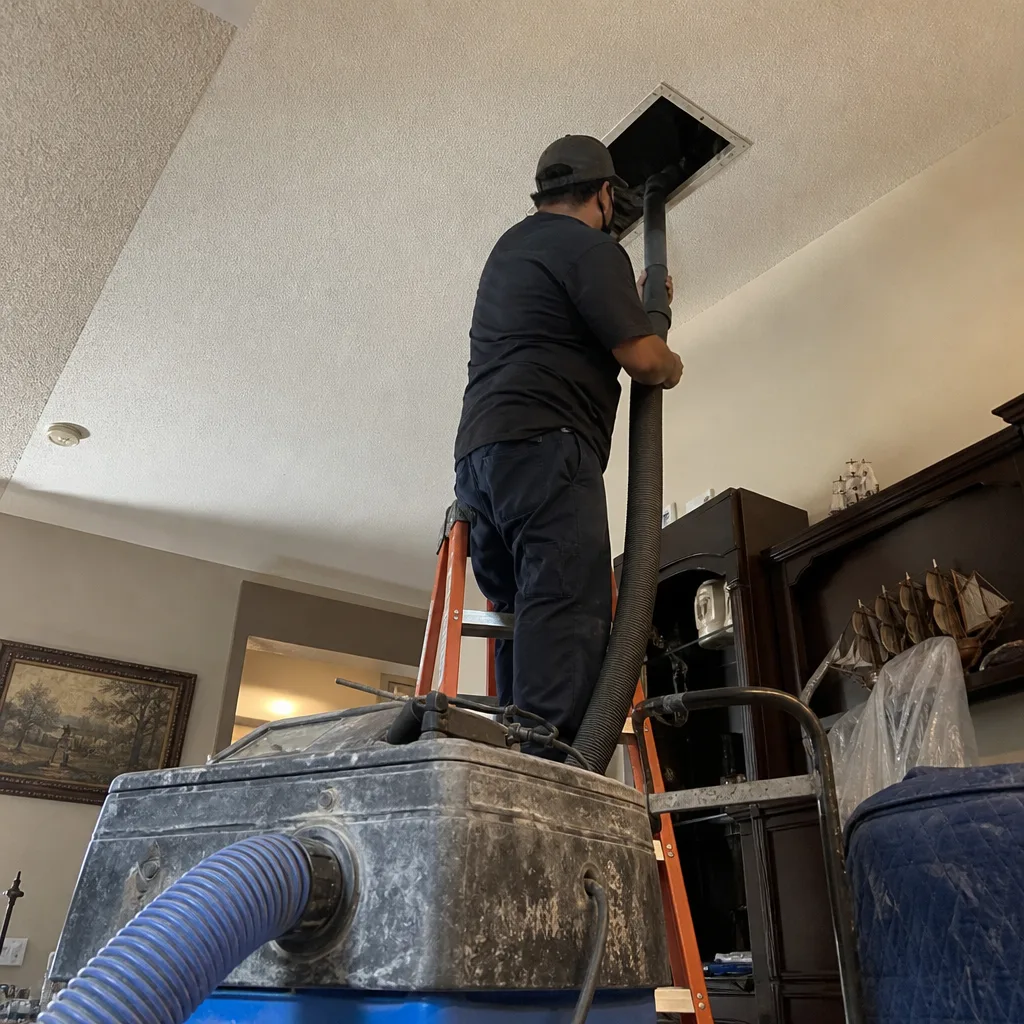
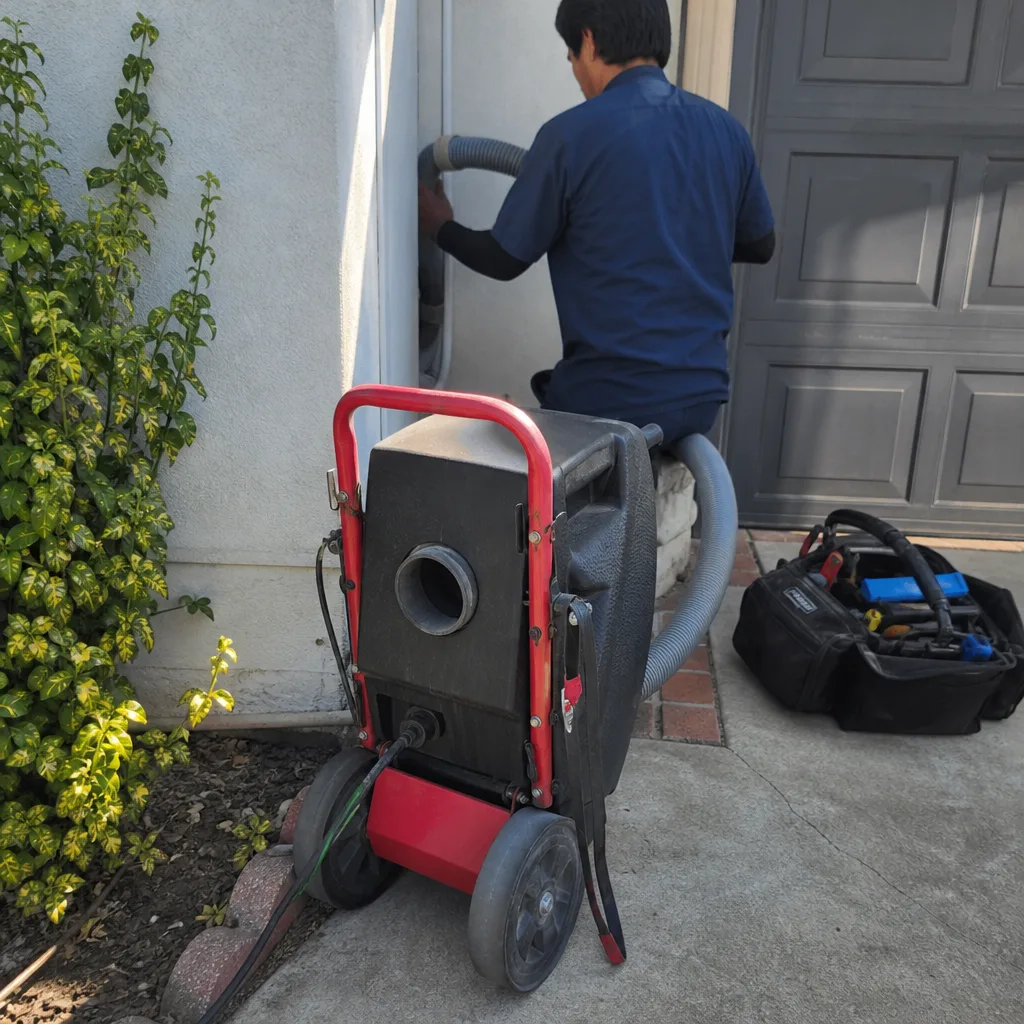
The physics of duct cleaning is straightforward: you’re trying to remove particulate from an enclosed air distribution system without releasing that particulate into the living space. The only reliable way to do that is to put the system under negative pressure. That means a powerful vacuum unit creating suction at the air handler, pulling air backward through the ductwork, while agitation tools knock debris loose so the vacuum can pull it out. The entire time, the system is under negative pressure, so any particle that gets knocked loose is pulled toward the vacuum, not pushed into your living room.
This is what Nikro units are built to do. They generate the kind of sustained negative pressure that professional remediation contractors rely on, and the system connects at the air handler with containment panels that seal the system except for the one duct run being cleaned. You can’t fake this with a shop vac, and you shouldn’t let anyone try.
What happens when a crew skips negative pressure? The most common shortcut is a “push-only” approach: a tech runs a brush or air whip through the ducts without proper extraction, knocking debris loose and relying on the HVAC blower to carry it to the filter. That puts every particle the brush releases into the air inside the home. If the debris load is heavy with fine wind-driven particulate from Santa Ana wind events, you’re effectively aerosolizing months of accumulated contamination into the space where you sleep and eat. The ducts might look cleaner afterward, but you’ve traded a contained problem for a distributed one.
The other shortcut is inadequate vacuum capacity. A small portable vacuum connected to the branch duct can’t generate enough airflow to pull debris from 30 feet of ductwork back to the unit. Debris gets knocked loose at the far end of the run and settles in the middle, waiting for the next blower cycle to push it into the house. Professional-grade equipment is the difference between removal and relocation. We run Abatement Technologies filtration in conjunction with our negative-pressure setup when the contamination profile calls for it, the same standard used in commercial remediation where airborne particulate is a known hazard.
An Honest Frequency Framework: When to Clean, When to Wait
The standard advice you’ll find online is “clean your ducts every 3 to 5 years.” That’s a number pulled from trade association marketing, and it doesn’t hold up against actual conditions in Santa Ana. A two-person household with no pets, no recent remodeling, a modern filtration system, and tight ductwork might go a decade without meaningful accumulation. A four-person household with two dogs, a cat, a recent kitchen remodel, and a 1970s flex duct system in a wind-exposed part of Santa Ana might need attention every 18 to 24 months. The useful framework is conditions-based, not calendar-based.
Here are the conditions that should push you toward cleaning:
- Post-wildfire smoke exposure. If smoke from a fire in the Angeles National Forest or the Santa Ana Mountains pushed AQI readings past 150 for more than a day or two while your HVAC system was running, ash particulate entered your system. The finer the particulate, the more readily it embeds in duct surfaces and the blower fan. A cleaning after a significant smoke event is not optional if you have occupants with respiratory sensitivity.
- Post-construction or major remodel. Drywall dust is fine and alkaline. It coats everything. If you remodeled without sealing off the return vents, a chunk of that dust is now inside your system, and it will keep circulating until removed. This is one of the most common triggers we see in Santa Ana homes, where older houses get renovated regularly.
- Visible dust emitting from registers. If you can see puffs of dust when the system starts up, or you notice dust streaks on walls near supply registers, that’s active redistribution of accumulated debris. This is not a “wait and see” situation; the accumulated load has reached the point where it’s being pushed into the living space.
- Pet-intensive households. Multiple shedding pets mean hair and dander are being pulled into the return side constantly. It compounds. If you have three dogs and you’ve never had your ducts cleaned, there is a substantial accumulation in your system regardless of how often you vacuum.
- Post-wind-event particulate load. After a multi-day Santa Ana wind event, especially if you live near the 55 freeway corridor or any active construction, your system has been inhaling airborne dust at elevated rates. One wind event won’t justify a cleaning. But if you’ve lived through several wind seasons since the last cleaning and you notice dust accumulation in the home accelerating, the ducts are likely contributing.
What should not trigger a cleaning is a door-to-door sales pitch, a flyer in the mail with a $49 whole-house offer, or a phone call claiming your neighborhood is “on the schedule.” Those are marketing tactics designed to get a technician into your home so they can upsell you on the actual charge. If you’re not seeing one of the conditions above, you don’t need a cleaning regardless of how convincing the flyer is.
What If the Cleaning Reveals Damaged Ducts
Cleaning and inspection are connected operations because you can’t effectively clean a duct system that’s structurally compromised. During the pre-inspection or the cleaning itself, a technician may find problems that need addressing before or instead of cleaning: separated branch lines, crushed flex sections, rusted sheet metal, rodent intrusion with gnawed openings, or liner degradation in older flex duct. These are structural issues, not cleaning issues.
This is where Anvil’s scope differs from a cleaning-only outfit. We repair, not just clean. If we find a disconnected branch during inspection, we can reconnect it on the same visit. If we find a crushed flex run that’s restricting airflow to a bedroom, we can replace that run. A cleaning-only company would have to either ignore the problem and clean around it, or refer you to a third party, which means another scheduling call, another truck roll, and another estimate. Our air duct repair capability in Santa Ana means structural problems get corrected on the same call, not deferred.
The reason this matters from a pure cleaning standpoint is that you can’t verify a cleaning was effective if the duct system is leaking. Negative pressure during cleaning draws air through every opening in the ductwork, including gaps and disconnections. That means the vacuum is pulling air from your attic (or crawlspace) through those openings instead of from the duct run being cleaned. The cleaning gets less effective, and you’re paying for suction that’s being short-circuited by leaks. Fixing the leaks first makes the cleaning substantially more effective. That’s not an upsell; it’s the order of operations.
The Dryer Vent: The Overlooked Half of the Air Pathway
Most homeowners think of air ducts and dryer vents as separate concerns, but they’re part of the same air pathway: your home’s mechanical air system moves conditioned air in through ducts and exhausts it out through vents. The dryer vent is the highest-volume exhaust point in most homes, moving hundreds of cubic feet of air per minute during a dry cycle. When that vent is restricted, it backs up the entire system.
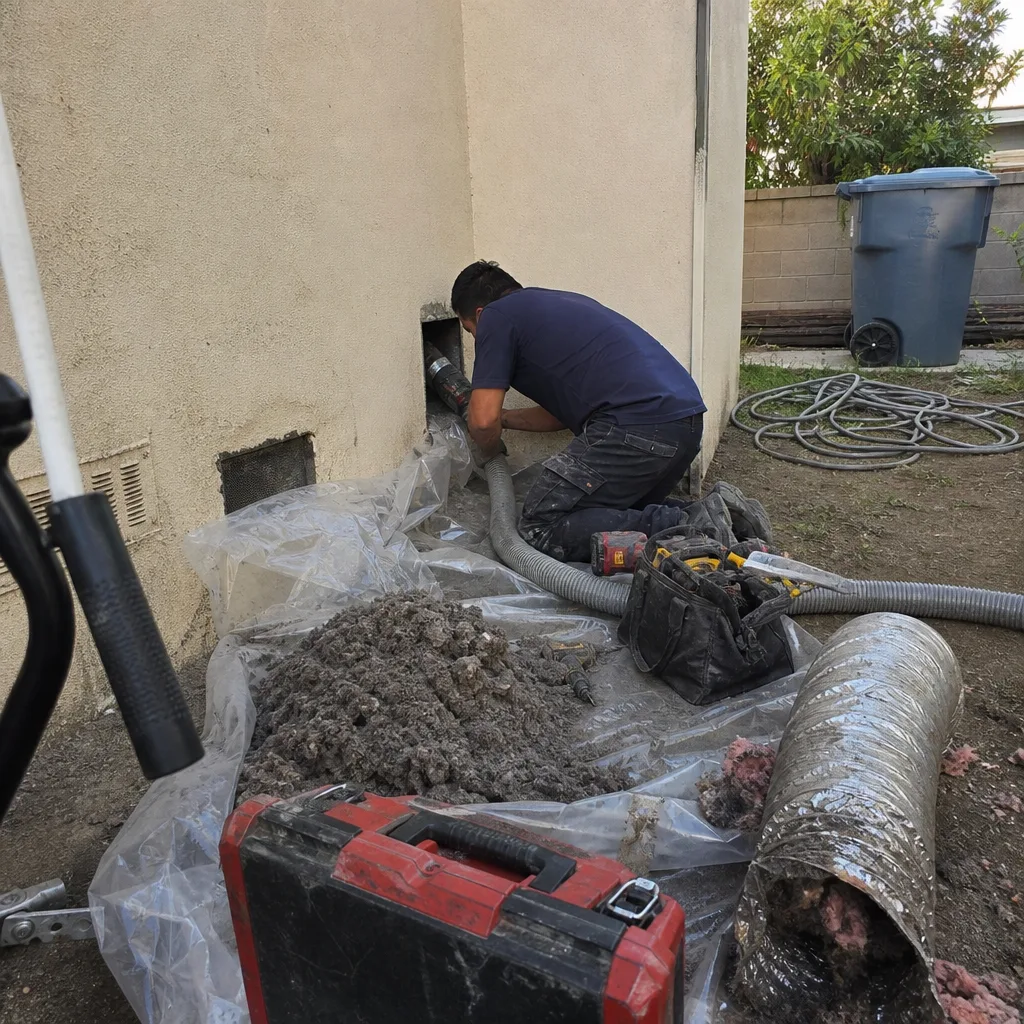
Lint accumulation in dryer vents is a recognized fire-risk factor, and the National Fire Protection Association’s guidance on dryer vent maintenance exists for a reason. Lint is highly flammable, and it builds up at bends, at the termination point, and wherever the vent sags. In Santa Ana homes where the dryer is located in an interior room and the vent run travels 20 or 30 feet through attic or crawlspace before terminating, the accumulation risk compounds because the long run gives lint more surface area to settle on. The hot dry air of Santa Ana summers doesn’t help: it desiccates lint to the point where it ignites more readily.
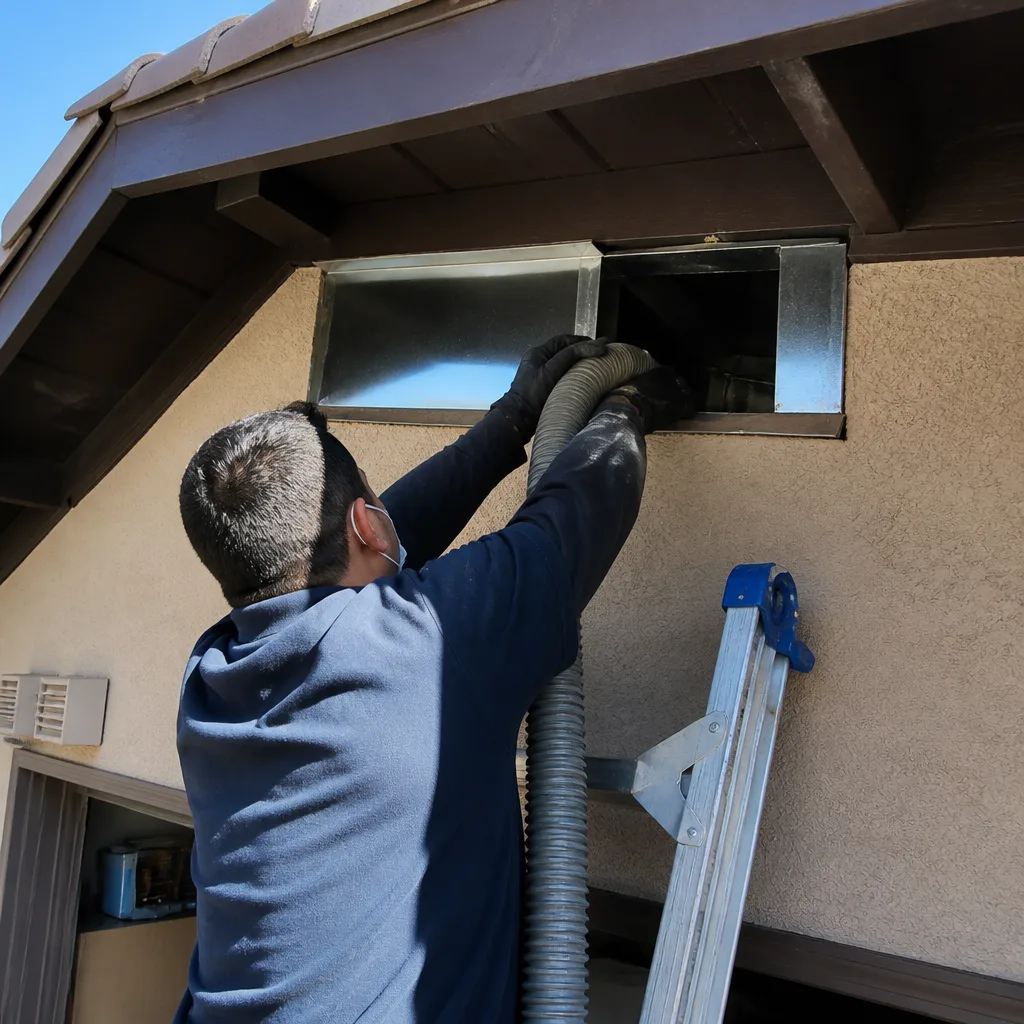
Beyond the fire risk, a clogged dryer vent reduces dryer efficiency, extends dry cycle times, and can push moist exhaust air back into the living space if the blockage is severe enough. If you’re running the dryer twice for loads that used to dry in one cycle, the vent is the likely culprit. Our dryer vent cleaning in Santa Ana handles this as a standard service, and we treat it as the second half of the full air pathway assessment: supply ducts, return ducts, and exhaust vent as one connected system.
What Does Air Duct Cleaning Actually Cost in Santa Ana
Let’s talk numbers without the bait-and-switch games. Air duct cleaning in Santa Ana for a typical single-family home ranges from $400 to $900, with the final number driven by the size of the system, the number of branch runs, the contamination level, and whether the cleaning reveals structural repair needs. That’s the range you should expect from a company using professional-grade equipment and doing the kind of inspection and verification described in this guide.
Here’s what drives the spread:
- System size and configuration. A 1,200-square-foot condo with six branch runs costs less than a 2,800-square-foot two-story home with 14 runs and two separate trunk lines. More access points, more time, more footage of ductwork. It’s the same reason a bigger house costs more to paint.
- Contamination level. A system with light dust accumulation is faster to clean than a system with years of wind-driven particulate, pet hair, and construction debris packed into flex ribbing. Heavy contamination requires more agitation passes and more time on each branch.
- Access conditions. Ductwork in a walkable attic is straightforward. Ductwork in a crawlspace with 18 inches of clearance, or an attic with blown-in insulation covering the runs, takes longer. Santa Ana homes built in the 1950s and 60s often have pier-and-beam foundations with under-floor ductwork, which is more labor-intensive than attic runs.
- Repair scope discovered during inspection. If the pre-inspection finds disconnected branches, crushed flex, or rusted-through sheet metal, the cost of correction is separate from the cleaning. This is where companies differ: some will clean anyway and ignore the structural problems. We flag them and give you a clear choice before any work proceeds.
The $149 whole-house specials you see on flyers are not real price points. They are designed to get a technician into your home with a vacuum system that costs a few hundred dollars, at which point the “real” price gets quoted and the upsell pressure begins. A legitimate cleaning takes 3 to 6 hours of labor with specialized equipment that costs tens of thousands of dollars. That labor and equipment cost is reflected in honest pricing. We quote one flat price per system based on the inspection, agreed before work starts. No per-vent multiplication games, no surprise line items added while you’re standing in the hallway. Call our Santa Ana air duct cleaning page or reach us directly at (833) 620-2848 for an exact quote after inspection.
Common Mistakes to Avoid
- Hiring on price alone. The budget operator with the $99 coupon is not bringing professional-grade equipment, is not doing a legitimate inspection, and is likely not putting the system under proper negative pressure. You’ll pay $99 for a surface vacuum and still have the actual problem.
- Skipping the pre-inspection. If a company quotes you over the phone without seeing the system, they don’t know what they’re quoting for. That’s a red flag for a bait-and-switch or a service that’s too generic to be effective.
- Cleaning without addressing structural damage. Cleaning a disconnected or crushed duct is wasted money. The contamination load will return quickly because the system is still leaking or restricted. Repair and cleaning should happen together where needed.
- Ignoring the dryer vent. Homeowners spend on duct cleaning and skip the exhaust side, leaving the most fire-prone component of the air pathway untouched. Dryer vent cleaning should be part of the assessment every time.
- Following a fixed calendar schedule blindly. A home with no pets, no recent construction, and a tight system doesn’t need a cleaning every three years just because a checklist says so. Conditions-based cleaning saves money and avoids unnecessary disruption.
- Running the HVAC system during a wind event without thinking about filtration. During heavy Santa Ana wind periods, your system is drawing particulate-loaded air into the return side. A high-MERV filter helps, but it can’t prevent accumulation indefinitely, and the wind season is not the time to let the system run with a clogged filter.
- Assuming visible cleanliness means internal cleanliness. A clean-looking home does not mean clean ducts. The duct interior is invisible to normal daily life, which is exactly why camera inspection matters before and after.
When to Call a Professional
Call a professional when you can see the evidence: dust emitting from registers on startup, dust streaks on walls near supply vents, visible accumulation when you remove a register cover and look inside. Call if you’ve had major drywall work done without sealed returns, or if you lived through a significant wildfire smoke season with the system running. Call if your energy bills have crept up with no obvious explanation, which can indicate airflow restriction that a cleaning and inspection package would identify. And call if you’ve noticed dryer cycles getting longer: that’s the exhaust side telling you it’s blocked. Anvil Air Duct Cleaning offers free estimates in Santa Ana. Call (833) 620-2848 to schedule an inspection, and you’ll get honest answers about what your system actually needs, based on camera footage and pressure readings, not a sales script.
Frequently Asked Questions
Expect to pay between $400 and $900 for a legitimate whole-system cleaning in a typical Santa Ana home, with the final number based on system size, configuration, contamination level, and access conditions. Any advertised price below $200 for a whole-house cleaning is a loss leader designed to upsell you once the technician is inside. Honest pricing reflects 3 to 6 hours of labor with professional-grade negative-pressure equipment, not a 45-minute surface vacuum. Call (833) 620-2848 for an exact quote after a proper inspection.
Cheaper quotes come from companies using shop-vac-level equipment, skipping negative pressure, skipping the camera inspection, and running a brush through the ducts for an hour before handing you a bill. They don’t generate the suction required to actually pull debris out of branch lines, and they often haven’t isolated the system properly, meaning whatever they knock loose goes into the living space. The price difference reflects equipment, time, and process, not just markup.
There’s no fixed answer because the condition drivers vary by household and by Santa Ana-specific factors like wind events and wildfire smoke exposure. Evaluate on conditions: post-remodel drywall dust, post-smoke-event ash load, visible dust emitting from registers, multi-pet households, and accumulated wind-driven particulate after several wind seasons. Some homes need attention every 18 months; others can go 7 to 10 years. Camera inspection tells you which one you have.
Request before and after camera footage of the duct interior. A professional cleaning should change the visible condition of the duct walls, and the footage proves it. You can also check register boxes and visible trunk sections yourself after the work. If a company can’t show you the difference, you didn’t get what you paid for. Anvil Air Duct Cleaning documents the system with camera footage as standard.
Yes. When outside air is drawn into your HVAC system through returns and duct leakage during smoke events, fine particulate from the smoke deposits on duct surfaces, blower components, and coils. The finer the particulate, the deeper it embeds. Even after the outdoor AQI recovers, that residue in your system can release into the environment as the blower cycles. Post-wildfire-season cleaning is one of the strongest condition-based triggers in Santa Ana.
It requires more care because the interior liner is thin and easily damaged by aggressive brush heads designed for sheet metal. Proper flex cleaning uses gentler agitation and relies more on negative-pressure extraction. A technician who doesn’t adjust technique for flex duct can tear liners, cause leaks, and damage the wire coil. Inspection first, then cleaning matched to the material.
The Bottom Line
Santa Ana’s climate and geography create a duct contamination profile that national guides simply don’t address. Wind-driven particulate, wildfire ash, and the specific duct materials in Orange County’s housing stock all change what cleaning should look like and when it’s actually needed. A legitimate air duct cleaning here means professional-grade negative-pressure equipment, a documented camera inspection, cleaning matched to duct material, and an approach that repairs structural problems rather than cleaning around them. If you’re going to have the work done, have it done the way it should be done: with real equipment, documented proof, and honest conditions-based guidance from a contractor who can also fix what the inspection finds. For more guides & resources on maintaining your home’s air quality, explore our blog. Built right, not just cleaned superficial.
Written by the team at Anvil Air Duct Cleaning, serving Santa Ana since 2017.
See the difference
 Before
 After
 Before
 After
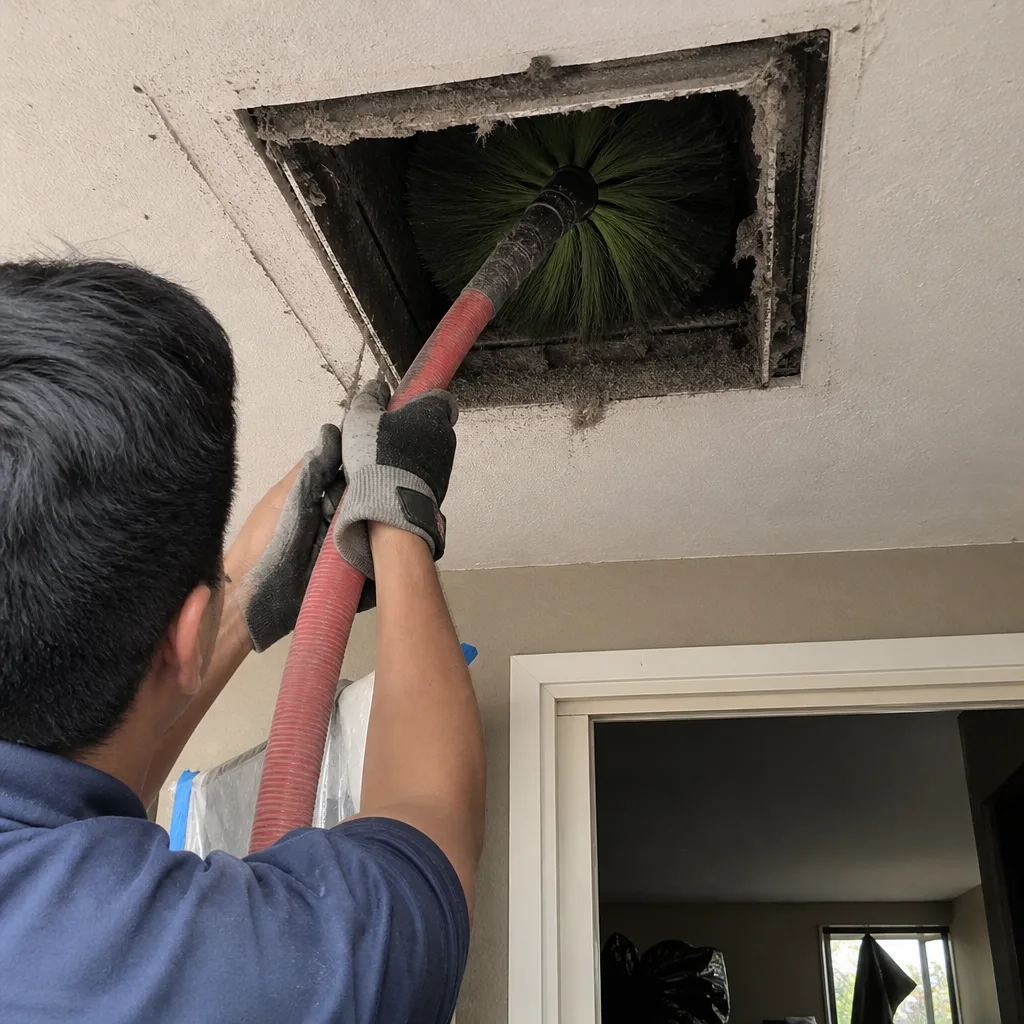 Before
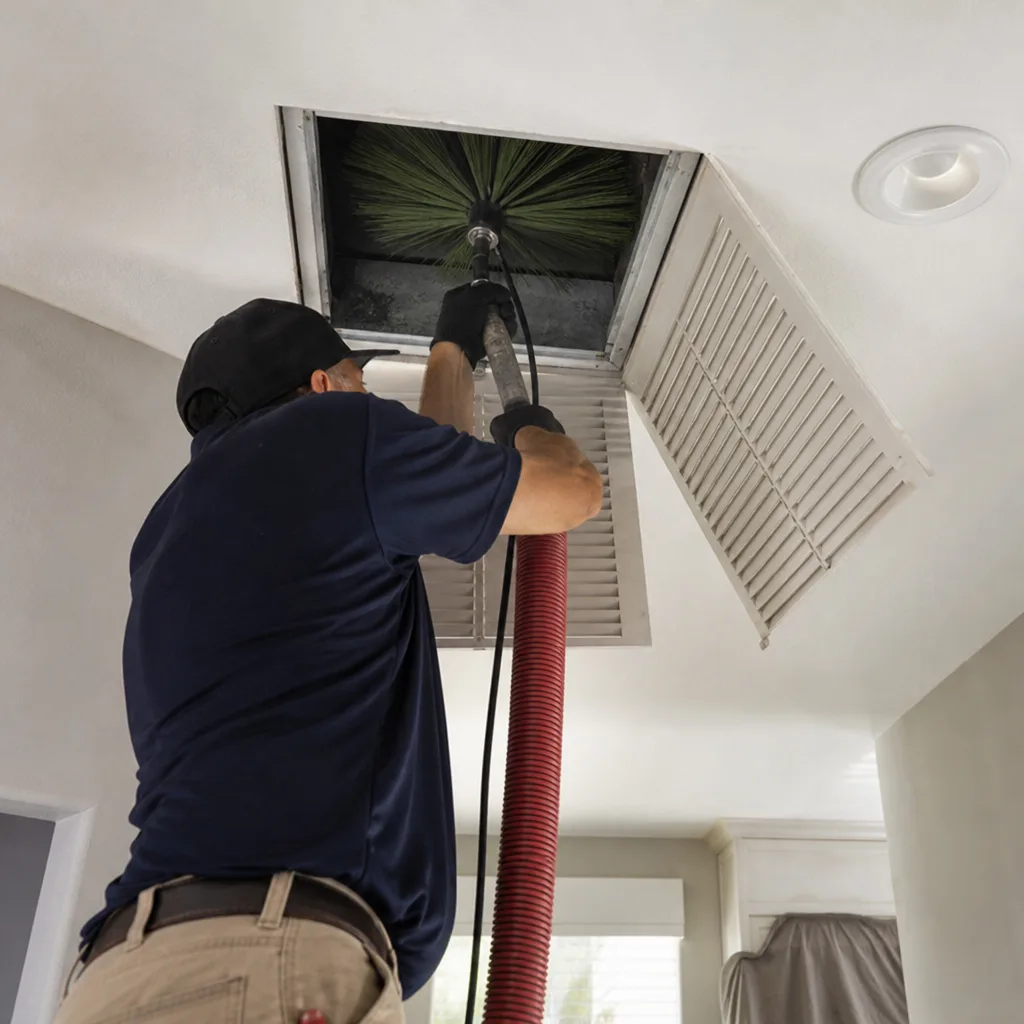 After