
Last updated November 2, 2026
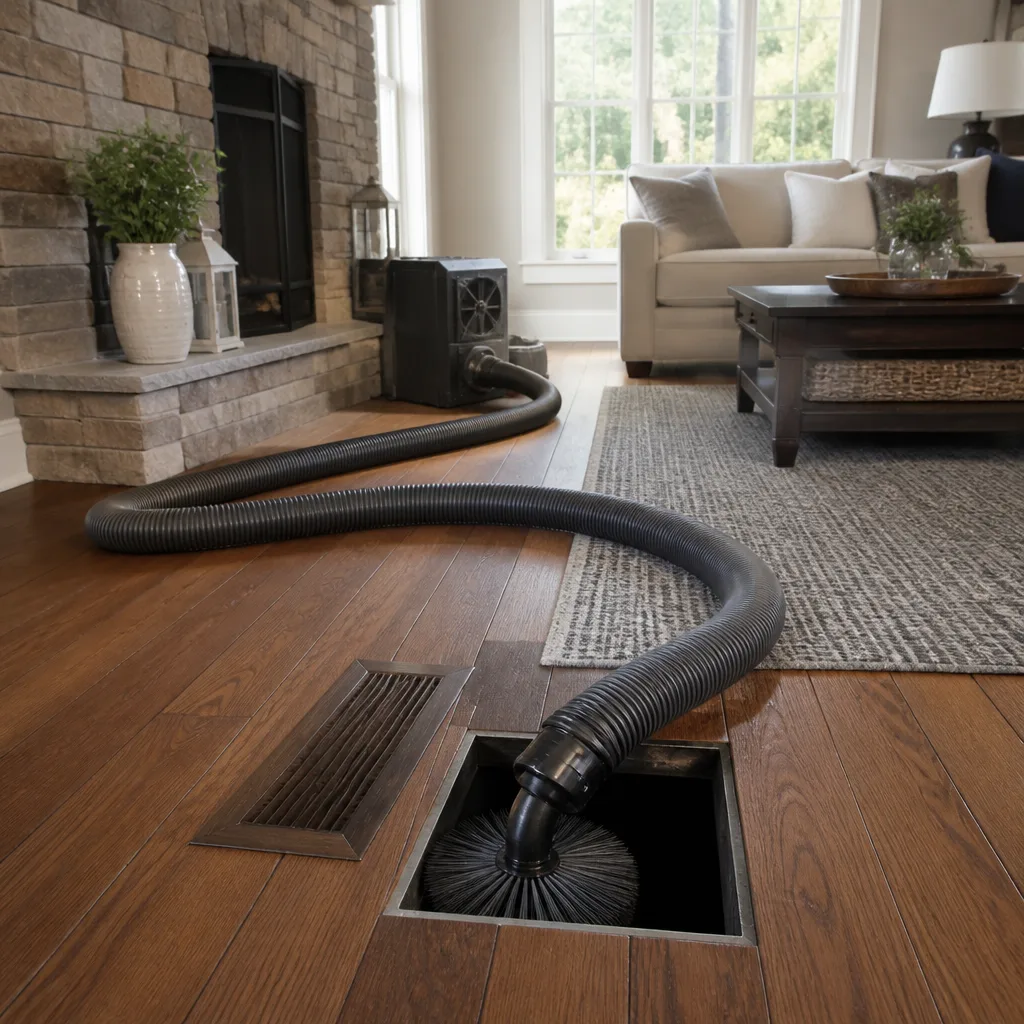 Whole-home duct cleaning
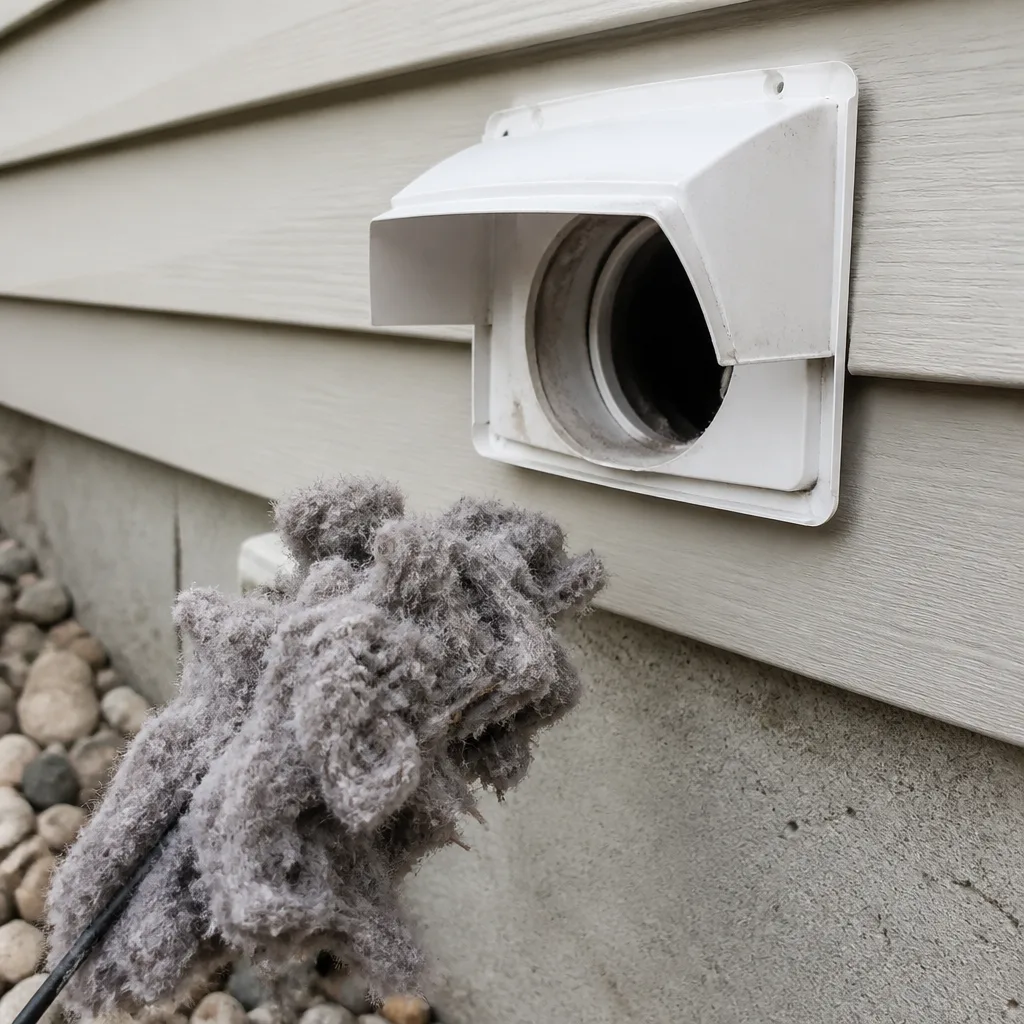 Dryer vent cleaning
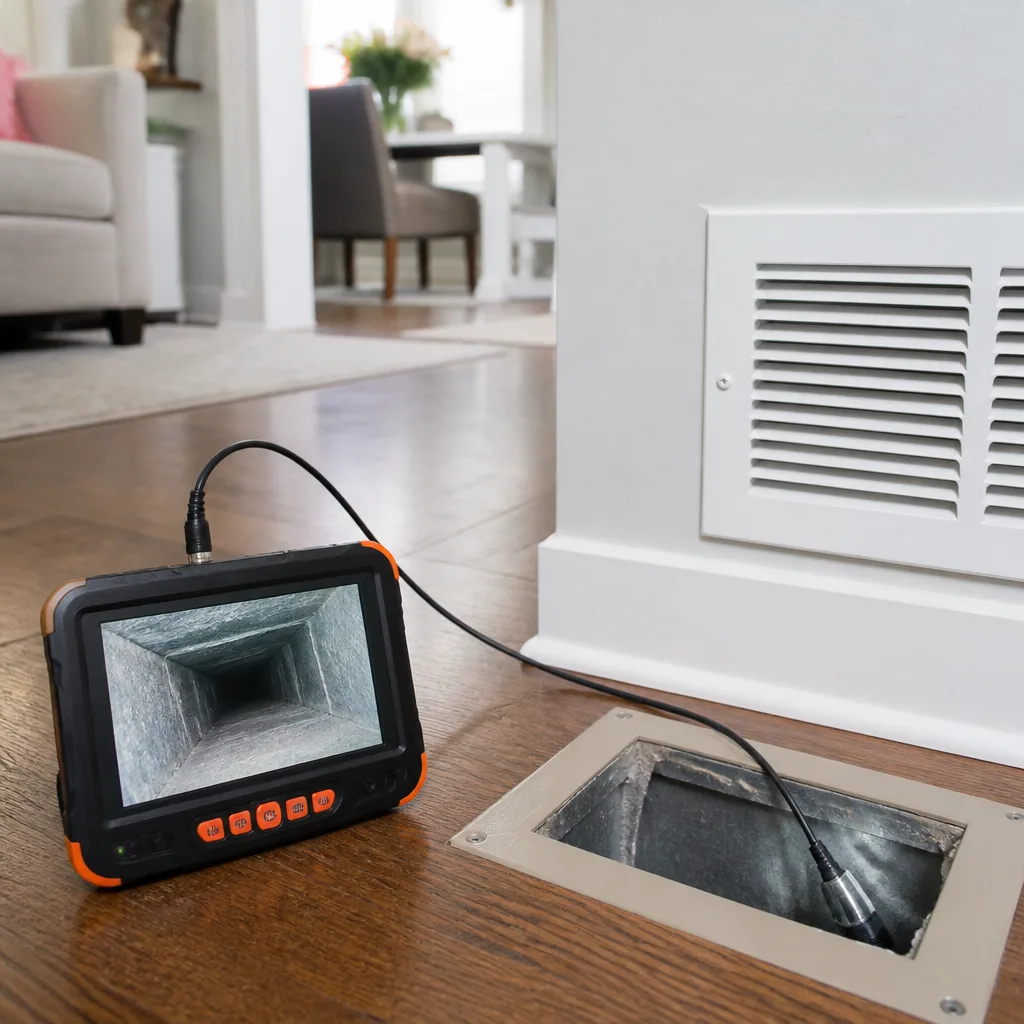 Camera inspection
 Sanitizing & deodorizing
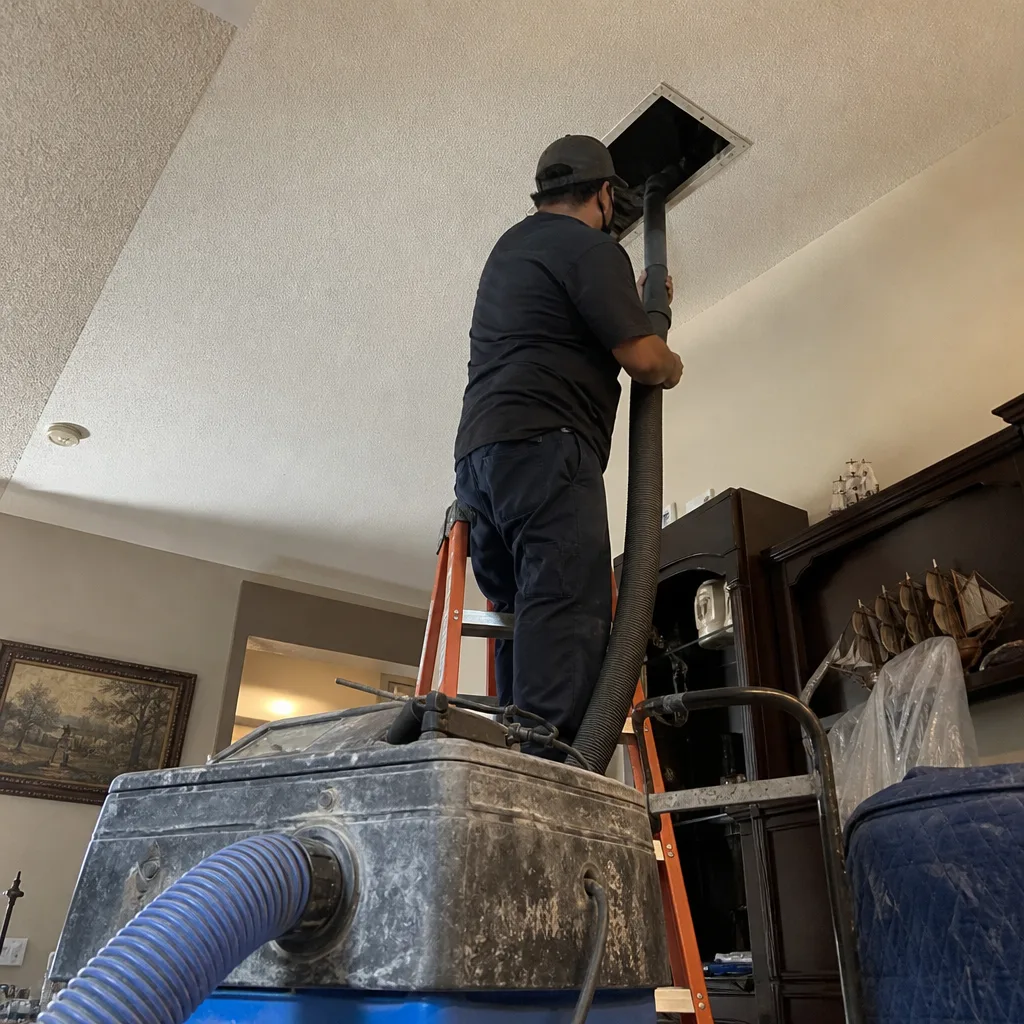
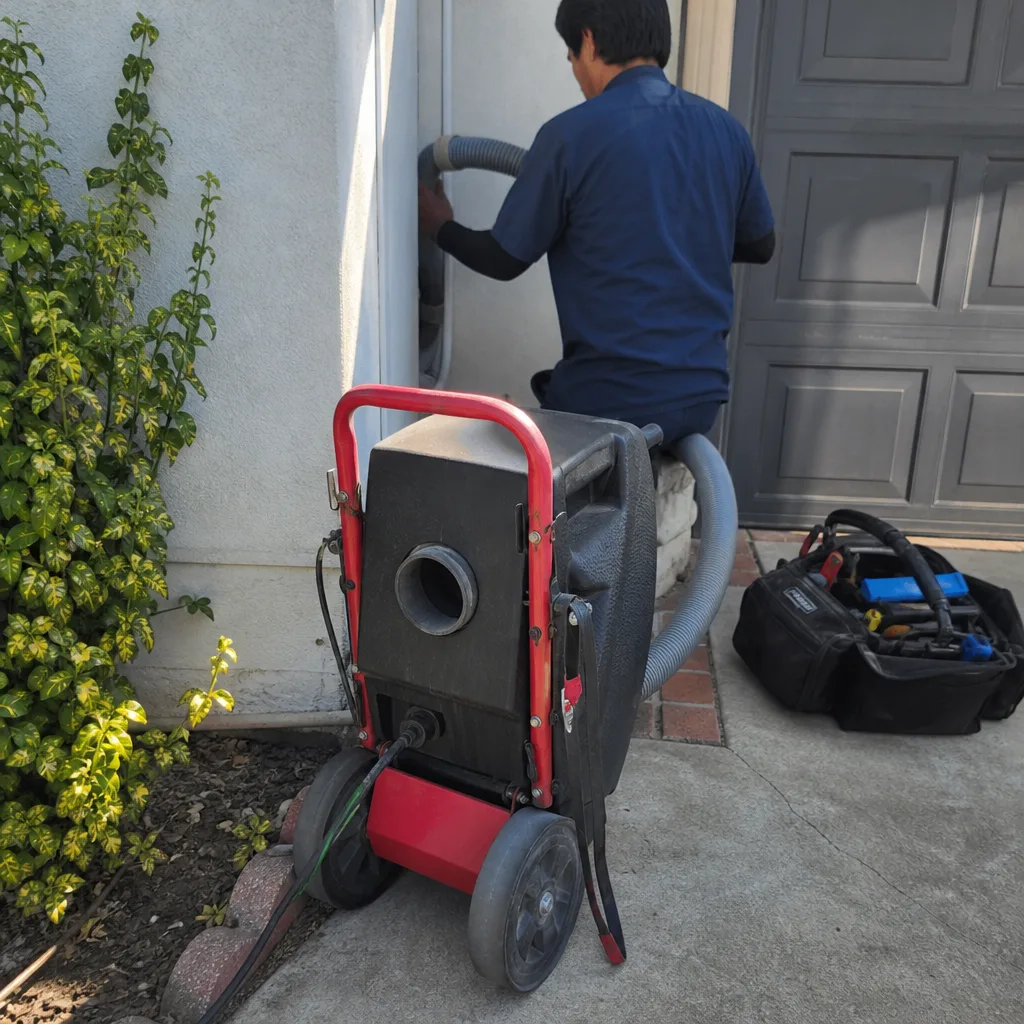
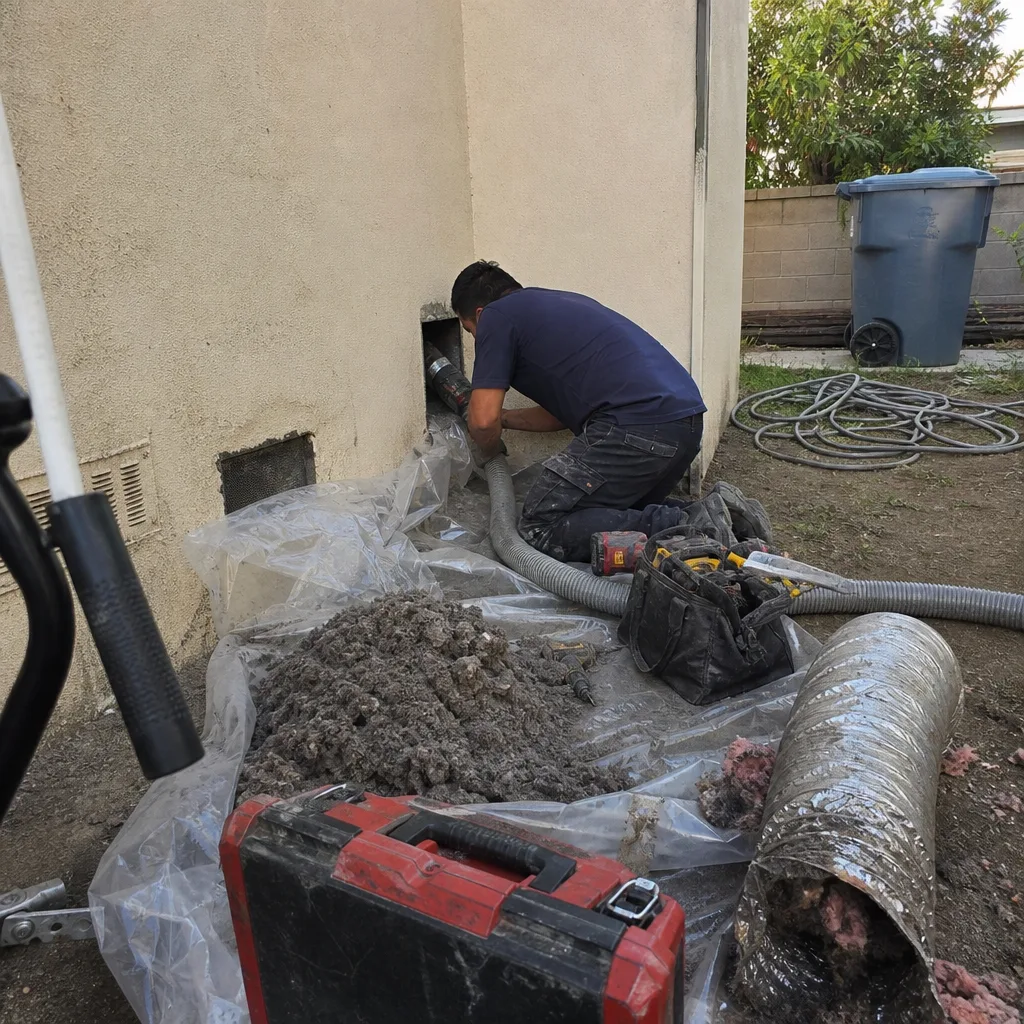
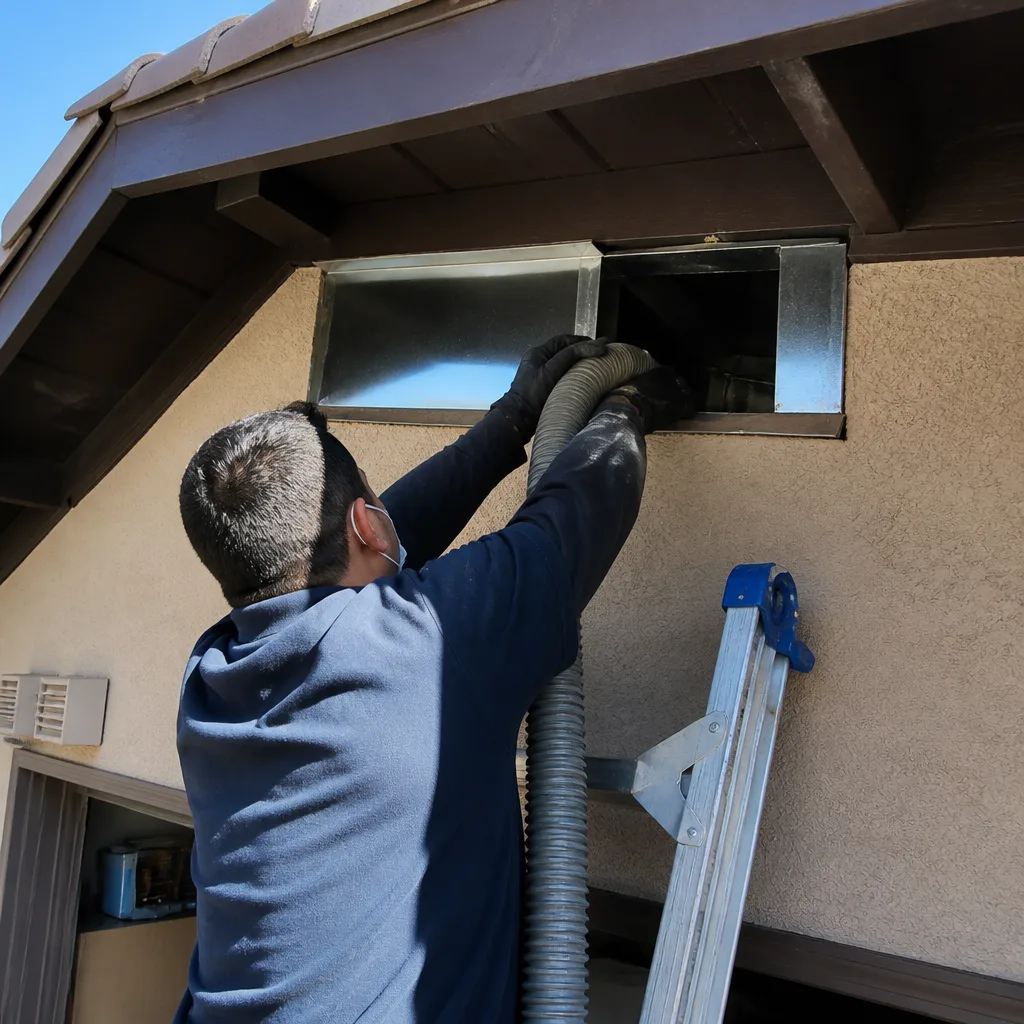
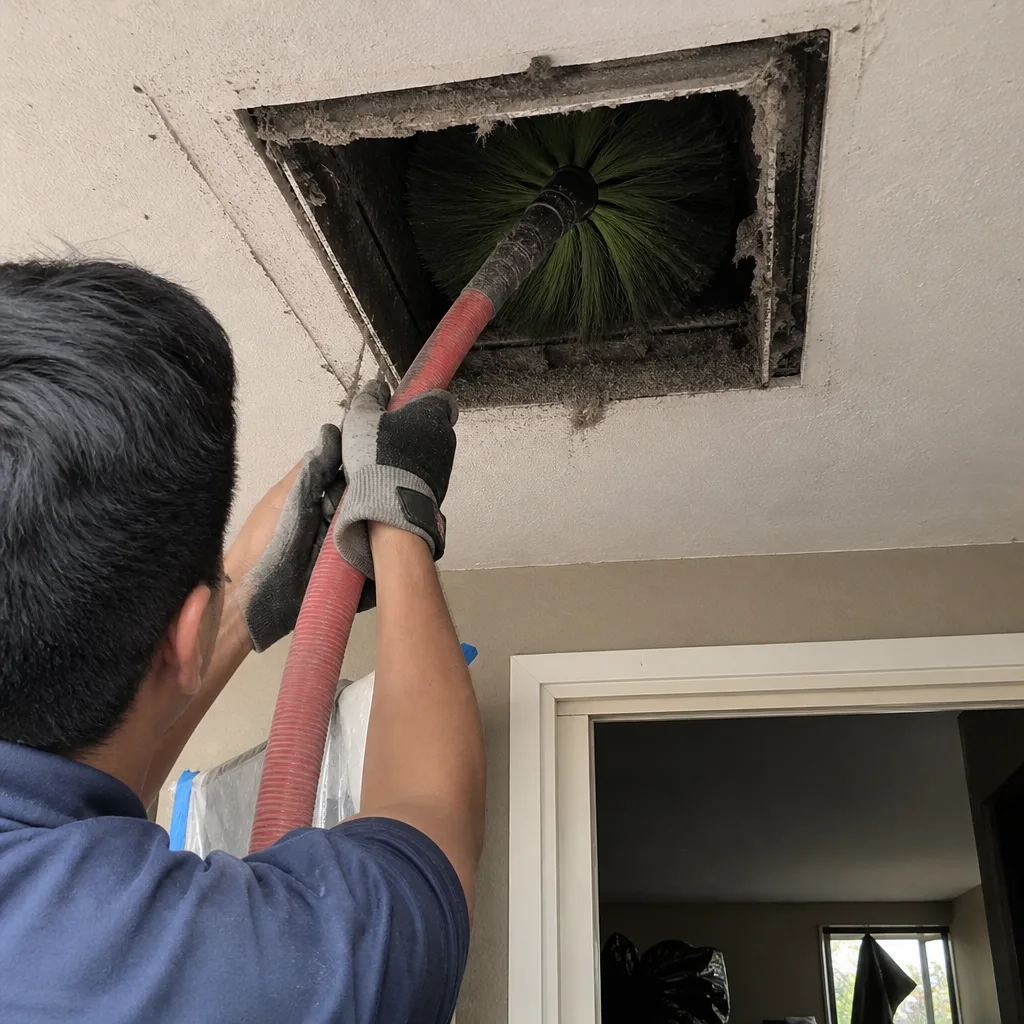
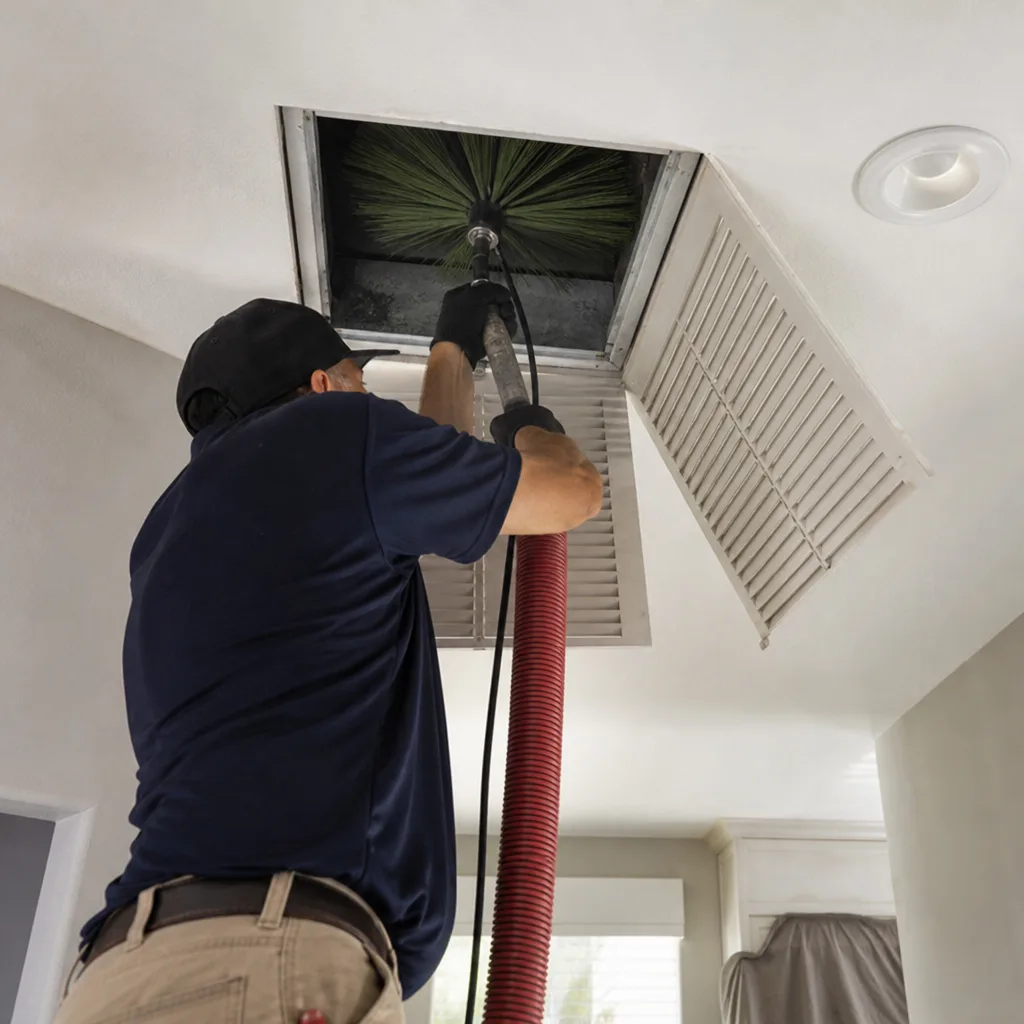
Whole-system duct and dryer vent check with before-and-after photos - you see exactly what came out of your vents
That "$99 whole-house special" is a bait ad - the real number appears once they are in your hallway, or the "clean" is a shop-vac at the register. We photograph the inside of your ducts before and after instead.
Air Duct Cleaning Troubleshooting: Common Problems and How to Fix Them
If cleaning your ducts didn’t fix the dusty rooms or the smell, you didn’t fail – the technician diagnosed wrong. Most duct problems that persist after cleaning are mechanical, not microbial. A brush and a vacuum can’t fix a disconnected boot, a kinked flex run, or a return leak pulling attic air into your living space. Here in Santa Ana, where summer attic temperatures regularly exceed 130°F, these structural failures degrade faster than in cooler climates – and they produce symptoms that mimic dirty ducts almost perfectly. This guide teaches you to read the symptom correctly before calling anyone, so you never pay for a cleaning that can’t solve the problem.
Styles & brands we work with
- Whole-home duct cleaning
- Dryer vent cleaning
- Camera inspection
- Sanitizing & deodorizing
Quick Answer
Air duct cleaning “not working” is almost never a failure of the cleaning itself – it’s a misdiagnosis of the symptom. If rooms stay dusty, airflow remains uneven, or smells return within weeks, the root cause is typically a structural duct problem (disconnection, collapse, leakage) or a source contaminant (mold, dead pest, construction debris) that vacuum-only cleaning cannot address. Correct diagnosis requires checking the full air pathway – supply ducts, return ducts, and the connections between them – not just brushing accessible surfaces.
Table of Contents
- The Symptom-to-Root-Cause Diagnostic Map
- How to Do a Basic DIY Pressure Check
- Flex Duct Failure Modes in Attic Spaces
- HEPA Vacuum vs. Rotary Brush: Which Tool Matches Which Symptom
- What to Ask a Contractor to Prove They Found – and Fixed – the Source
- What to Do When Cleaning Didn’t Fix the Problem
- Santa Ana-Specific Duct Failure Patterns
- Common Mistakes to Avoid
- When to Call a Professional
- Frequently Asked Questions
- The Bottom Line
The Symptom-to-Root-Cause Diagnostic Map
Before you spend money on another cleaning, you need to know which symptom points to which root cause. Here’s the diagnostic framework we use when a Santa Ana homeowner calls us after a previous cleaning didn’t resolve their complaint. This is the same map we walk through on every Anvil Air Duct Cleaning home service call, and it prevents the most common failure: treating a structural problem as if it were a dust problem.
Symptom: Rooms stay dusty within days of cleaning. If your registers show a fine gray film within a week of a professional cleaning, the dust is not coming from inside the ducts. It’s entering through one of three paths: a disconnected return duct pulling unfiltered attic air, a return chase that’s open to a wall cavity or crawlspace, or a filter bypass that lets air around the filter rather than through it. None of these get fixed by vacuuming harder.
Symptom: Musty smell that returns after cleaning. Persistent odor after a cleaning points to a source that was never removed. The two most common in Santa Ana: mold growing on the inside of flex duct insulation where a condensation leak has soaked the liner, or a dead rodent inside a duct run. Brushing the accessible metal surfaces won’t touch either one. The fix is either duct replacement or accessing the specific section where the contaminant sits.
Symptom: Some rooms never get warm enough or cool enough. Uneven airflow room-to-room is the single most misdiagnosed complaint in residential HVAC. Homeowners assume the duct is clogged with debris. More often, in our experience, the problem is mechanical: a flex duct has kinked, the duct has separated at the boot, or a damper blade has broken and closed off the branch. Cleaning cannot restore airflow through a collapsed or disconnected duct. You need Air Duct Repair in Santa Ana to correct the structural fault.
Symptom: Utility bills keep climbing despite clean ducts. High energy costs are rarely about dirt. The driver is usually duct leakage – conditioned air escaping into the attic before it reaches the rooms, or attic air being sucked into the return side. A 10% duct leak on a 2000-square-foot home in Santa Ana can add $180 to $350 per year in cooling costs alone, because your system runs longer to compensate for the air it’s losing. Dirt doesn’t cause that. Leaks do.
Symptom: You can hear air moving, but feel almost nothing at the register. This is a classic disconnected duct. The air is blowing, but it’s dumping into the attic or wall cavity instead of the room. You’ll often hear a faint hiss near the ceiling in the affected room. Cleaning does nothing for this. The duct needs to be reconnected and sealed at the boot.
Here’s the summary of the diagnostic logic:
- Dust returns fast: Source contamination or return-side leak. You need leak testing and source identification, not another cleaning.
- Smell persists: Contaminant still in place. You need source removal or duct replacement.
- Uneven airflow: Mechanical obstruction or disconnection. You need repair, not cleaning.
- High bills: Duct leakage. You need sealing and repair.
- Visible debris at registers only: This is the one case where cleaning is genuinely the answer.
How to Do a Basic DIY Pressure Check
Before you call anyone, there’s a simple test you can run in about fifteen minutes that reveals whether your ducts are pulling air from places they shouldn’t. The equipment is a stick of incense – the kind you can buy at any grocery store in Santa Ana for a few dollars. Here’s the procedure, and the logic behind it.
What you’re testing: Whether your return side is under negative pressure strong enough to pull air from the attic, a wall cavity, or the crawlspace. If it is, then the air you’re breathing isn’t all passing through your filter. That’s why the dust keeps coming back.
- Set your system blower to “ON” at the thermostat. Not “Auto.” You want continuous airflow for the test.
- Close all windows and exterior doors. You’re testing the sealed-house condition, which is how most systems operate daily.
- Light the incense and hold it near a return grille. Watch the smoke. It should stream directly into the grille and disappear. That’s normal and expected.
- Move to the edge of the return grille housing, where the metal frame meets the wall. Hold the incense against the seam. If smoke is drawn into cracks around the grill frame, the return is pulling wall-cavity air – air that has never been filtered. This is a source of the dust you keep seeing.
- Check interior doors. In many homes, return air relies on undercut door gaps. If you have a room that’s always dusty, close its door with the fan running and hold the incense at the gap under the door. If smoke streams under the door toward a return on the other side, that’s normal. If it doesn’t move, that room may have insufficient return airflow, forcing the system to pull harder from wherever it can – including cracks in the return ducts in the attic.
- Go into the attic. With the blower running, light the incense again and hold it near any visible return-side connections: elbow joints, branch takeoffs, the return box at the air handler. If the smoke gets pulled into any seam or joint, you’ve just found a duct leak on the return side. That leak is pulling raw attic air – insulation particles, dust, debris – directly into your living space, bypassing the filter entirely.
What you’re looking for with the incense is straightforward: smoke should only move into the system through the register faces, never through seams, cracks, or joints. If you find it moving anywhere else, cleaning your ducts will not solve your dust problem. You’ve found a structural fault that needs repair.
Flex Duct Failure Modes in Attic Spaces
Most homes in Santa Ana built in the last forty years use flexible ductwork – the insulated, wire-reinforced tube that snakes through attics and crawls over rafters. It’s affordable and quick to install. It’s also the single most common source of “cleaning didn’t fix it” complaints, because flex duct fails in ways that no amount of brushing or vacuuming can correct.
Here are the four failure modes we find repeated across Santa Ana attics, and why each produces symptoms that imitate dirty ducts.
1. Kinking at bends. Flex duct is installed with bends to route from the main trunk to each register. If a bend is too tight – typically tighter than one duct-diameter radius – the inner liner collapses. The duct still looks fine from the outside; the insulation jacket isn’t damaged. But inside, the air passage is choked down to a sliver. The room serves by that duct gets maybe 30% of the airflow it should. The homeowner feels like the duct must be clogged with dirt. It isn’t. It’s folded. The fix is cutting out the kinked section and replacing it with a proper radius bend, or replacing the run entirely. This is standard Air Duct Repair in Santa Ana work.
2. Rodent damage through the insulation and liner. Santa Ana attics are prime habitat for roof rats, which chew through flex duct. Sometimes they tunnel into the insulation jacket for nesting material. Other times they chew clear through the liner to get into the conditioned space. Either way, the result is a breach in the air pathway. If it’s on the supply side, conditioned air escapes into the attic. If it’s on the return side, attic air gets sucked in. The symptom profile is identical to a dirty-duct complaint: dust, poor airflow, smell. Cleaning does nothing to patch a hole.
3. Disconnected boots at the register. A “boot” is the metal transition that connects the flex duct to the register in the ceiling or wall. Over time, the zip tie or duct tape that holds the flex duct to the boot degrades – heat accelerates this – and the duct separates. The result is air dumping into the attic instead of the room. You’ll notice the room never reaches the set temperature, and the register may show zero airflow even when the system is running hard elsewhere. A HEPA vacuum run through the register won’t resolve this. The duct isn’t clogged. It’s disconnected.
4. Crushed ducts under stored items or other friction against structure. Homeowners store boxes in the attic, or contractors run new wiring and compress a flex duct against a rafter. The inner liner flattens. Airflow drops. The system struggles. And the homeowner calls for a cleaning because the room is stuffy. The cleaning technician runs a brush through a duct that resembles a toothpaste tube – and the room is still stuffy a week later.
If you have flex duct in your attic and the symptoms persist after a cleaning, the odds are better than even that one of these four failure modes is the actual cause. The definitive test is to have the ductwork visually inspected in the attic space itself, not just from the register.
HEPA Vacuum vs. Rotary Brush: Which Tool Matches Which Symptom
Not every duct problem requires the same tool. A common failure pattern we see in Santa Ana is a technician using one method on every home, regardless of what the ducts actually need. Here’s how to judge whether a HEPA vacuum-only pass was the right call, or whether your symptoms point to the need for rotary brush agitation – and what the difference actually is.
HEPA vacuum-only is the right tool when: the buildup is loose particulate – construction dust, drywall debris, pet hair, common household dust – that hasn’t adhered to the duct surfaces. A strong negative-pressure vacuum can pull loose material out through the register without mechanical scrubbing. This is appropriate for newer ductwork, or systems that have been maintained regularly and haven’t been through a remodel.
Rotary brush agitation is the right tool when: the buildup is adhered to the duct walls – the kind of greasy, fibrous film that forms over years, or dried-on debris from a construction project, or material that has been moistened and then dried. A vacuum alone will not remove material that’s stuck. The brush mechanically dislodges it so the vacuum can extract it. Systems from Rotobrush and Nikro – the equipment we run on our fleet – combine the agitation and the negative-pressure extraction in one pass. That’s the professional standard, and it’s what separates a real cleaning from a shop-vac pass.
How to tell from your symptoms which one you needed:
- If a cleaning was done with a vacuum only and the dust returned within a month, the problem is likely not adhesion – it’s a leak or disconnection pulling new dust in. Another cleaning with any tool won’t fix it.
- If you stuck a phone camera into a register before cleaning and saw fluffy, loose debris, vacuum-only would have been sufficient. If you saw a caked-on layer that looked like felt, the job needed rotary agitation. If it got vacuum-only, that’s why the result was disappointing.
- If the previous technician couldn’t show you before-and-after photos of the duct interiors, you have no way to verify whether agitation was even attempted.
The equipment tells you what the crew is capable of. A company running Abatement Technologies HEPA filtration alongside rotary brush systems is equipped for remediation-grade work, not just surface dust removal. If your duct problem traces back to mold or pest contamination, that’s the tier of capability you need.
What to Ask a Contractor to Prove They Found – and Fixed – the Source
Whether you’re calling someone after a failed cleaning, or you’re hiring for the first time and want to avoid becoming that person, there are specific questions that separate a diagnostic technician from a vacuum operator. Here’s the exact list we’d want a homeowner in Santa Ana to ask us – or any contractor – before work starts.
- “Will you inspect the ducts in the attic, or only from the registers?” The attic is where flex duct fails. A company that only works from inside the house cannot see kinks, rodent damage, or disconnections. If the answer is “only from the registers,” call someone else.
- “What will you do if you find a disconnected or damaged section while cleaning?” A full-service indoor air quality contractor will say they repair it on the same call. A cleaning-only crew will say they can’t, or that you’ll need a separate company. Anvil offers Air Duct Repair in Santa Ana as part of the same service scope, so a structural find gets fixed immediately rather than left for later.
- “Can you show me photos or video of the duct interiors before and after?” This is non-negotiable. Any competent operator can document the condition with an inspection camera. If they won’t show you the inside of your ducts, they haven’t cleaned them properly, or they’re hiding something.
- “What equipment are you using, and what brand?” If the answer is vague – “professional-grade” with no name behind it – ask again. Rotobrush. Nikro. Abatement Technologies. These are specific, verifiable brands used in commercial and remediation work. A contractor who can name their equipment is a contractor who has nothing to hide.
- “If the smell comes back in two weeks, what happens next?” A real diagnostic approach includes a follow-up plan. If the answer is “we’d come back and look again,” that’s better than “we already cleaned it.” But the best answer is “we would have found the source before we left, because we don’t clean around contaminants.”
Contractors who know their trade welcome these questions. Contractors who don’t will deflect, blur, or rush to the price. That tells you everything.
What to Do When Cleaning Didn’t Fix the Problem
You’ve already paid for a cleaning and the problem persists. Here’s the step-by-step path from “didn’t work” to a resolved system, in the order that prevents you from paying twice for the same non-solution.
- Document the symptom precisely. Which rooms, what time of day, what does the air smell like, how fast does dust return? Write it down. The more specific you can be, the faster a real diagnosis happens.
- Run the incense pressure check described above. If you find smoke being pulled into seams or joints, you have identified a leak or disconnection without paying anyone. That knowledge changes the conversation when you call a contractor.
- Ask the company that did the cleaning for the before-and-after documentation. If they can’t provide it, you have your answer about why the cleaning didn’t work: it was superficial. Don’t pay them to do it again.
- Call a company that repairs ducts, not just cleans them. In Santa Ana, that means finding a contractor whose service list includes both cleaning and structural repair. The full air pathway – supply ducts, return ducts, boots, and plenums – needs to be inspected in the attic, not just at the register faces.
- Get the source removed, not just the symptom treated. If the diagnosis is mold, ask whether the contaminated duct section will be replaced or chemically treated – and ask to see the contamination before and after. If it’s a dead rodent, confirm the carcass will be removed, not just the smell masked. If it’s a disconnected boot, confirm it will be reconnected and sealed, not just cleaned.
The common thread: after a failed cleaning, the next call should be to someone who can find and fix the structural cause. That’s a different job than what the first contractor did.
Santa Ana-Specific Duct Failure Patterns
Duct systems in Santa Ana fail differently than ducts in Phoenix, or Seattle, or Minneapolis. If you know what the local climate and housing stock does to ductwork, you can anticipate the most likely cause of your symptoms before the contractor even arrives.
Extreme attic heat cycles. Summer attic temperatures in Santa Ana regularly exceed 130°F, sometimes approaching 140°F during heat waves. Flex duct’s plastic liner and foil insulation jacket expand and contract daily through a temperature swing of 60 to 80 degrees. That thermal cycling degrades the duct tape and zip ties that hold flex duct to boots and takeoffs. Connections separate. Ducts slip off. This is the single most common mechanical failure we find in Santa Ana attics, and it happens year-round – not just in summer – because the daily swing is always present.
Older housing stock with original metal duct. Much of central and north Santa Ana was built in the 1950s through 1970s, and many homes still run original galvanized metal ductwork. Those systems are durable but they’re old. Soldered seams crack. Joints separate. And because metal duct was rarely insulated to modern standards, condensation can form on the exterior in humid weeks, leading to rust-through in places that are impossible to see from inside the house. A visual attic inspection finds these before they become a bigger problem.
Rodent pressure. Roof rats are a year-round reality across Orange County, and Santa Ana’s older neighborhoods with mature trees and overhead utility lines carry a heavier burden than newer subdivisions. Rats chewed through flex duct insulation to access the conditioned ducts, leaving entry holes that admit attic dust and insulation into the air stream. You’ll know it when your cool air comes out at the register with a faint attic smell.
Construction dust from the constant remodels. Santa Ana has a genuinely active housing market – older homes getting flipped, room additions, kitchen remodels – and every one of those projects runs the HVAC or leaves drywall dust in the air. Many of those homes get a duct cleaning afterward. But if the cleaning was done while the drywall sanding was still ongoing, or if the return side was left open during remodel, the dust comes right back. The cleaning wasn’t the problem. The sequence was.
If you live in Santa Ana and your ducts were cleaned once and the problem persists, these are the four most likely explanations, in order: thermal-cycle disconnection, rodent breach, old metal duct seam separation, or post-remodel contamination. All four require repair, not re-cleaning.
Common Mistakes to Avoid
- Paying for a second cleaning without a new diagnosis. If the first cleaning didn’t resolve the symptom, the same service will produce the same result. Demand a structural inspection before another vacuum pass. In Santa Ana’s climate, the second cleaning without a diagnosis is usually just a second payment for the same missed problem.
- Assuming the first technician “didn’t clean thoroughly enough.” Sometimes that’s true. But more often, the cleaning was fine and the real issue was never in the scope of a cleaning at all. Don’t blame the labor when the diagnosis was wrong.
- Replacing the air filter repeatedly without finding the source. A filter that clogs quickly is a symptom of unfiltered air bypassing the system. Replacing the filter is treating the symptom, not the cause. Find the leak or the bypass.
- Buying duct sealant and crawling into the attic on your own. The attic is hot, cramped, and full of hazards. And if the ductwork is on the return side, you don’t seal leaks with a can of spray foam while the system runs. This is the one job where a trained professional with the right materials and the ability to inspect afterward is genuinely the cheaper option than the $200 emergency room visit or the failed DIY attempt that makes the leak worse.
- Hiring a contractor who can’t name their equipment. If you ask “what do you clean with” and the answer is “commercial vacuum,” you’ve just been told everything you need to know. Brands like Rotobrush and Nikro mean a company invested in real machinery. No answer means they invested in a shop vac and a website.
- Believing a low quote for a job that requires attic access. A proper duct inspection and cleaning in a Santa Ana home with attic flex duct takes hours. If the quote is below what a handyman would charge for a half-day, the scope is smaller than the problem. You’re buying a vacuum pass, not a diagnosis.
- Ignoring your dryer vent because the AC ducts were the focus. The full air pathway includes the dryer exhaust. A clogged dryer vent is a fire risk and a system efficiency problem – a recognized concern across the industry. If your home has never had Dryer Vent Cleaning in Santa Ana, you’re leaving the most dangerous part of the air system unaddressed.
When to Call a Professional
Call a professional when the incense test reveals a leak, when the symptom persists after a cleaning that was supposed to fix it, or when you suspect a contaminant source that requires removal rather than vacuuming. Specifically: if you smell something dead that never fades, if a room won’t hold temperature no matter how long the system runs, or if you see visible duct disconnection in the attic, don’t delay. In Santa Ana, structural duct failures rarely heal themselves, and the next summer heat wave will expose every weak connection you currently have. Anvil Air Duct Cleaning offers free estimates in Santa Ana – call (833) 620-2848 to schedule an attic-level inspection of your ductwork. We repair, not just clean, so the cause gets fixed on the same call.
Frequently Asked Questions
Air duct cleaning in Santa Ana typically runs between $450 and $900 for a standard single-system home, depending on the number of vents, the accessibility of the attic, and whether the ducts have been cleaned before. A home with extensive contamination or multiple HVAC systems will run higher. If the inspection reveals structural damage – disconnected boots, kinked flex runs, rodent breaches – the repair work is quoted separately and is not included in a basic cleaning price. Beware quotes under $200; that price point cannot cover the labor hours and equipment required for a real cleaning job. Call (833) 620-2848 for a free estimate.
Cheaper quotes usually reflect a smaller scope: vacuum-only from the registers, no attic inspection, no agitation, no before-and-after documentation. A Rotobrush or Nikro system costs tens of thousands of dollars and requires trained operators. A shop vac costs $80. The math is simple. If the quote sounds too low, ask what equipment they use and whether they access the ductwork from the attic. The answers will explain the price gap.
Demand before-and-after photos or video of the duct interiors, taken with an inspection camera. Any legitimate company can provide this. If they cannot show you the inside of your ducts, assume they were never cleaned. Also ask for a visual walkthrough of the attic findings – disconnections, damaged sections, contamination sources. A real technician can point to what they found.
For most Santa Ana homes, every 3 to 5 years is a reasonable interval, with earlier service if you’ve had a remodel, a pest intrusion, visible mold, or specific respiratory symptoms. But the honest answer is that cleaning frequency depends on the condition of the duct system. A home with sealed, well-connected ducts and good filtration can go longer. A home with leaky returns pulls attic air in continuously, and no cleaning interval will keep up with a structural problem. Fix the structure first, then the cleaning schedule becomes predictable.
Improper cleaning can absolutely make allergies worse, typically by using agitation without adequate negative pressure containment. That’s why the HEPA vacuum runs simultaneously with the brushing on professional systems from Rotobrush and Nikro – the agitation loosens material, and the vacuum immediately captures it rather than letting it disperse through the house. A shop-vac cleaning that blows debris around is not real duct cleaning and will worsen indoor air quality.
Attic heat cycling. The daily expansion and contraction of flex duct connections in 130°F-plus attics degrades tape and zip ties over time, leading to disconnected boots and separated seams. This is a mechanical failure, not a hygiene problem. You can clean the duct a hundred times and it will still leak air into the attic. The fix is reconnection and sealing, which is standard Air Duct Repair in Santa Ana work.
The Bottom Line
Air duct cleaning fails when it’s applied to a problem that cleaning cannot solve. Dust that returns quickly means a leak, not dirt. Uneven room temperatures mean a mechanical fault, not buildup. Persistent smells mean a source contaminant, not residue. The fix in all three cases is the same: a proper attic-level inspection that identifies the structural cause, followed by a repair that addresses it. If you’re in Santa Ana and you’ve already paid for a cleaning that didn’t work, don’t pay for another one. Find a contractor who repairs, not just cleans – and who can prove with photos what they found and what they fixed. The full air pathway is one connected system. Treat it that way, and the symptoms stop recurring.
Written by the team at Anvil Air Duct Cleaning, serving Santa Ana since 2017.
See the difference
 Before
 After
 Before
 After
 Before
 After