
Last updated November 2, 2026
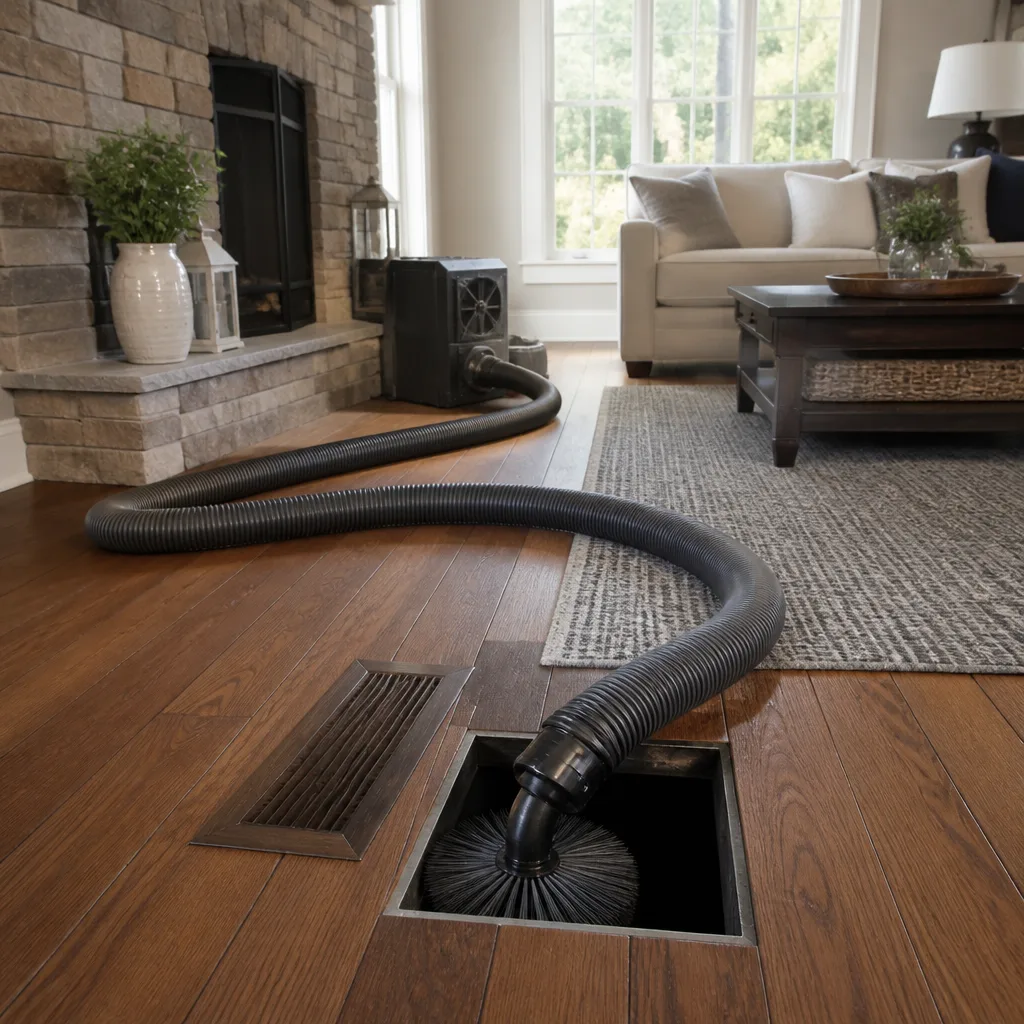 Whole-home duct cleaning
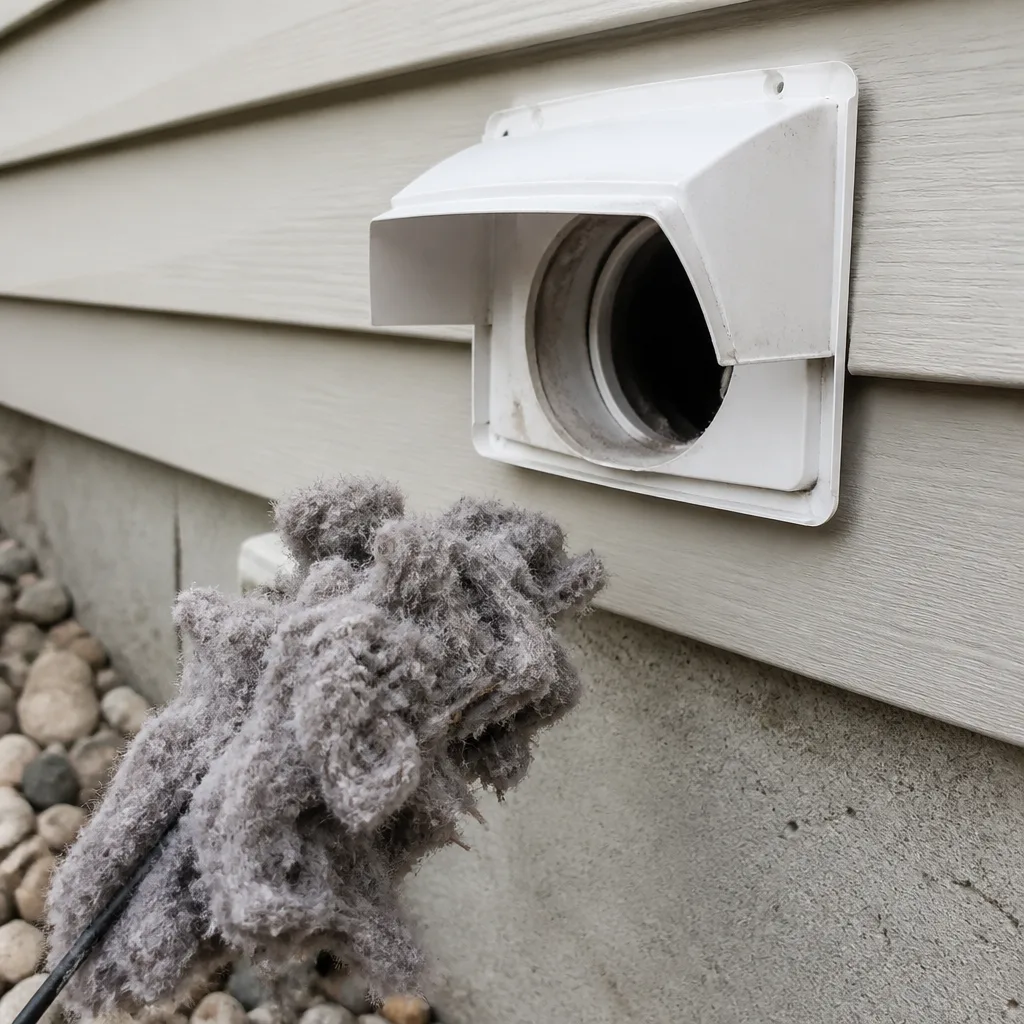 Dryer vent cleaning
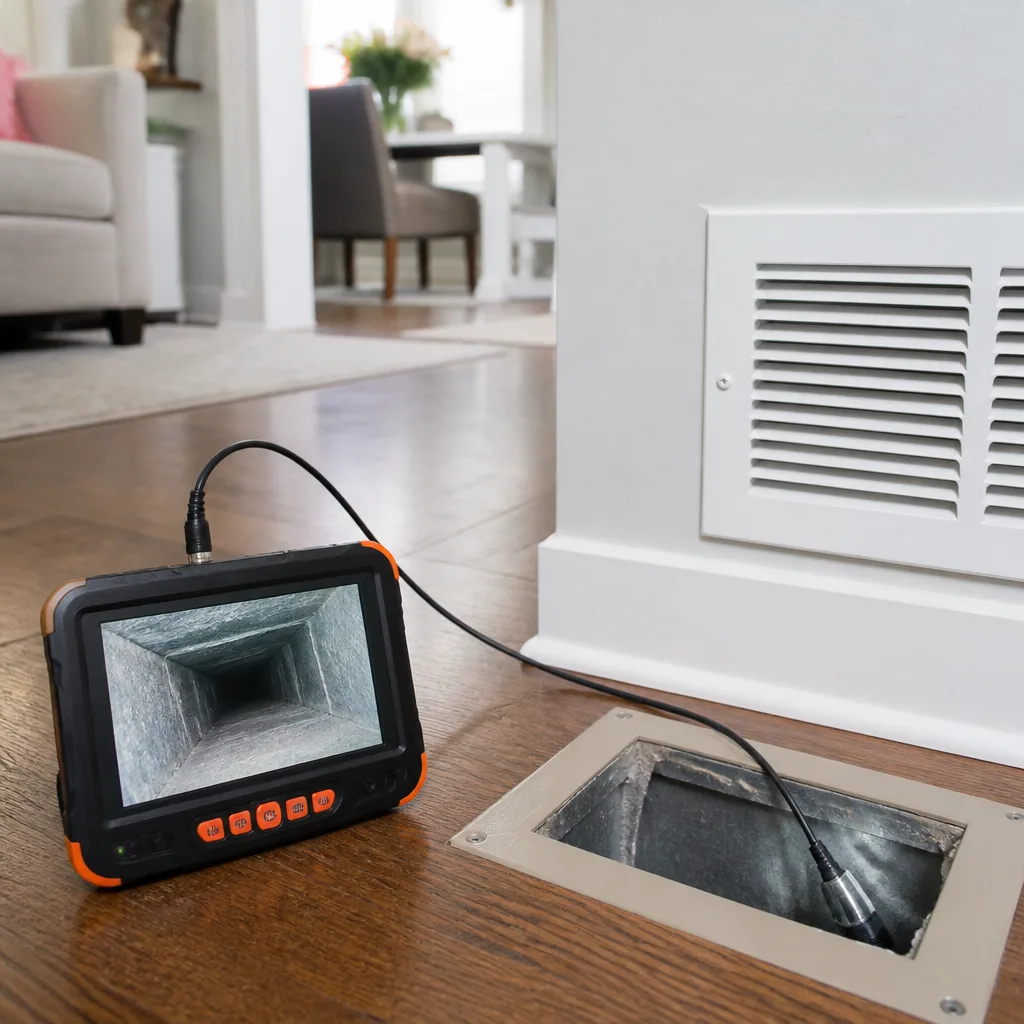 Camera inspection
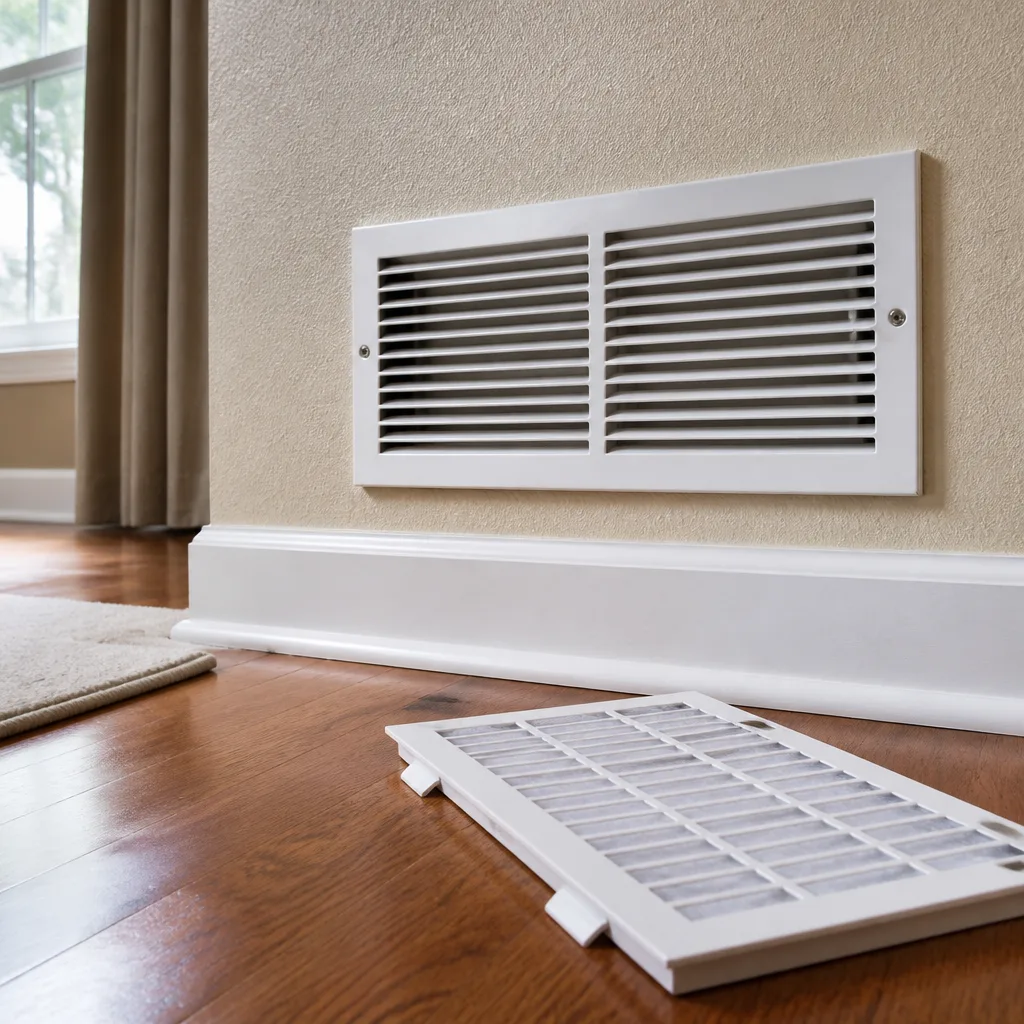 Sanitizing & deodorizing
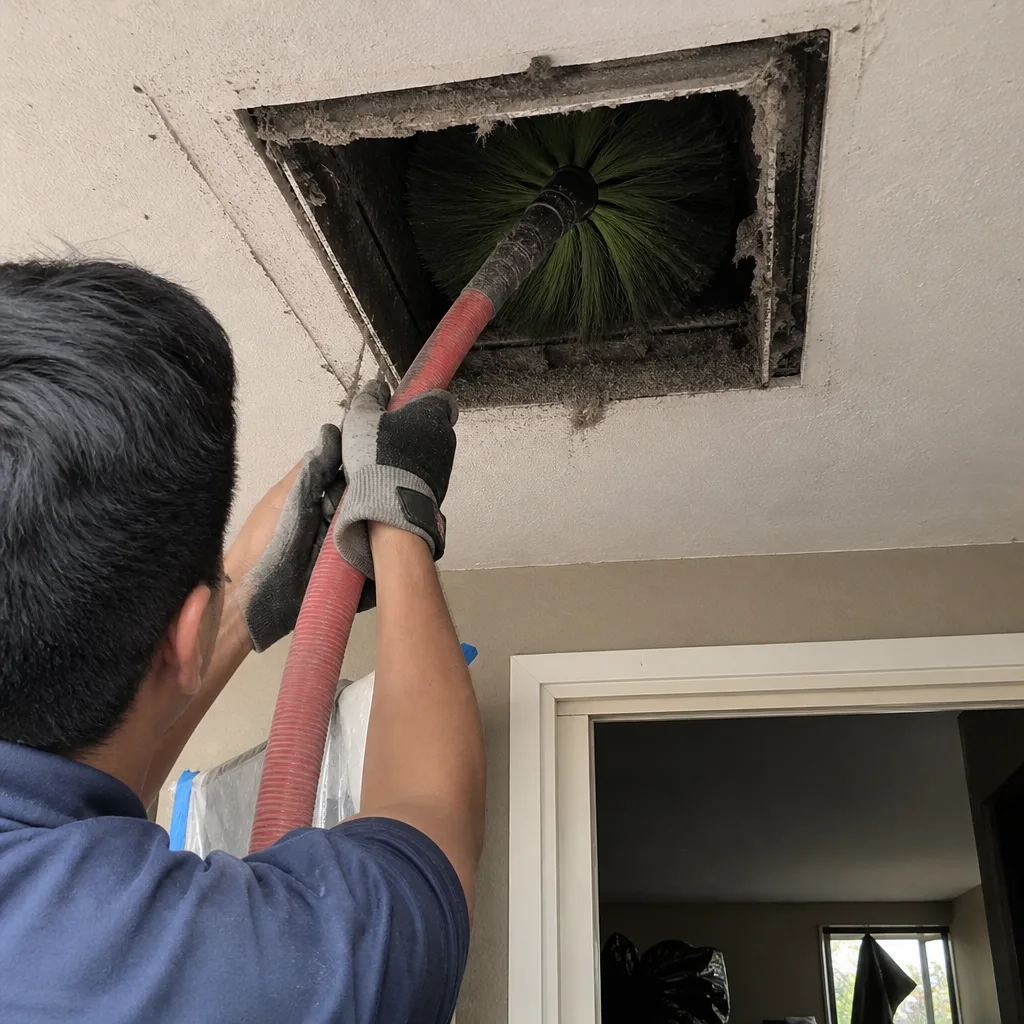
Whole-system duct and dryer vent check with before-and-after photos - you see exactly what came out of your vents
That "$99 whole-house special" is a bait ad - the real number appears once they are in your hallway, or the "clean" is a shop-vac at the register. We photograph the inside of your ducts before and after instead.
DIY vs Professional Air Duct Cleaning: The Santa Ana Homeowner’s Decision Guide
A $60 dryer vent brush kit from Home Depot will clean your dryer duct adequately. The same logic applied to a 200-linear-foot supply duct network with inaccessible trunk lines and fibrous liner is how homeowners spend a Saturday morning believing a job is done when it isn’t. This guide explains exactly where the DIY line is drawn in a typical Santa Ana home, which tasks you can genuinely handle yourself, and which ones require equipment that doesn’t fit in the trunk of a sedan. By the end, you’ll know the mechanical reality of duct cleaning, not just the marketing version.
Styles & brands we work with
- Whole-home duct cleaning
- Dryer vent cleaning
- Camera inspection
- Sanitizing & deodorizing
Quick Answer
DIY duct cleaning in Santa Ana is effective for registers, grilles, and the first few feet of visible ductwork, but the majority of contamination sits in inaccessible trunk lines that only professional negative-air systems reach. If your ducts haven’t been professionally accessed in 10+ years, or if you see mold, rodent evidence, or heavy debris at the register openings, the honest assessment is that DIY methods leave about 80% of the problem untouched. A professional service using Rotobrush or Nikro equipment runs $450 – $900 for a typical Santa Ana home, while a DIY attempt costs $50 – $150 in materials and a full day of labor with partial results.
Table of Contents
- What a DIYer Can Actually Reach
- Why Negative Pressure Is the Dividing Line
- Legitimate DIY Duct Maintenance Tasks
- When Professional Cleaning Is Non-Negotiable
- Cost-Benefit Comparison: DIY vs Professional
- Documentation and Records: What You Get for the Money
- How Santa Ana Specifically Affects Duct Systems
- Common Mistakes to Avoid
- When to Call a Professional
- Frequently Asked Questions
- The Bottom Line
What a DIYer Can Actually Reach
Let’s be direct about the physical reality. A residential duct system in a Santa Ana home typically includes supply registers (the vents that blow air into rooms), return grilles (where air gets pulled back to the furnace), branch runs (the smaller ducts connecting trunk lines to registers), trunk lines (the main arteries running through attics or crawlspaces), and the air handler itself. Each of these has a different accessibility profile.
What you can physically touch with a brush kit and shop vac:
- Register covers and faceplates: You can remove every one in the house, wash them with hot soapy water, and wipe the visible interior of the boot (the metal box directly behind the register). This is real work that improves airflow.
- The first 24-36 inches of branch runs: If a branch run is straight and accessible from the register opening, you can push a brush in that far. Beyond that, the brush fights you, bends, and stops making contact with the duct walls.
- Return air cavities visible from the filter slot: You can wipe down what you can see and reach when the filter is out. That’s usually about an arm’s length.
- Dryer vents that run a short, straight distance to an exterior wall: A dryer vent brush kit genuinely works here because the vent diameter is small, the run is often under 15 feet, and the brush makes full contact throughout. This is the one place where DIY matches professional results in the right conditions.
What you cannot reach without professional equipment:
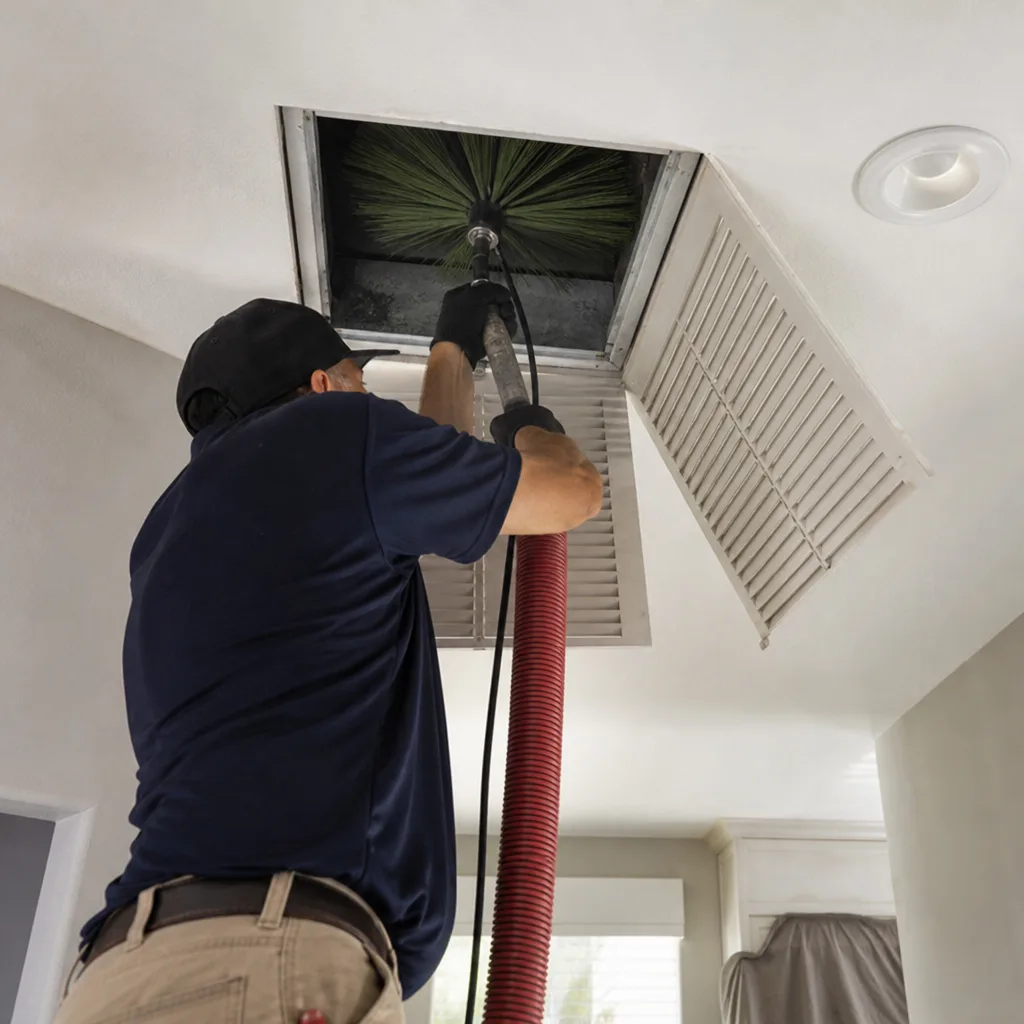
- Trunk lines in the attic or crawlspace: These are the contaminated main arteries. They run the length of the house, are sealed at joints, and are often wrapped in insulation. You can’t access them from a register. A professional crew cuts access ports, runs a powered rotary brush (Rotobrush) or pneumatic agitation system through the full length, and seals the ports afterward.
- Branch runs longer than three feet or with bends: Most branch runs in Santa Ana ranch-style homes run 6 to 15 feet with at least one elbow. A DIY brush makes contact with maybe the first third before it loses pressure against the wall.
- Return duct risers inside wall cavities: These vertical runs are impossible to service from a filter slot or grille. Debris accumulates at the bottom over decades.
- The air handler coil and blower wheel: The coil collects dust, hair, and biofilm that restricts airflow and gets recirculated. Accessing it requires opening the air handler cabinet, which is past the point where DIY is intelligent or safe.
We’ve inspected Santa Ana homes where homeowners did a thorough-seeming DIY job, removed the register covers, vacuumed what they could reach, and felt satisfied. Then they saw the camera footage from the trunk line. The gap between what you can reach and what you can see is the entire story. For a fuller picture of what professional equipment actually does, our Air Duct Cleaning in Santa Ana page walks through the process step by step.
Why Negative Pressure Is the Dividing Line
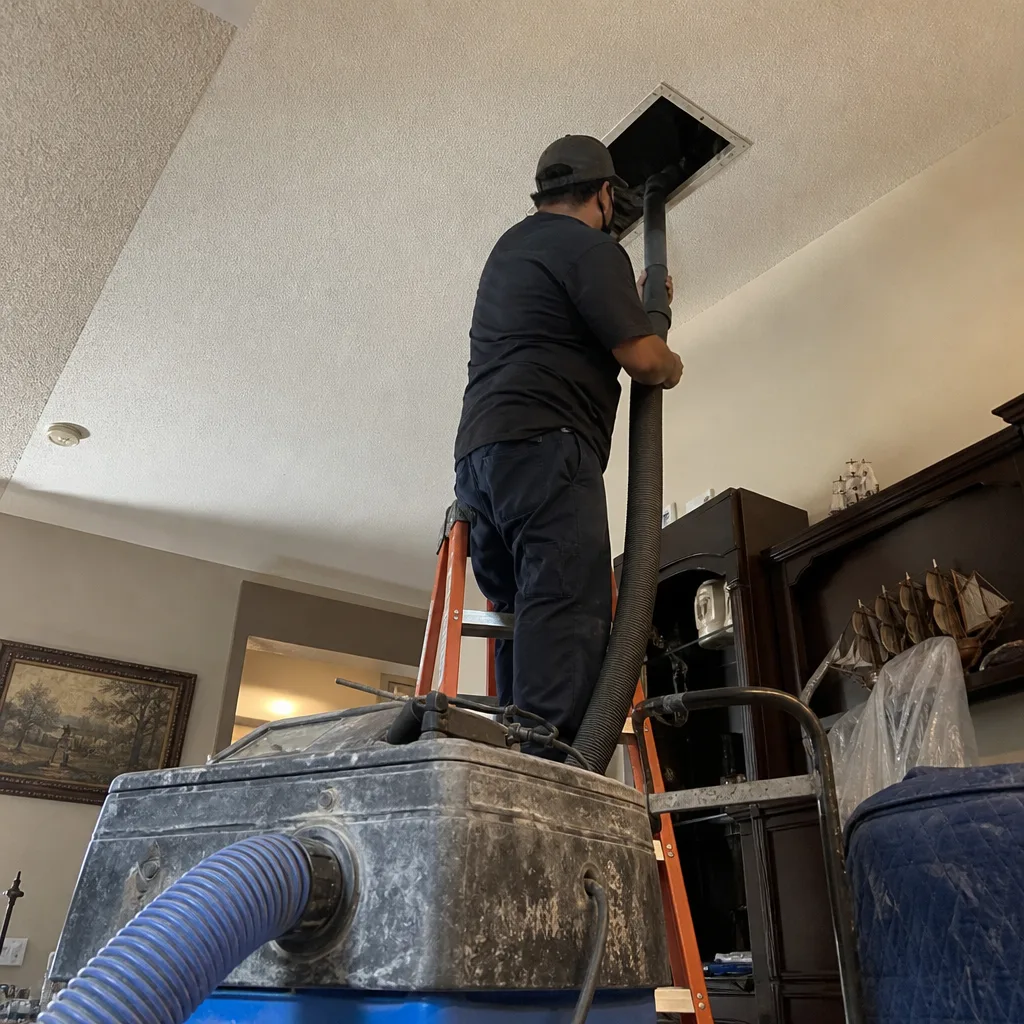
This is the technical detail that separates real duct cleaning from cosmetic work. Professional duct cleaning uses negative pressure: a high-volume vacuum creates suction at one end of the sealed duct system while agitation tools (rotary brushes, compressed air whips, skipper nozzles) knock debris off the walls. The debris is pulled toward the vacuum and into a containment system, never back into the living space.
A residential shop vac cannot produce meaningful negative pressure at the scale of a duct system. Here’s what happens instead:
- You push a brush into an accessible section of duct and agitate dust and debris.
- The shop vac, positioned at the register opening, captures some of what’s loosened near the opening.
- But the shop vac’s suction is local. It pulls air from the immediate area around the hose tip. It does not create airflow through the entire duct run.
- Dust loosened beyond the immediate reach of the hose settles deeper into the duct or gets pushed forward by the brush.
- When the system turns back on, that loosened debris becomes airborne and circulates through the house.
The push-and-pray method is mechanically incapable of removing what it dislodges from anything beyond the first couple of feet. Worse, without the duct system sealed during cleaning, loose particle agitation can send fine dust out through other register openings. Some Santa Ana homeowners have described doing a DIY duct cleaning and then finding a fine layer of dust on their furniture the next morning. That’s not a coincidence. That’s the physics of positive-pressure brushing without containment.
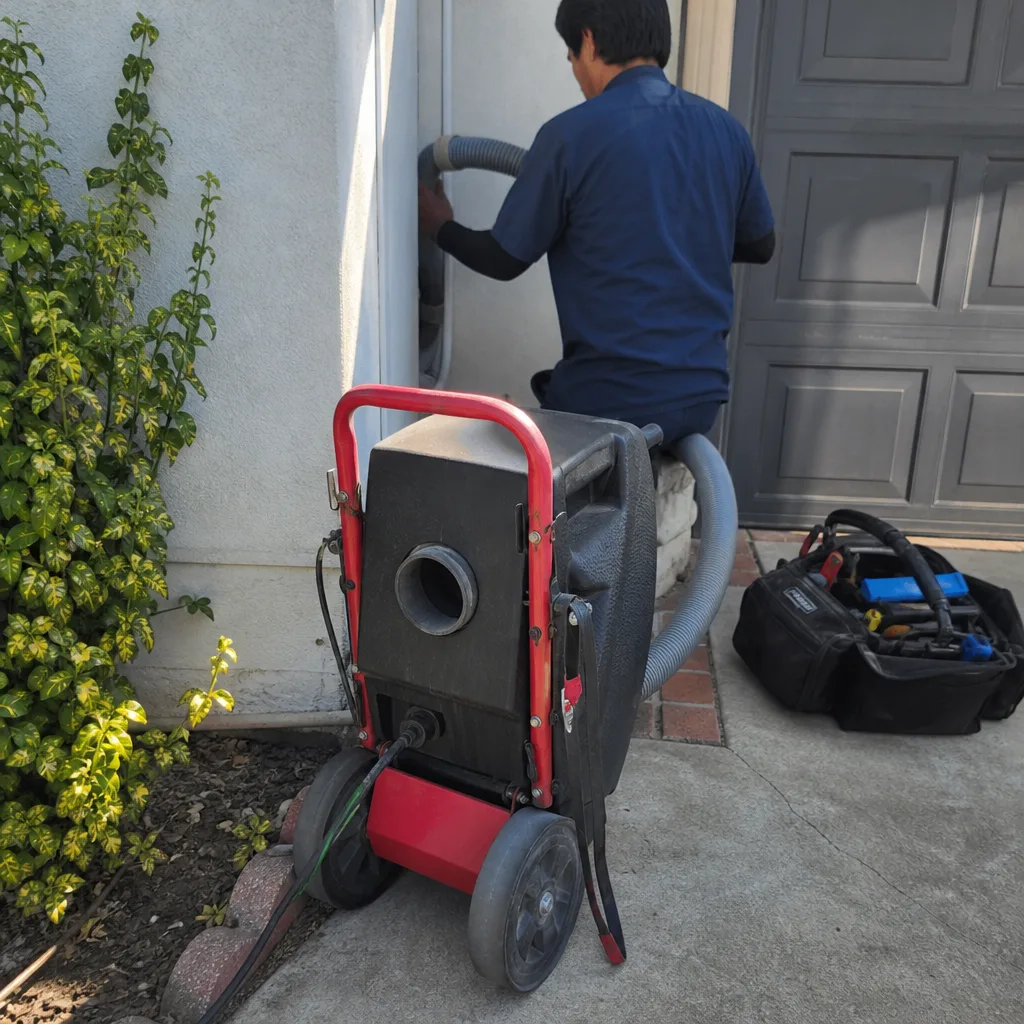
Professional equipment from Nikro and Abatement Technologies creates vacuum levels measured in the thousands of CFM (cubic feet per minute). A typical wet/dry vac pulls 100-150 CFM. The scale difference isn’t a percentage improvement; it’s the difference between what’s physically possible and what isn’t.
Here’s exactly what we do: we connect a vacuum unit capable of pulling 4,000+ CFM to the duct system, seal every register except the one being actively brushed, and maintain continuous negative pressure while rotating brush systems travel the full length of the trunk and branch lines. Debris goes into the containment, not into your hallway. The system stays under suction for the entire job. That’s the process that produces a measurable result, not a cosmetic one.
Legitimate DIY Duct Maintenance Tasks
We’re not anti-DIY. There are tasks in a Santa Ana home that are genuinely within reach and genuinely useful. Doing these between professional cleanings extends the life of the work and keeps the air system performing between appointments.
Here are the DIY tasks we actively encourage homeowners to do:
- Register and grille cleaning: Remove every supply register and return grille in the house. Soak them in hot water with dish soap. Scrub visible debris from the boot opening with a damp rag. Reinstall. This is 20 minutes of work that removes the visible layer most people associate with dirty ducts. Do this twice a year.
- Filter changes on a strict schedule: In Santa Ana, where air conditioners run from May through October, a standard 1-inch filter should be changed every 30-60 days during the cooling season. Write the date on the filter frame with a Sharpie when you install it. A clogged filter forces the blower to work harder and pulls more contamination through the system.
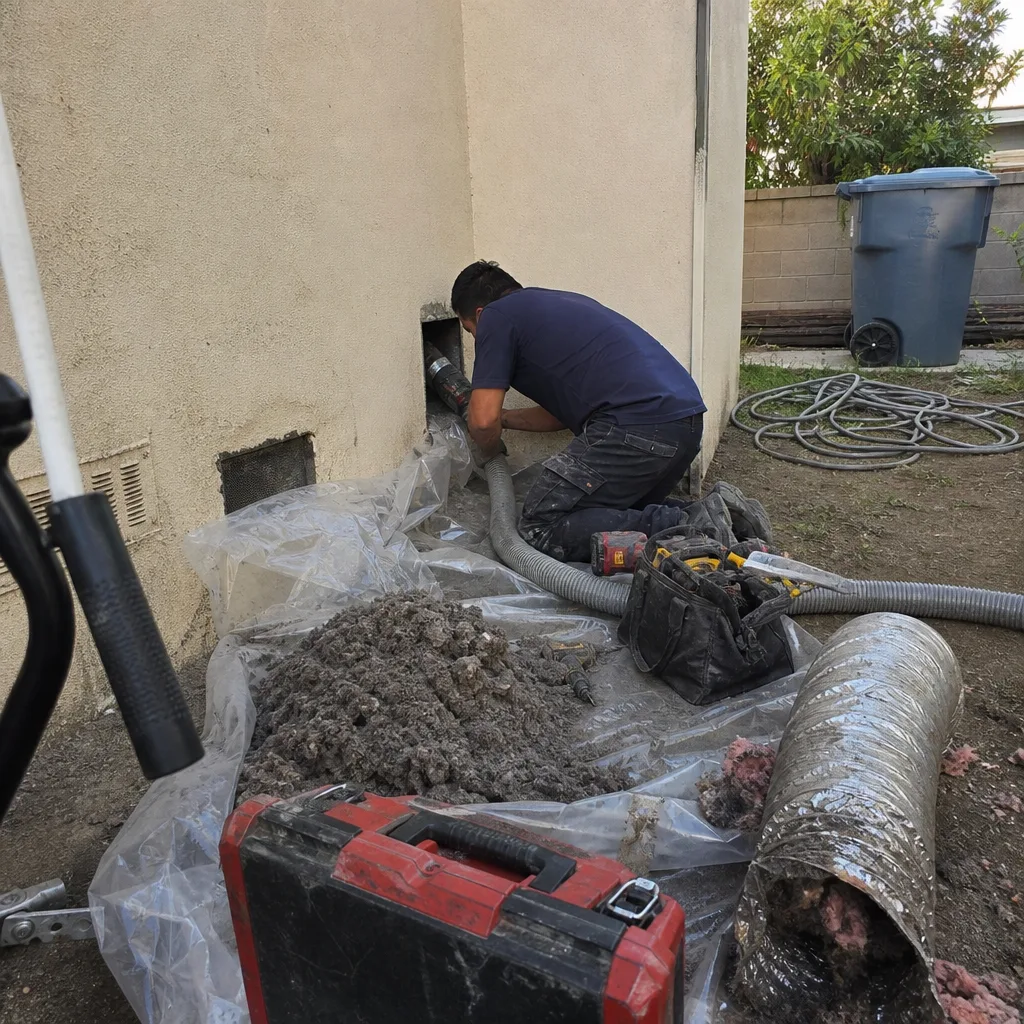
- Dryer vent maintenance for short, straight runs: If your dryer vents directly through an exterior wall with a run under 10 feet and no sharp bends, a $40 dryer vent brush kit from a big-box store is legitimate DIY territory. Disconnect the dryer, push the brush through from the interior, run it several times, reconnect, and confirm airflow at the exterior termination. Do this annually. This directly reduces the fire risk that comes from lent accumulation, consistent with the NFPA guidance that makes Dryer Vent Cleaning in Santa Ana a standard preventive service.
- Visual inspection of accessible boots: Every few months, pop a register cover off and look into the boot with a flashlight. Look for visible dust blanket, discoloration that might suggest moisture, insect activity, or material that looks like rodent droppings. This is the early-warning system. What you see there informs whether professional cleaning is called for.
- Keeping mechanical room areas clear and dry: Don’t stack boxes around the air handler. Keep the area sweepable. Moisture near the air handler in a Santa Ana summer creates conditions for biological growth inside the system.
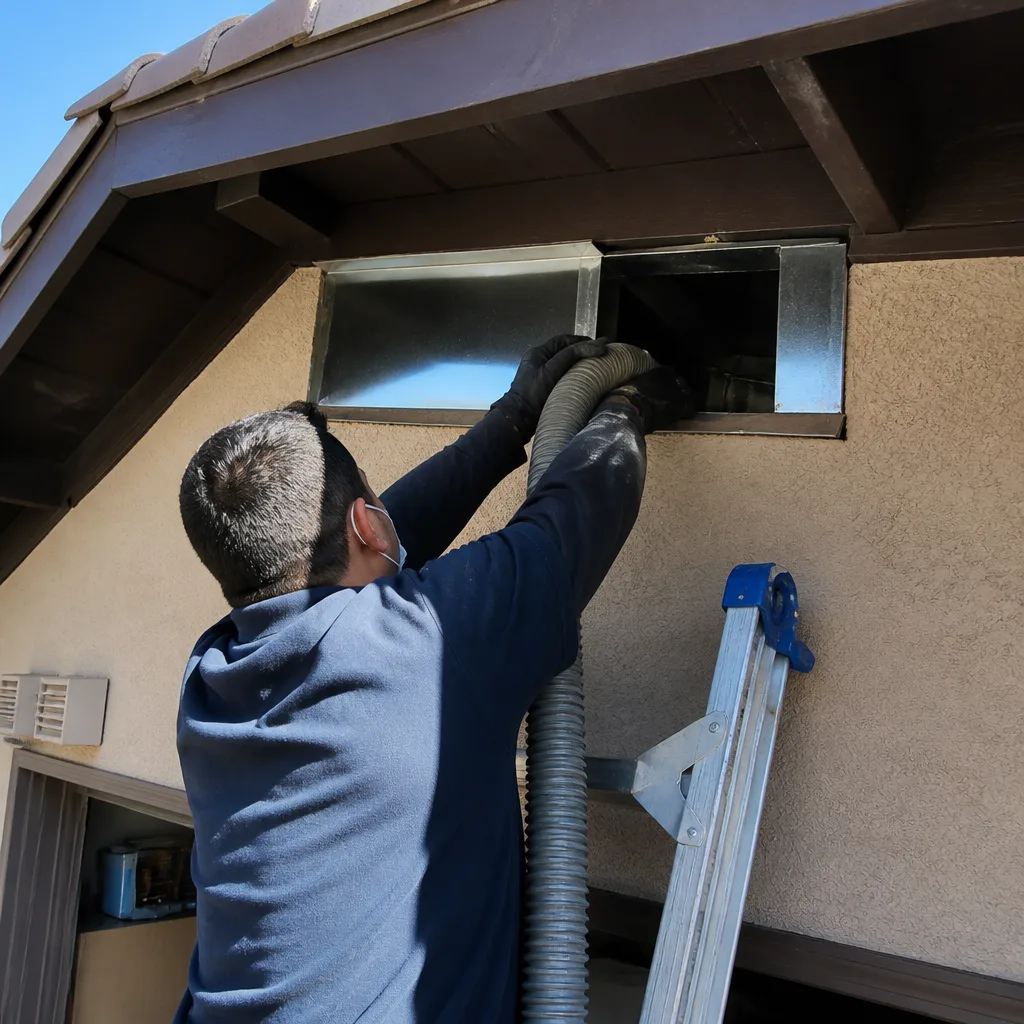
One note on DIY dryer vent work: if your vent run is longer than 10 feet, includes angles, or terminates on the roof (common in two-story Santa Ana homes), a brush kit won’t travel cleanly. You’ll leave lint plugs behind that you can’t see. That’s the point where the task crosses into professional equipment territory, not because DIY is irresponsible but because the tool doesn’t reach the job.
When Professional Cleaning Is Non-Negotiable
Some conditions are beyond the DIY boundary as a matter of health and structural integrity, not convenience. These are scenarios where we tell homeowners that a professional crew is the only honest option in Santa Ana.
Mold or moisture evidence anywhere in the system. If you see any discoloration on register interiors, smell musty air when the system runs, or know of past leaks near the air handler, it’s a professional-only situation. Mold remediation in ducts requires HEPA-level containment, not agitation. And it often requires repair of the underlying moisture problem before cleaning even makes sense. We can’t stress this enough: brushing mold without containment spreads spores into living spaces. This is where equipment from Abatement Technologies, designed for remediation-grade air handling, becomes essential rather than optional. If you suspect mold, stop, close the registers, and make the call.
Rodent or pest debris. If visual inspection reveals droppings, nesting material, or you’ve had rodent activity in the attic around ductwork, the ducts need professional sanitation. Rodent matter in ducts isn’t a nuisance; it’s a biohazard. And in many cases, the ducts have been physically damaged by gnawing, which takes us into air duct repair territory: patching holes, replacing chewed sections, and resealing joints. Cleaning without repairing just invites future infestation.
10+ years without access. If the ducts have never been professionally cleaned since the home was built, or you bought the home and have no documentation of the prior owner’s air system maintenance, the first professional cleaning is non-negotiable. A decade of Santa Ana dust, insulation breakdown, construction debris from the original build, and everyday household contaminants has accumulated in spaces no tool from a hardware store can touch. The first professional visit establishes the baseline.
Post-construction or major renovation. If you’ve remodeled in Santa Ana, the ducts have absorbed drywall dust, paint overspray, and construction debris. The fine particulate from drywall mud compounds with moisture and adheres to duct walls. This material won’t brush loose. It requires professional agitation and extraction.
Cost-Benefit Comparison: DIY vs Professional
The honest numbers for a typical Santa Ana home. A mid-century ranch with 10-14 registers and a single air handler is the reference point.
DIY Approach
- Materials: Brush kit ($25-$50), shop vac filters and bags ($20-$30), register cleaning supplies ($10), garbage bags and cleaning rags ($15). Total: roughly $70-$105.
- Time: A thorough DIY attempt cleaning registers, brushing reachable branch runs, vacuuming returns, and attempting trunk line access: 4-6 hours on a Saturday.
- Coverage achieved: Register faces clean. First 2-3 feet of branch runs clean. Return filter slot area clean. Trunk lines untouched. Air handler untouched. Estimated 15-20% of total duct surface addressed.
- Risk introduced: Debris loosened deeper into the system. Potential dust discharge into living space. No documentation. No verification.
- Long-term cost: The professional cleaning still needed hasn’t gone away. Delaying it while believing the system is clean increases accumulated debris density and may allow undetected problems to worsen.
Professional Approach
- Cost in Santa Ana: Typical whole-home cleaning for a 1,200-2,500 square foot house runs $450-$900. Larger homes, multiple air handlers, or years of neglect can push toward the higher end.
- Time: 3-6 hours with a two-person crew. You’re not doing the work.
- Coverage achieved: Trunk lines, branch runs, air handler, coil, blower assembly, registers, and returns. The full air pathway. Estimated 95%+ of duct surface addressed.
- Risk addressed: Negative pressure containment. Debris extracted, not redistributed. Visual verification with camera documentation available.
- Long-term value: A documented cleaning establishes a maintenance baseline. If you sell the home, you can show the buyer’s inspector proof of system care. If you have respiratory concerns, you have a verifiable intervention.
The cost difference is real and nobody should pretend otherwise. But the value question isn’t “what do I spend today?” It’s “what do I actually complete?” A $100 DIY session that addresses 15% of the system is $100 spent toward the illusion of completion. A $650 professional cleaning that addresses the entire system is a closed loop. The honest framing is that DIY and professional aren’t competing versions of the same job. They’re different jobs.
Documentation and Records: What You Get for the Money
Here’s a part of the equation most guides skip: what you can prove afterward.
When a professional crew cleans your ducts, you should receive documentation of what was done. At minimum, the work order details the areas cleaned, the equipment used, and any observations during the job. Many companies, including ours, provide before-and-after photos or camera footage of the trunk lines. That’s not a bonus feature. That’s the difference between “the crew said they cleaned it” and “I can see what the interior looked like before and after.”
This documentation matters in three concrete scenarios:
- Real estate transactions: When you sell a Santa Ana home, the buyer’s inspector may flag duct condition. A documented professional cleaning, especially one with photos, answers the question before it becomes a negotiation point. Buyers ask for credits when they see “ducts appear soiled” on a report. Sellers with documentation don’t grant that credit.
- Health concerns: If someone in the home has respiratory issues and you’re working with a doctor or specialist, a documented intervention is a data point. “We had the ducts cleaned” means very little. “We had the full duct system cleaned with HEPA-filtered extraction on this date, here’s the report” is actionable information.
- Rental properties: For Santa Ana landlords, documentation provides a maintenance record that addresses tenant concerns and demonstrates reasonable care. It’s the difference between a verbal reassurance and a paper trail.
DIY can’t produce documentation. There’s no before-and-after, no coverage verification, no record. If documentation matters to you, that alone may settle the question.
How Santa Ana Specifically Affects Duct Systems
Santa Ana’s climate creates particular conditions inside duct systems that a generic national article won’t discuss. We work here, and our experience tracks with what you’d expect from the local environment.
Santa Ana’s summer runs hot and dry, with air conditioning cycling heavily from May through October. The A/C doesn’t just cool; it dehumidifies. When the system cycles off, condensation forms on the coil, and over time, that intermittent moisture combines with dust to form a film on coil surfaces and nearby duct walls. That’s the biofilm that attracts more particulate and restricts airflow. In a Santa Ana summer, the system is running at high volume, and that means more dust moving through the registers and more buildup on the blower assembly.
The Santa Ana winds in fall and early winter are another local factor. Fine particulate from inland areas pushes into the region, and homes with slightly loose duct connections in the attic draw that dust directly into the return side. We see Santa Ana attics with duct connections that have pulled apart slightly over years of thermal expansion, allowing insulation and attic dust into the air stream. That’s a repair issue as much as a cleaning issue. Sealing the system is part of the full air pathway approach: you don’t just clean what’s inside the ducts, you make sure the ducts aren’t pulling contamination in from the attic.
Housing stock matters too. A significant portion of Santa Ana’s residential inventory was built between 1950 and 1975. Those homes have original or decades-old duct systems with fibrous liner material in the trunk lines. Liner is notoriously difficult to clean by hand because particles embed in the fiber. It requires professional agitation and extraction to remove embedded material without damaging the liner. DIY methods don’t just fail to clean liner; they can abrade the fiber surface and release fibers into the air stream.
If you want the full picture of professional equipment and process applied to Santa Ana conditions, the Air Duct Cleaning in Santa Ana page details the specific steps we take for homes in this market.
Common Mistakes to Avoid
- Assuming a shop vac creates enough suction. A residential shop vac pulls 100-150 CFM. Professional duct cleaning systems pull thousands. The shop vac captures what’s near the hose. It doesn’t create system-wide airflow that extracts debris from deep runs. This is the single biggest misconception in DIY duct cleaning.
- Pushing a brush deeper than it’s designed to go. When a brush kinks inside a branch run or snags on a joint, you can’t see it, but you can damage liner or disconnect loose fittings. A brush that stops moving forward is stuck on something. Forcing it is how homeowner duct repairs are born.
- Cleaning without sealing other registers. If you’re agitating debris near one register and the other registers are open, loose dust travels to the open path of least resistance. That’s how you end up with dust coating in a bedroom down the hall.
- Treating mold as a cleaning problem. Brushing mold disperses spores. If you see or suspect mold in Santa Ana ducts, the job is containment and remediation, not scrubbing. Agitating biological material without sealed extraction makes the air quality problem worse.
- Skipping the filter inspection. Some homeowners go straight to deeper duct access when the actual airflow restriction is a clogged filter at the return. Change the filter first, verify airflow, then evaluate whether the ducts themselves are the issue.
- Believing that a clean-looking register means clean ducts. The register face is the most visible part and the least relevant to what’s moving through the air. Ducts carry air past the same interior surfaces regardless of how the faceplate looks. Clean faceplates solve appearance, not air quality.
- Assuming one professional cleaning lasts forever. Ducts refill over time. Santa Ana’s dust load means a professional cleaning typically holds meaningful benefit for 3-5 years, depending on occupancy, pets, and filtration. Every 3-5 years is a reasonable rhythm for most homes.
When to Call a Professional
Call a professional if you see mold or moisture staining anywhere in the system, find evidence of rodent activity, haven’t had the ducts accessed in a decade or more, are experiencing musty air from the registers when the system runs, or have just completed a renovation that produced drywall dust. Call if you’re a Santa Ana landlord managing tenant air quality concerns, or if you’re selling a home and want documentation to answer buyer inspection questions. Call if you did a DIY attempt and found your brush stopped moving at an unseen obstruction. And call if you simply want the full air pathway addressed once, completely, with verification. Anvil Air Duct Cleaning offers free estimates in Santa Ana – call (833) 620-2848.
Frequently Asked Questions
A typical whole-home professional cleaning in Santa Ana runs $450 to $900, varying by home size, number of air handlers, and condition of the system. Homes with heavy buildup, multiple return drops, or no prior access history trend toward the higher end. The price reflects full coverage of trunk lines, branch runs, air handler, and containment equipment. Call (833) 620-2848 for an exact quote on your system – estimates are free.
No, and the limitation is mechanical, not motivational. DIY brush and vacuum methods reach the first few feet of visible ductwork plus register surfaces. The trunk lines, deep branch runs, and air handler that hold the majority of contamination are inaccessible without professional negative-air equipment. You can absolutely clean registers and change filters yourself as maintenance, but that’s a different job than cleaning the full system.
Request before-and-after documentation. A legitimate professional cleaning includes camera footage or photos of the trunk line interior before and after the job, along with a work order that details what was cleaned and with what equipment. If a company can’t provide visual verification, that’s a red flag. Documentation is part of what you’re paying for.
Cheap quotes usually mean limited equipment and limited coverage. A $99 duct cleaning special typically involves a technician vacuuming accessible register openings with a portable unit, which means trunk lines are never touched. The job is cosmetic, takes under an hour, and the lost cost is the false confidence that the system is clean. Professional equipment and full coverage cost what they cost because the job is bigger and the equipment is expensive to own and operate.
For short, straight runs under 10 feet with direct exterior termination, yes. A brush kit makes full contact with the vent wall in that configuration, and DIY cleaning is effective when done annually. For longer runs, runs with bends, or roof terminations, the brush won’t travel cleanly and you’ll leave lint plugs behind unseen. In those cases, professional Dryer Vent Cleaning in Santa Ana with powered equipment is the safer call, and it directly addresses the fire risk that accumulated lint creates.
Every 3-5 years for most Santa Ana homes, depending on occupancy, pets, local dust conditions, and whether the home has been renovated. Homes with heavy pet dander, smokers, or recent construction might need more frequent attention. A home that’s never been cleaned in 10+ years needs the first professional cleaning to establish baseline, then can move to the regular interval. If you’re unsure whether you’re due, Anvil Air Duct Cleaning home offers free estimates and can assess your system.
The Bottom Line
DIY duct cleaning is not a failure of effort. It’s a failure of mechanics. The tools a homeowner can buy are not capable of reaching the majority of the duct surface that matters, and without negative pressure, what they dislodge can make things worse rather than better. In Santa Ana, where A/C cycles dominate the year and the housing stock skews older, the gap between visible registers and hidden trunk lines is especially wide. The legitimate DIY work is registers, filters, and simple dryer vents. Everything else needs professional equipment, professional containment, and the kind of access that comes with training and purpose-built machines. If you want the job done once and done completely, that’s a phone call, not a Saturday project.
Written by the team at Anvil Air Duct Cleaning, serving Santa Ana since 2017.
See the difference
 Before
 After
 Before
 After
 Before
 After